Governments of more than 190 nations will converge in Paris from 30 November to 11 December at the United Nations Climate Change Conference (COP21), with the aim of reaching a historic agreement to reduce global greenhouse gas emissions and averting the disastrous effects of climate change.
As talks centre on smart ways to cut emissions, attention is turning towards the role of agriculture and the management of natural resources to ensure global warming does not exceed pre-industrial levels by more than 2°C.
Scientists believe that any greater temperature rise would be catastrophic for the planet, exceeding survival thresholds of crop, tree and fish species. Climate change threatens to derail efforts to end poverty and hunger, and achieve the sustainable development goals.
Here are 10 reasons why a focus on agriculture is integral to action on climate change.
The poorest are hit hardest
Climate change disproportionately affects the world’s poorest countries - particularly small island developing states, landlocked countries, arid and semi-arid areas - where people are most dependent on natural resources. In a cruel twist, these countries have contributed the least to causing climate change.
Food producers are most vulnerable
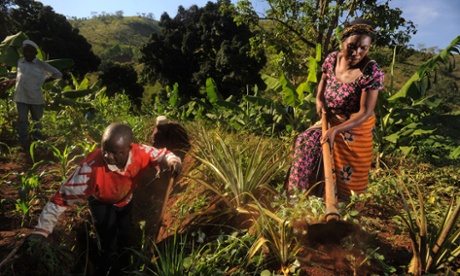
Drought, floods, sea level rises, and hurricanes destroy crops, livestock and fish resources and devastate ecosystems, irrigation systems and infrastructure. Family farmers, pastoralists, fisherfolk and foresters - the same people who provide the bulk of the planet’s food – are those whose lives and livelihoods will be most affected.
A threat to global food production
Agricultural production needs to increase globally by an estimated 60% by 2050 to meet projected demands for food and feed from a growing and changing world population. However, scientists predict that production may fall by as much as 2% each decade for the rest of this century as a consequence of rising temperatures. The socio-economic impact could be devastating.
Stressing the planet
The expected increase in extreme weather events will only add to the challenge of current food production systems, which are already under stress through degradation of land and water resources and loss of biodiversity and ecosystem services resulting from unsustainable practices. Today, a third of farmland is degraded, up to 75% of crop genetic diversity has been lost and 22% of animal breeds are at risk. More than half of fish stocks are fully exploited, and in the first decade of this century, some 13m hectares of forests were converted into other land uses each year.
Reducing agriculture’s carbon footprint
Agriculture, forestry and fisheries can make a significant contribution to global mitigation efforts by reducing their carbon footprint, adopting low emission growth strategies and enhancing carbon storage in soils, forests and aquatic systems. While agriculture and deforestation account for about a quarter of global greenhouse gas emissions from human activities, forests retain as much carbon as in the whole atmosphere, and soil makes up the greatest pool of terrestrial organic carbon. The agricultural sector has considerable transformational potential as it is uniquely positioned to simultaneously address all three dimensions of sustainability.
Agro-ecology schooling
Sharing knowledge with farmers on agro-ecological approaches and how to adapt them to local conditions through farmer field schools and other networks can have a positive long-term impact on climate change. For some time now, FAO has been working with countries and partners in developing and promoting approaches that avoid deforestation, overfishing and focus on improving soil fertility and increased ecosystems services that lower emissions while ensuring human and ecosystem well-being.
Transforming food systems
Modern food systems are heavily dependent on fossil fuels. Moving away from dominant input-intensive food systems and pursuing climate-resilient approaches to agriculture can contribute to reducing greenhouse gas emissions. However, the cost of shifting to sustainable agricultural practices will require long-term public and private investment and cannot be borne alone by poor farmers, fisherfolk, foresters, and indigenous communities.
Saving energy
One third of the food the world produces is lost or wasted. That amounts to about US$2.6 tn per year, including $700 bn of environmental costs and $900 bn of social costs. Reducing food losses through improved access to post-harvest technologies, and reducing waste through consumer education and initiatives like FAO-UNEP’s Save food can help cut the energy bill. Ultimately, the agri-food value chain will have to gradually decouple from fossil fuel dependence to deliver more food with less and cleaner energy.
The big picture
Action on climate change must be part of the bigger picture of sustainable development, taking into account the fight against hunger and poverty while investing in renewable resources. Nearly 80% of the world’s poor live in rural areas, and most depend on agriculture for their living. Achieving zero hunger by 2030 largely depends on ensuring that agricultural systems and rural communities are healthy, productive, sustainable, and resilient in the face of climate change.
Measuring and monitoring
A better understanding of the influence of a changing climate on agricultural sectors has to be the first step. Providing essential information for climate change adaptation planning and reporting on greenhouse gas emissions, FAO has developed tools for assessing the impact of climate change, monitoring natural resources and harmful emissions.
Content on this page is paid for and provided by FAO, a sponsor of the Guardian Global Development Professionals Network.