
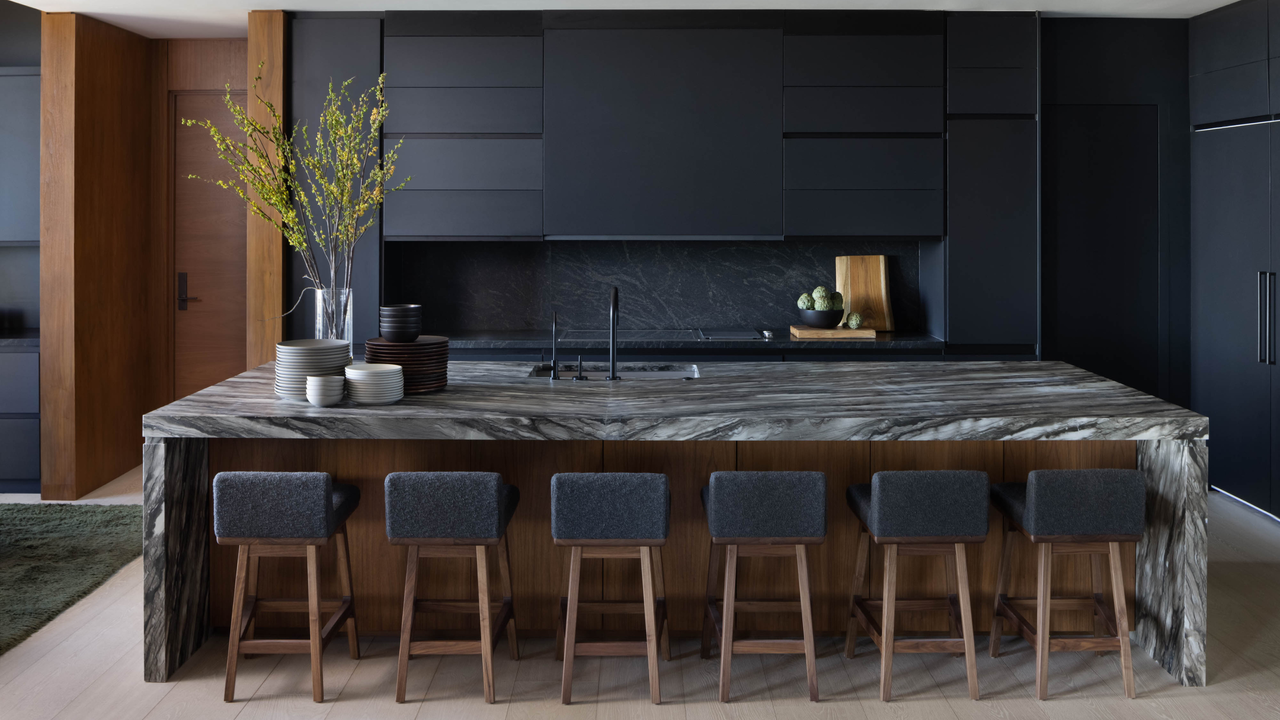
It’s interesting the kinds of questions homeowners tend to ask first about their kitchen. The truth is, we seem to get a little hung up on the look and the pretty details, forgetting how important the actual functionality is.
So, we asked the experts which questions we really should be asking — either ourselves or our designers and contractors — to ensure our kitchens function as easily and as well as possible for those living there.
From gaining a better understanding of what you want to change and why to the things you might never have thought about at all, these questions will get you closer to the beautiful yet practical modern kitchen you're looking for.
1. Are you designing around the traditional ‘work triangle’ — or around how your household actually lives?
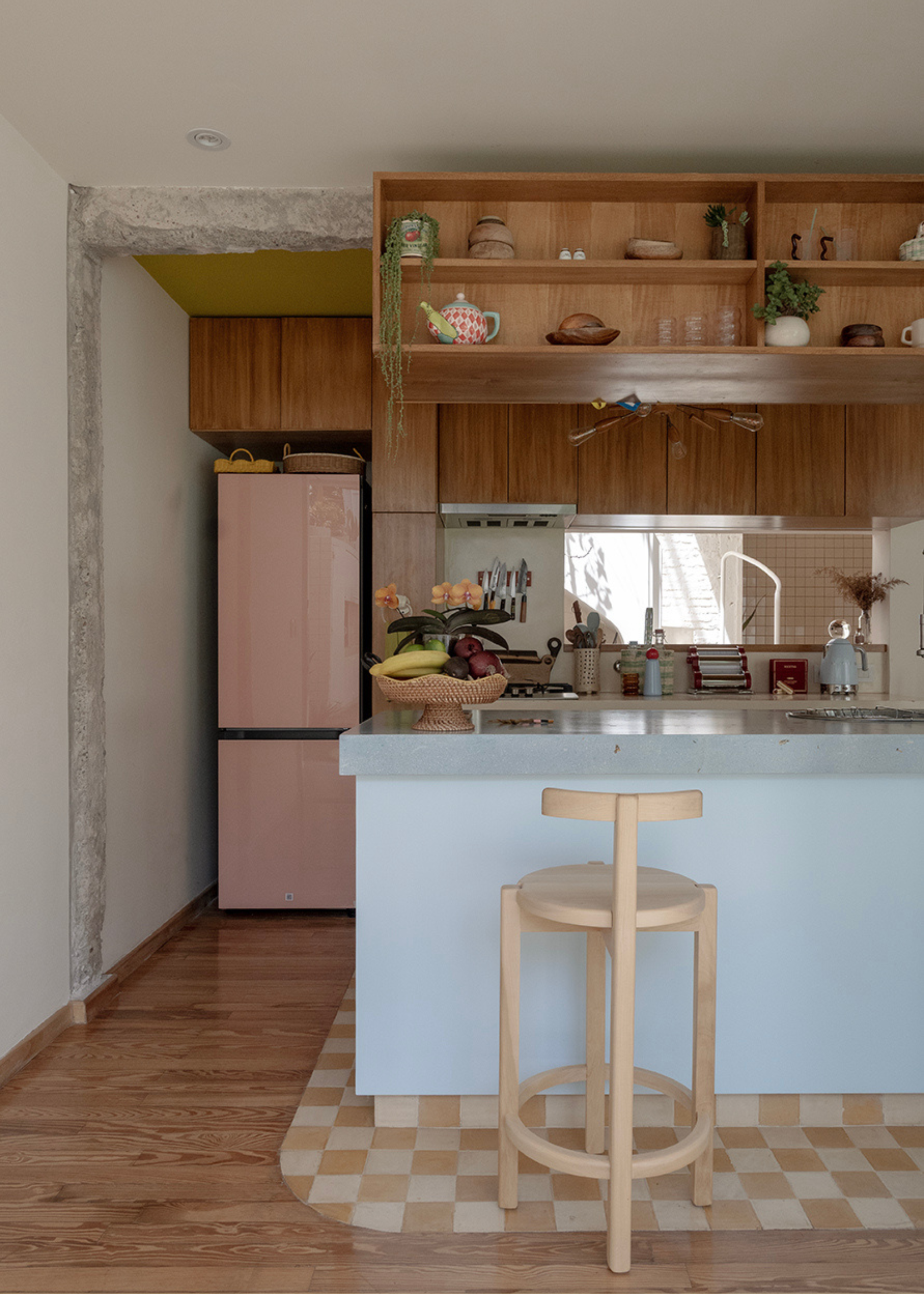
According to Anita Lang, founder and creative principal of IMI Design, the traditional kitchen 'work triangle' was designed for a different era, so this can be a bit of a dated way to think these days.
“Today, I often find myself designing for families gathering around the island, children doing homework nearby, couples cooking together, and guests lingering over a glass of wine,” she says. “Understanding how your household lives is often more important than following a formula.
"Your layout may require entirely different thinking, such as incorporating multiple zones and individualized accoutrements.”
2. Does your kitchen have zones that work independently of the cooking area?
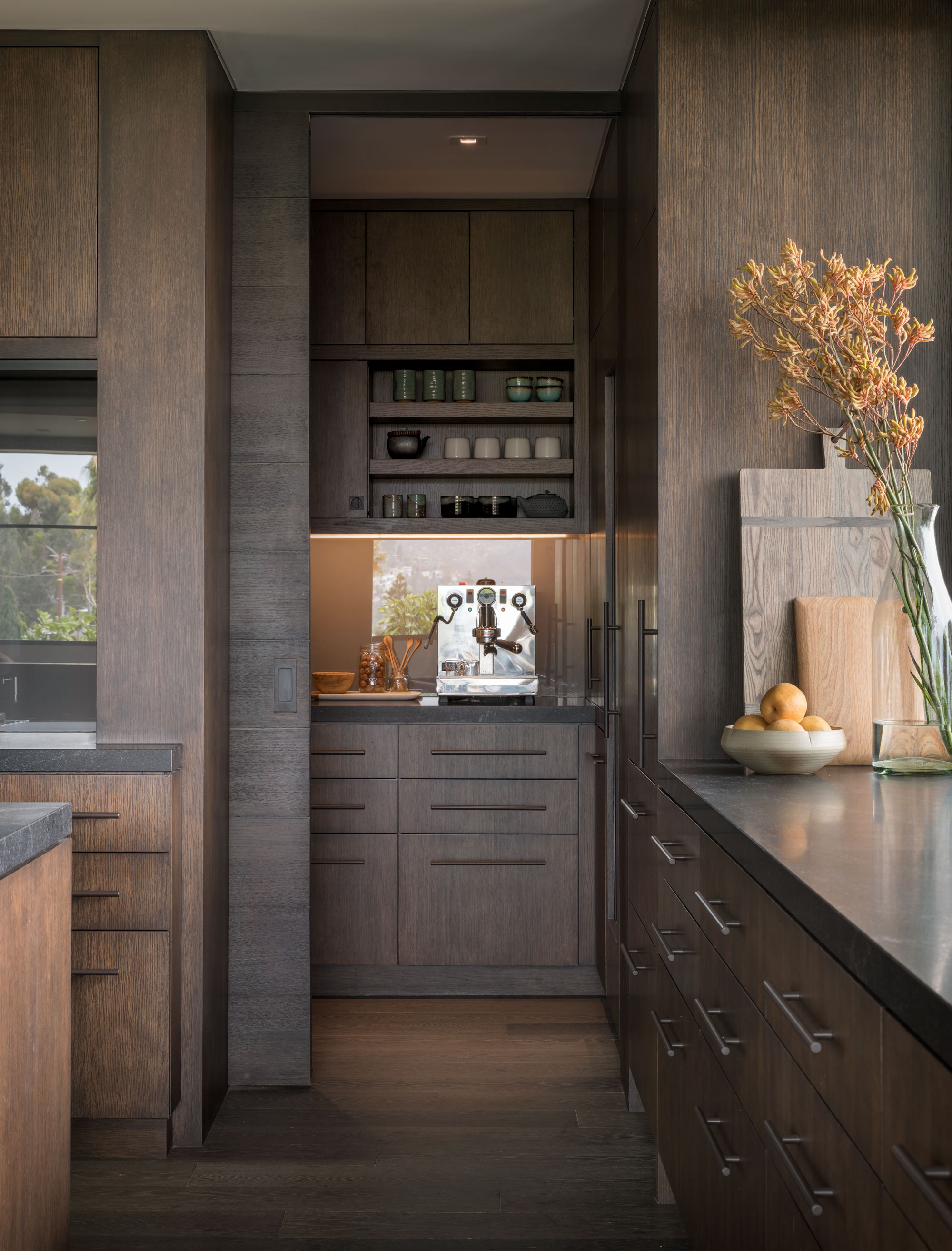
A dedicated beverage or coffee station positioned away from the range cooker means guests, kids, or anyone else can move freely without ever crossing the chef's path and getting in the way.
Anita says, “Most people never ask for it, yet everyone who has it wonders how they lived without it.” It's definitely worth some consideration.
3. Have you thought about what your children need from the kitchen beyond mealtimes?
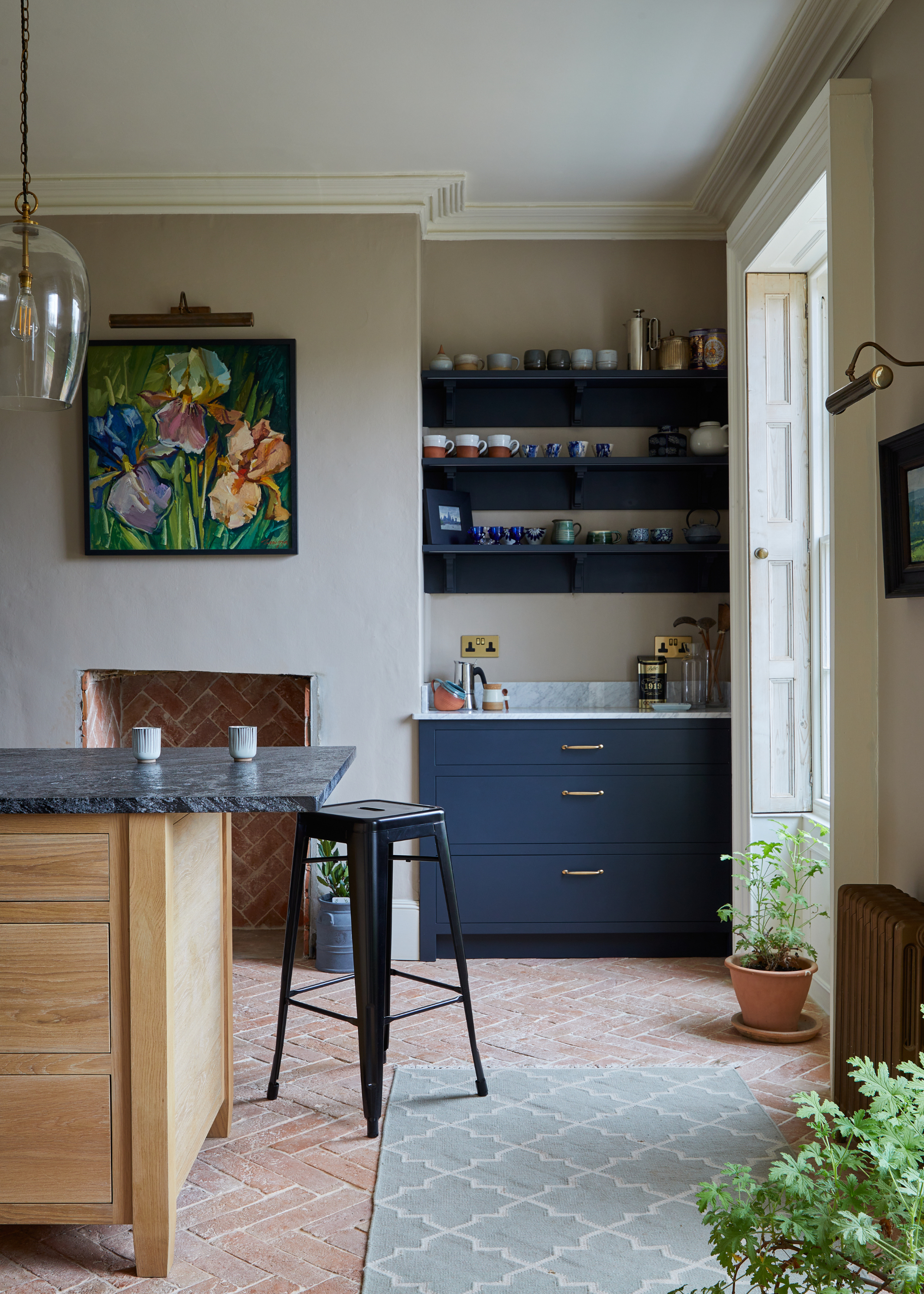
This may not be your first thought, but Anita assures us that young families can benefit enormously from a snack or drink station positioned low and away from the stove.
She says that having something children can access independently without ever entering the cooking zone is a really handy element of the kitchen — safely allowing a little independence, but often a decision most people make too late.

A small stack of reachable cups for kids can save a lot of time and effort when busy weekday evenings hit.
4. Does a serious home cook need a different kitchen entirely than someone who primarily entertains?
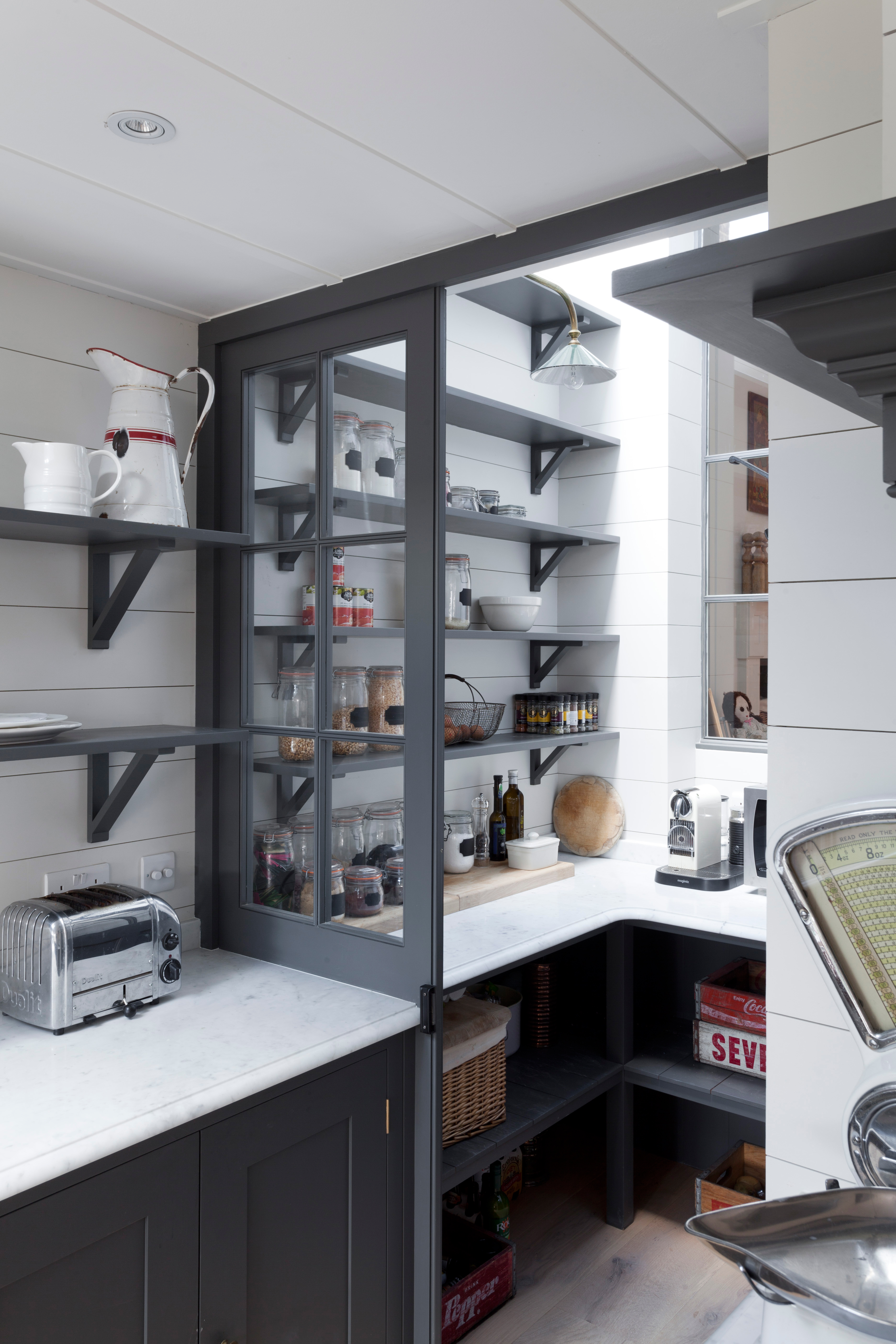
This is an interesting one, because often a kitchen is designed and built to what it should be like, but actually it needs to be designed for the people living there using it. Anita answers this one with confidence, suggesting the use of zones.
“Yes. A prolific chef needs unobstructed flow between prep, range, and refrigeration — purpose-built zones with everything exactly where it belongs.” She explains that an entertainer needs an open, generous layout where guests feel included without disrupting the work or being too close; it’s a little uncomfortable.
“One solution to solve both is a front show and entertaining kitchen with the functionality of a back kitchen connected with seamless flow.” This is becoming more and more of a must in modern kitchens, because it allows for separation when needed, and a bit more of a working area.
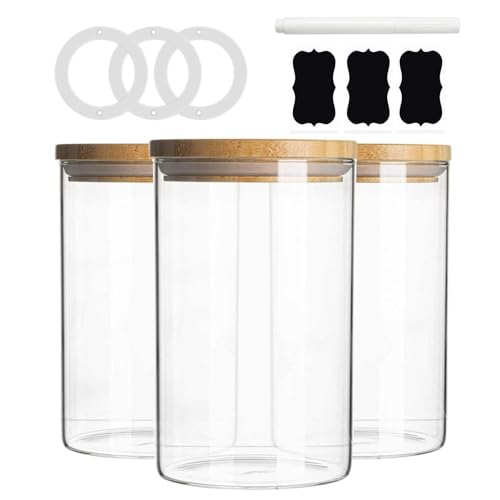
Nicely labeled matching jars will no doubt be a huge help with back kitchen/pantry organization.
5. What do I dislike about my current kitchen, and are we actually fixing it?
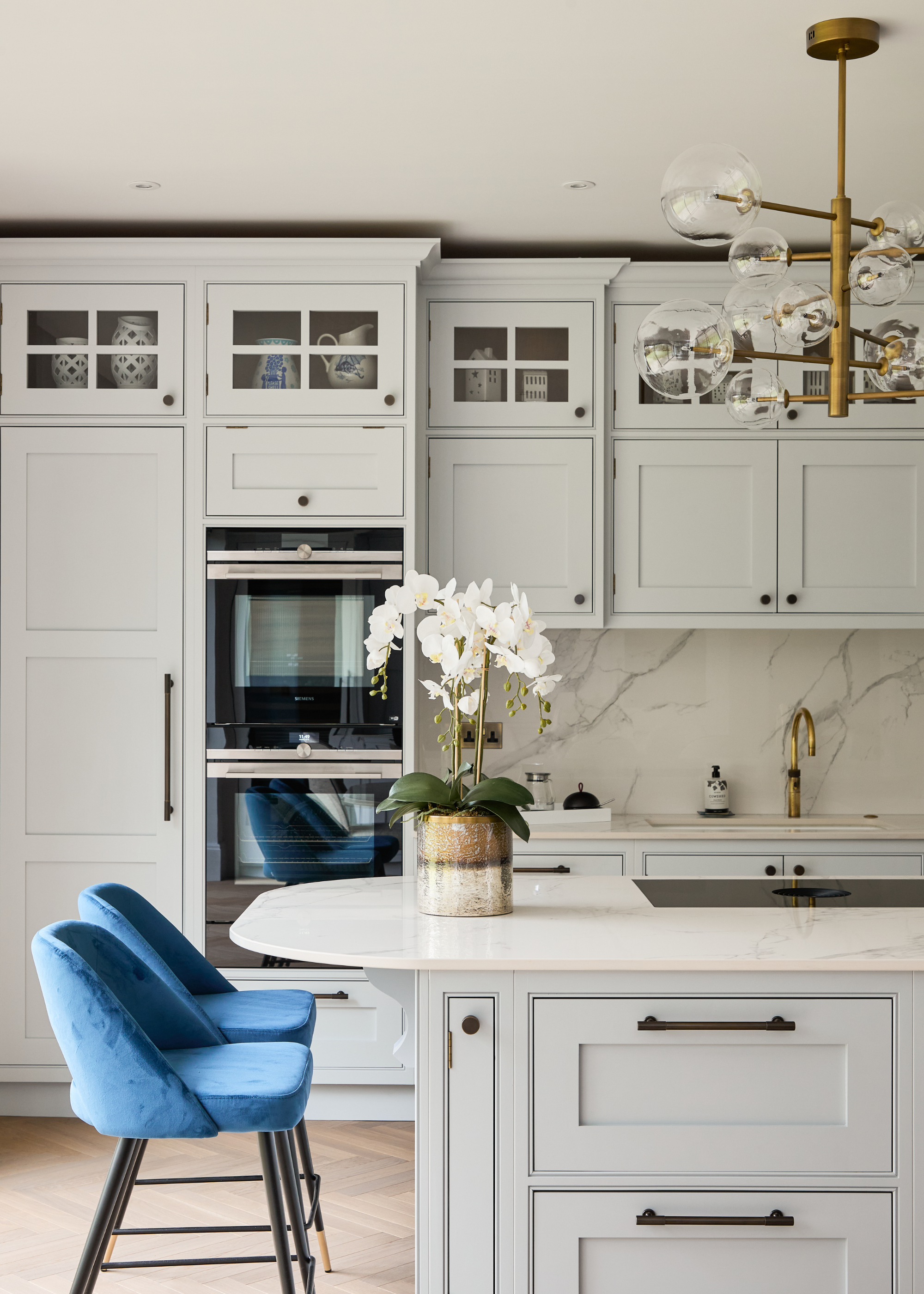
It’s easy to look past struggles with the existing kitchen when a new kitchen is pending and brings such excitement. But Charlotte Butler, kitchen design manager at BK Eleven, warns you can learn a lot from existing issues.
“Before thinking about new colors or door styles, it’s worth making a very honest list of what doesn’t work in the existing kitchen.” Is the dishwasher too far from the sink? Is there never enough prep space? Do children’s homework, pets, coats or paperwork keep landing where you need to cook?
It may not be what you want to focus on, but Charlotte reminds us that a redesign is the perfect moment to correct those frustrations, but only if they are named at the beginning. Otherwise, it is easy to create a more beautiful version with the same problems, leaving you with regrets about your investment.
6. Do I have enough clear countertop space where I actually need it?
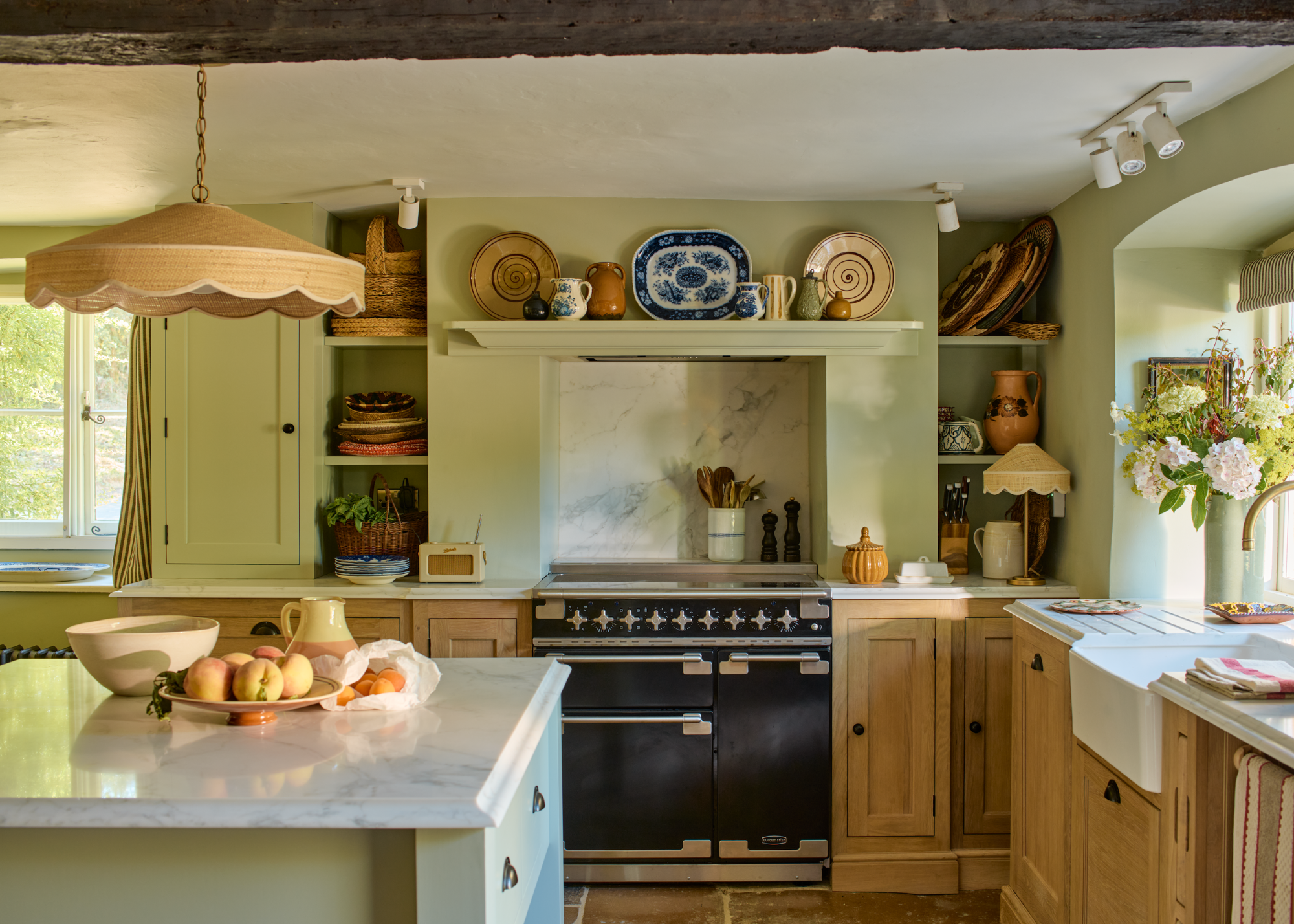
A kitchen can look generous on a plan but still feel awkward if the countertop space is located in the wrong places. People often focus on having a large kitchen island or a beautiful run of cabinetry, but the most valuable countertop is usually the space beside the hob, sink, and fridge, because that is where food is unpacked, prepared, plated, and served.
“A well-designed kitchen should give you space to put down hot pans safely, unload shopping without blocking a walkway, and prep without having to move everything from one side of the room to the other,” says Charlotte.

Keep a slightly raised bowl for decorative things on the countertop to keep them separate from the prep area.
7. What clearance do I need between the island and the wall cabinetry?
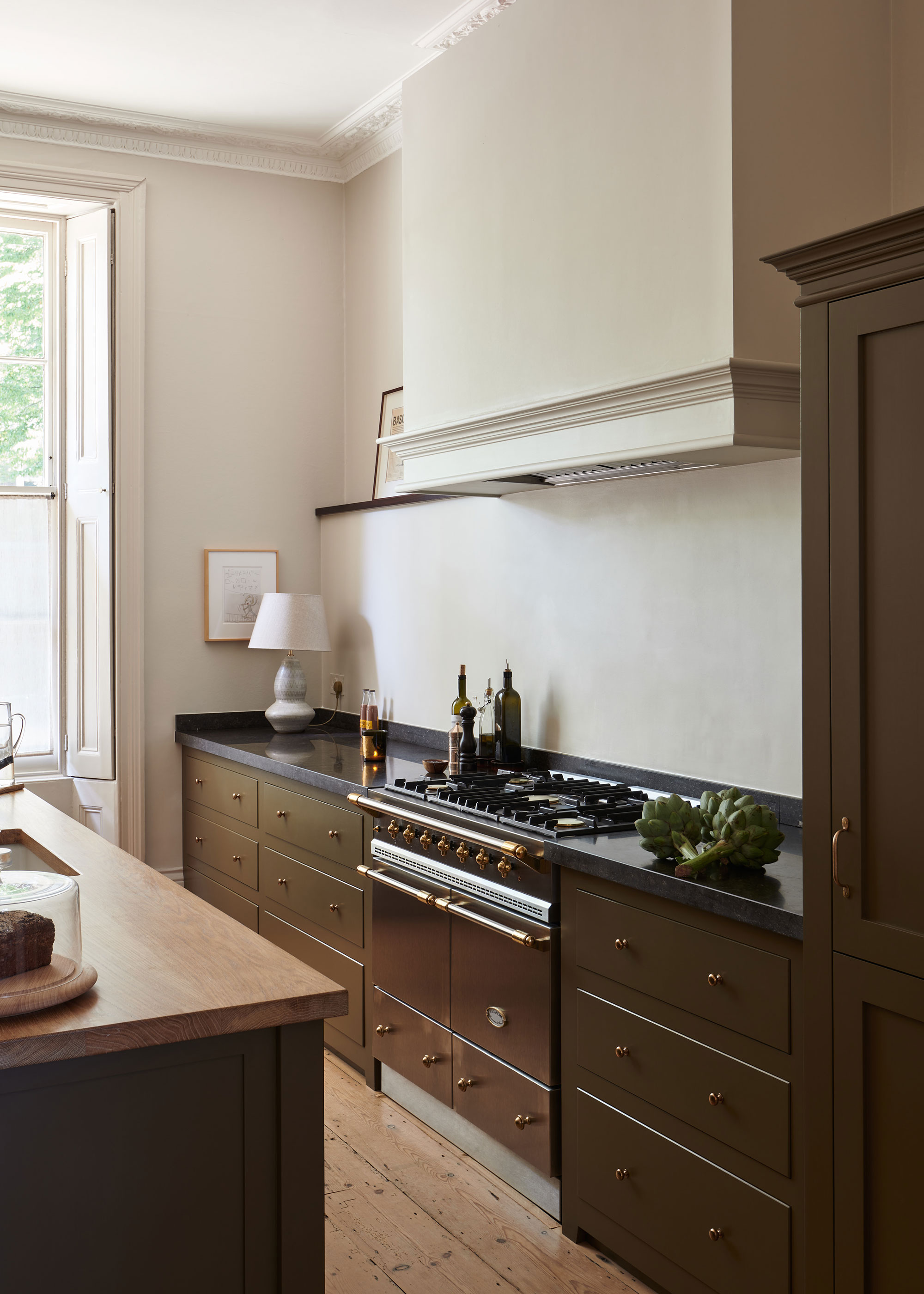
Clearance around an island is one of the details that will determine whether a kitchen is functional. As a guide, Charlotte recommends at least one meter between the island and the surrounding cabinetry, as this allows drawers and doors to open properly while still leaving room to move.
“In busier family kitchens, or where there are appliances such as a dishwasher, oven or fridge opening into the walkway, 1100mm to 1200mm can be more comfortable, particularly if more than one person will regularly be using the kitchen at the same time.”
She also suggests, “It is also worth avoiding the temptation to make the gap too generous, as once you go much beyond this, the island can start to feel disconnected from the rest of the kitchen.” This means the room becomes less efficient to work in and less valuable in general.
8. Where will the dishwasher sit in relation to the sink, bins and crockery storage?

Dishwasher placement has a huge effect on the daily flow of a kitchen. Ideally, it should sit close to the sink for ease of scraping and rinsing, near the bins for clearing plates, and within easy reach of where crockery and glassware are stored, so unloading does not become a walk around the kitchen.
This really is an essential part of the kitchen to consider. Charlotte recommends always asking whether the open dishwasher door will block a walkway or stop someone from reaching the sink.
9. Where will small appliances live when they are not being used?
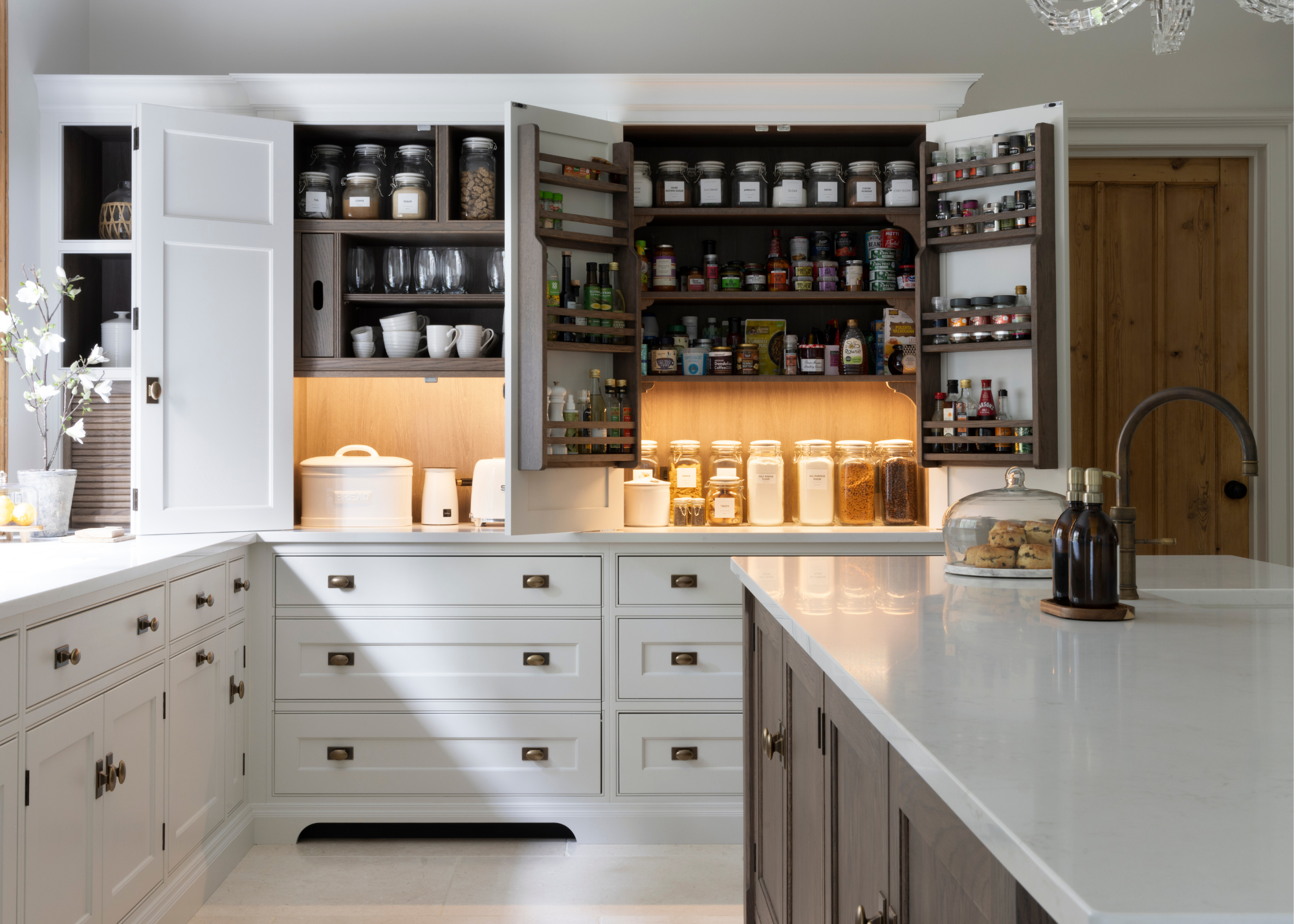
Small appliances are often what make a kitchen feel cluttered, even when the design itself is beautiful. Most of us have more than just a kettle and toaster now, so it is worth being honest about what you use every day — whether that is a coffee machine, air fryer, blender or food processor, and where those pieces are going to live, as they can be rather sizeable machines, some of them.
“A breakfast cupboard or appliance cupboard can be a brilliant way to keep the worktops calmer, but only if it is planned properly, with sockets in the right place and enough space to use things without having to drag everything out. The aim is not to hide everything away for the sake of it, but to make sure the pieces you rely on are easy to reach without taking over the room.”
10. Have I planned enough sockets, and are they in the right places?
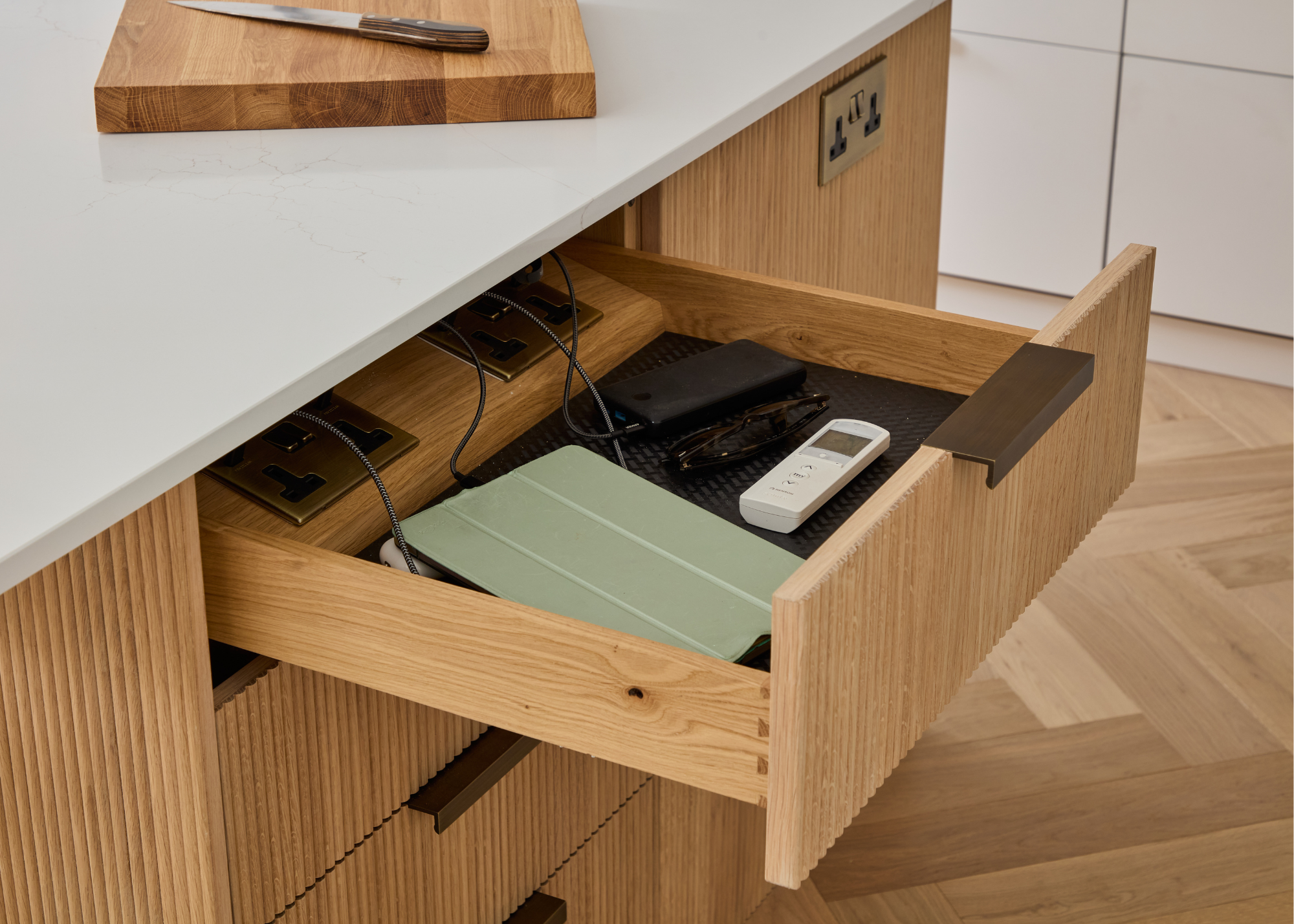
Sockets are one of those details that are easy to underestimate until you are living in the kitchen. It is worth thinking through where you will actually make coffee in the morning, where the toaster will sit, whether you ever work at the island, where phones tend to charge, and which appliances you use often enough to keep out rather than pack away.
We always advise planning sockets alongside the kitchen layout, because once you know where the sink, hob, prep space, and storage are going, it becomes much clearer where power is needed. It may be worth positioning some within drawers for things like phone chargers to keep some wire-free areas for a cleaner look.
Kitchen renovations can be one of the biggest investments you'll make in a home, so the conversation shouldn't stop at colors, countertops, and cabinet styles. The questions above may not be as glamorous as you want your kitchen to be, but they're often the difference between a kitchen that simply looks good and one that genuinely works. Ask them early, and you'll be way ahead of the game, likely to end up with a space that feels effortless to use, no matter how your household lives, cooks, and entertains.
There are also some things to prioritize in your kitchen renovation if you want to add value to your home, according to experts.
For more design ideas for your kitchen and beyond, subscribe to the Livingetc newsletter, and all the latest will be delivered directly to your inbox.