The Wellcome Trust is the second biggest health charity in the world and accepts climate change as one of the greatest, if not the greatest, threats to health this century. It has done extraordinary good in the world with its £18bn endowment, but that fund contains large investments in fossil fuels.
Last month, the Guardian launched a campaign to persuade the highly influential health charity to show leadership on climate change and to divest from fossil fuels. So far the Trust, chaired by a former senior director of oil company BP, has declined to do so.
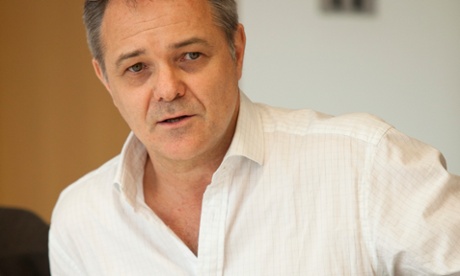
You can read why in this article by Wellcome’s director Jeremy Farrar.
Farrar’s response, and Wellcome’s investment policy, raise a number of questions, which the Guardian put to the Trust. The trust declined to answer them, with a spokeswoman replying: “Our director, Jeremy Farrar, has already explained our position at length in the Guardian. We have no additional comment.” You can read the questions below:
1. Transparency
Farrar said the Wellcome Trust says it is an unusually “transparent” investor.
Question: What is the total value of the Wellcome Trust’s fossil fuel holdings? Can Wellcome name all the fossil fuel companies it is invested in?
2. Engagement
Farrar said the Wellcome Trust practices “active engagement with the companies in which we invest”. He added: “We would not be able to have the frank discussions we require if we published details, but we are confident that our engagement has impact.”
Question: A number of people, including the philanthropist Valerie Rockefeller Wayne (ExxonMobil) and British environmentalist Jonathon Porritt (BP, Shell), have stated recently that engagement does not work. Without giving specific details, can Wellcome outline any examples of successful engagement on climate issues, such as changes of company policy?
3. Selling investments if companies refuse to engage
Farrar said: “We consider individual companies on their merits, including the extent to which they meet their environmental responsibilities, when we decide whether or not to invest or stay invested.” He added: “But when we are not satisfied that a company is engaging with our concerns, we are perfectly prepared to sell.”
Question: Can you give any examples of companies that Wellcome has sold after the company failed to respond to engagement? There cannot be any harm in being transparent about this if Wellcome is no longer invested in the company.
4. ExxonMobil
The Guardian revealed that The Wellcome Trust recently sold a £94m investment in ExxonMobil.
Question: Was this investment sold because of failed engagement and/or a failure of ExxonMobil to meet its environmental responsibilities?
5. Climate-responsible fossil fuel companies
Farrar said: “We do not agree that the strongest contribution the trust can make to a decarbonised economy is a commitment to avoid investing in a list of 200 fossil-fuel companies, compiled according to the size of their reserves rather than the position they take on climate issues.”
Question: Can Wellcome give any examples from those 200 of companies with responsible positions on climate issues, given that all are committed to finding and exploiting more fossil fuels, when we already have several times more than can be safely burned?
6. Fossil fuel company support for carbon pricing
Farrar said: “Some fossil fuel companies – though by no means all of them – are playing important roles in this transition ... Some champion carbon pricing, and already use carbon prices internally in assessing investment projects.”
Question: BP champions carbon pricing, but also funds US climate denier senator Jim Inhofe. Shell uses internal carbon prices, but also funds the US climate denier lobby group Alec. Why are companies that fund climate deniers suitable investments for Wellcome, which requires environmental responsibility?
7. Tar sands
Farrar said: “We have had no [direct coal for energy] investments for many years. The Rockefeller Brothers Fund pledged to reduce its investments in coal and tar sands to less than 1% of its portfolio. Again, [Wellcome’s] investments meet this benchmark.”
Question: This benchmark would allow up to £180m invested in tar sands, the continued exploration of which is considered by scientists to be incompatible with a stable climate. How much does Wellcome have invested in tar sands and in which companies?
8. Clean energy investment
Farrar said: “We also invest in alternative energy technologies, from novel and sustainable biofuels to nuclear fusion.”
Question: How much is invested in these sectors and how does that compare to investments in fossil fuels?
9. Reputational damage
Section 2.1.4 of the Wellcome Trust’s investment policy states: “It will not invest in structures or assets which create ... significant adverse operational, reputational or legal liability.”
Question: Do investments in fossil fuel companies, for example those funding climate change deniers or extracting tar sands, damage Wellcome’s reputation?
10. The “carbon bubble”
Section 5.12 of the Wellcome Trust’s investment policy states: “Scenario tests are used to examine the potential impact of extreme market conditions.”
Question: Has the Wellcome Trust tested its investments against a scenario in which rapid cuts to global carbon emissions are made in order to keep warming below the internationally agreed limit of 2C? This scenario has been dubbed the “carbon bubble” and warnings about the large risk posed have been given by the World Bank, the Bank of England and economist Lord Nicholas Stern.