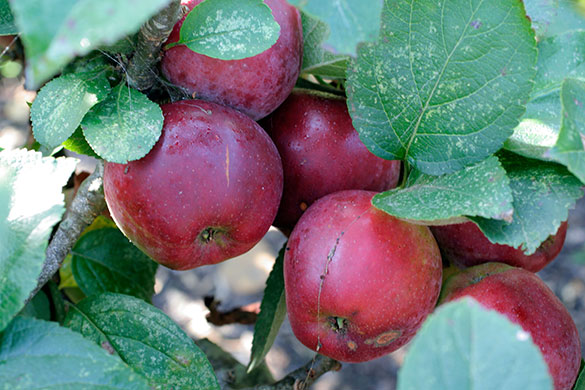
Spartan eating apple
If you want to sneak vitamin C into your children, this is the magic tool. Apples in storybooks look like this: dark red skin that buffs up to startling gloss, and sweet white flesh. It’s less temperamental than its cousins, being pretty resistant to scab and mildew, a reliable cropper and partially self-fertile so you don’t need to plant a partner tree, although you’ll get a better crop if you do. The fruit is best eaten straight from the tree once it is crimson all over as it doesn’t store well, but it’s a good juicer when age has softened it. Harvest between October and January.
Height: 4.5m Photograph: Alamy
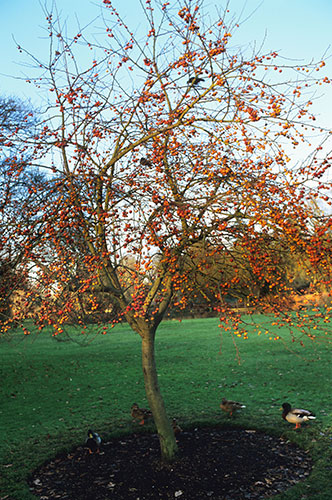
Crab apple tree
It requires powerful self discipline to navigate the menu of crab apple temptations without succumbing to an orchard’s worth. This one is particularly winsome if you only have room for a single tree, because it works so hard all year round. Red buds erupt into a glory of white flowers in April; come autumn, orange-yellow fruits dangle among colourful leaves. The apples, sadly, are inedible, but will nourish local birdlife. It likes sun or partial shade and a moist, well-drained soil.
Height: 7m Photograph: Alamy
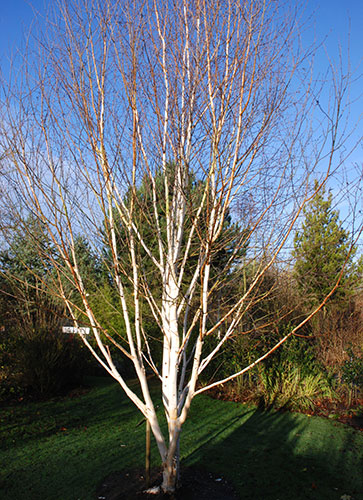
Himalayan birch
The beauty is all in the bark. Trunk and branches are a luminous white, which casts an ethereal glow over the winter garden and provides a striking backbone to the summer one. If you plant red- or orange-stemmed dogwood nearby you are guaranteed sculptural drama throughout the dead season. In autumn, the glossy green leaves turn a useful yellow. It will tolerate most soils and sun or light shade, but you’ll have to wait a couple of years for the wood to reach its full snowy glory.
Height: 5-10m Photograph: www.bluebellnursery.com/www.bluebellnursery.com
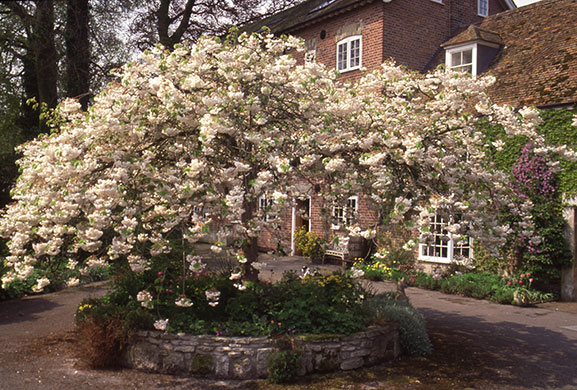
Japanese flowering cherry
Every ornamental cherry tree is lovable in its spring finery, but some, like this one, uplift the garden for an extra season. The long leaves are bronze when they start out, then turn fiery through autumn. The climax comes in May when it is frilly with double pink-and-white flowers. You’ll need a sunny, moist, well-drained spot and beware: aphids and caterpillars may love it as much as you do.
Height: 5m Photograph: Alamy
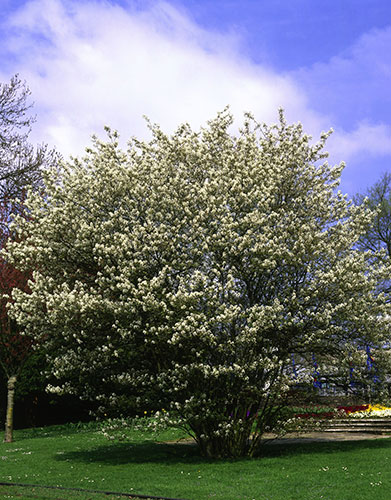
Snowy mespilus
In April the juneberry becomes a cloud of white star-shaped blossom, before producing sweet purple-black fruits that will enrapture blackbirds and can be cooked for human palates. Meanwhile the leaves turn from bronze in spring to green to brilliant red and orange. Even when it is bald in winter it is an asset, providing strong multi-stemmed structure. It will put up with extreme cold and wet, requires very little pruning and is happy in sun or partial shade, but it does insist on lime-free soil.
Height: 10m Photograph: Alamy
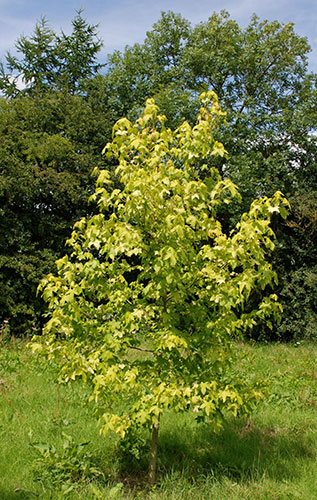
Sweet gum
When the summer borders have keeled over, this sweet gum tree will reignite the garden. All its parts are glorious: the bark is pale and corky, the fruits are quaint gumballs and the leaves are elegantly fingered like Japanese maples. In spring the leaves are a pretty creamy yellow, darkening to green, then in autumn they blaze purple, yellow and red. Full sun coaxes the best colour and it needs acidic or neutral soil. This is the most compact of the range and pruning will keep it to a suitable size.
Height: 10m Photograph: www.bluebellnursery.com
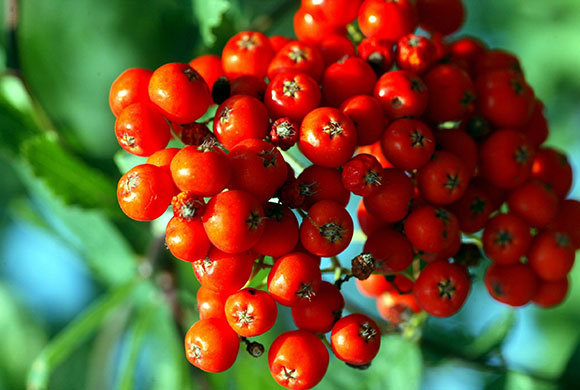
Mountain ash
Here’s one for a narrow backyard, for this slow-growing rowan forms an elegant column. It’s a tireless performer, producing clusters of white flowers in late spring, dark red berries in June and fiery autumn leaves. It would make a good focal feature in a town garden because of its tidy shape and its tolerance of pollution. It will also weather extremes of heat and cold and the odd drought.
Height: 8m Photograph: Lehtikuva OY/Rex Features
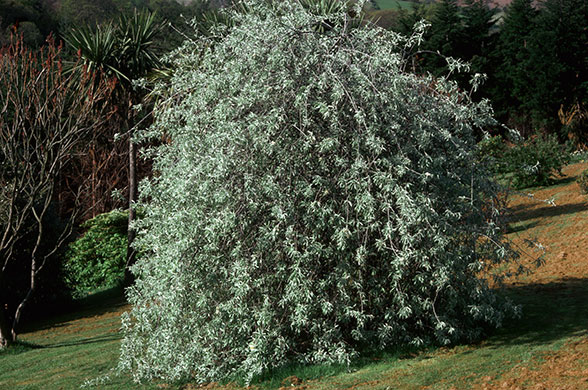
Weeping pear
This is an ornamental pear that will weep willow-like and compactly over a small lawn. You would never want to eat the fruit, but its looks alone should nourish you. Grey-felted leaves droop gracefully all summer, leaving you with a strong architectural shape in the winter. In spring it erupts into dense clusters of creamy white flowers. Despite its dainty appearance it is a toughie. Provided it gets full sun it will put up with any well-drained soil, it is content in an exposed site and is resistant to drought and cold.
Height: 5m Photograph: Patrick Johns/ Patrick Johns/CORBIS
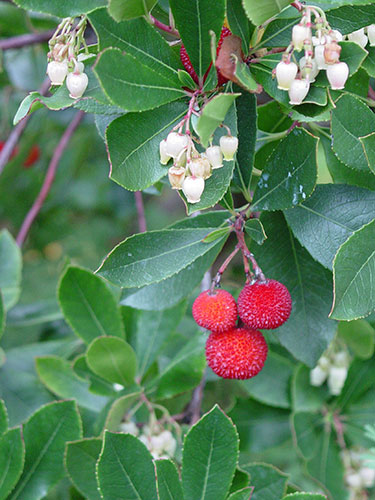
Strawberry tree
An evergreen statement is essential to carry the garden through winter. The strawberry tree works equally effectively in the shrub border or, if you trim off side branches from the main trunk, as a standalone specimen. Its ruddy-coloured, shredding bark and leathery leaves are, by themselves, appealing, but autumn brings white flowers, followed months later by bizarre, round fruits that ripen from yellow to red. You can eat them – the Portuguese distill them into a killer brandy – but they’re not worth the effort. It needs a sunny site sheltered from cold winds.
Height: 8m Photograph: Alamy
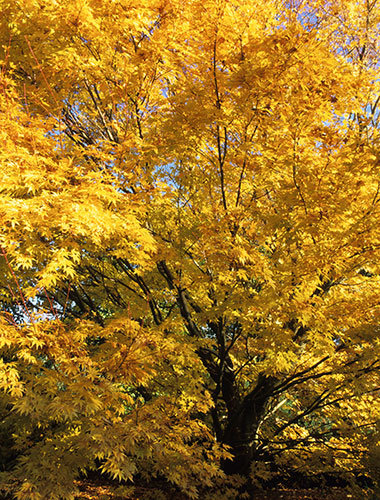
Coral bark Japanese maple
Other japanese maples might blaze with more bombast during autumn but this one has a few extra virtues. Its winter nudity is glorified by the coral red of its young branches. Pinkish green leaves will coordinate prettily with your spring bulbs before they darken to a rich green backdrop for summer borders. Then in autumn the whole tree turns butter yellow, providing a nice foil for any showier reds and oranges nearby. It copes with most kinds of soil in partial shade and won’t mind a drought.
Height: 6m Photograph: Alamy