Earlier this week, Radio 3 were celebrating youth with Young Artists Day. As a counterbalance to all the preternatural prodigiousness, let us not forget that it’s not only the whippersnappers who have a monopoly of creative energy, adventure, and sheer boldness. So here are 10 composers and performers who have all kept working through their 80th year (a fine but necessary distinction – you know who I am, Joe Green…) and beyond, producing masterpieces and masterly performances that inspired and continued to inspire audiences of any age.
Five composers
Heinrich Schütz The great German composer’s Swansong was published in 1671, when the composer was 86. The 13 motets of this astonishing work are made of an 11-movement setting of Psalm 119, then Psalm 100, and the German Magnificat. It’s music of awesome grandeur, with a haunting, lyrical austerity that is the summit of a lifetime’s musical devotion.
Elliott Carter Carter’s creativity in his 80s, 90s, and the first years of his second century, before his death in 2012, is I think the most extraordianry in artistic history. Carter created his own kind of energising classicism in the music he wrote in his last decades; it’s thrillingly diverse in its achievement from orchestral works to an opera, from chamber pieces to concertos, but it all shares a life-enhancing spark of inextinguishable, unsentimental energy.
Milton Babbitt But Babbitt, who died at a comparatively young 94 in 2011, ran Carter close for sheer unstoppable productivity, with a catalogue of pieces composed in his 80s and 90s, including a piece called Swan Song from 2003 – an ironic title, given that Babbitt followed it with scintillating music like the Concerti for Orchestra, written for James Levine and the Boston Symphony, the next year.
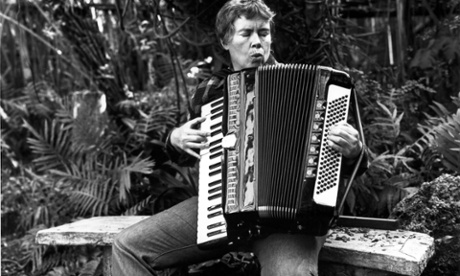
Pauline Oliveros Composer, performer, improviser, inspiration: Oliveros’s life-work as one of the most visionary musicians anywhere in the world still goes on now that she is well into her 80s.
Giuseppe Verdi OK, so Verdi’s final masterpiece, Falstaff, was premiered when Verdi was still 79, but Falstaff belongs in the venerable company of the composers above because his opera is arguably the towering testament to what can only be achieved after decades of compositional labour: the creation of a new style, a new kind of operatic synthesis, and the most dazzling, fleet-footed youthfully-energetic-yet-magnanimously-wise operatic comedy ever written.
... and five performers
Arthur Rubinstein: Rubinstein’s pianistic powers did not leave him in his ninth decade: witness this performance of Brahms’s First Piano Concerto with Bernard Haitink and the Concertgebouw Orchestra. At the age of 86.
Ida Haendel: violinist and teacher, Ida Haendel is still going strong in her mid-80s; a violinist who can legitimately say that Jean Sibelius gave her his imprimatur. After hearing her recording of his concerto, he wrote: “I congratulate you on the great success, but most of all I congratulate myself, that my concerto has found an interpreter of your rare standard”. Here she is in action leading a masterclass as an 84 year-old at the Royal College of Music.
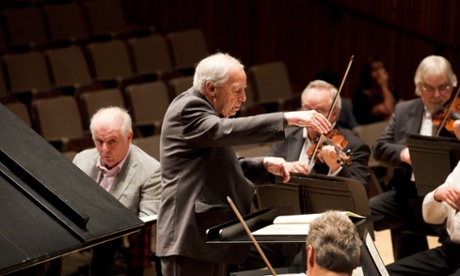
Pierre Boulez: he turned 90 at the end of March, but Boulez’s 80s were a time in which he refused to rest on his laurels, creating and leading a new course for young musicians from all over the world to proselytise the music of the 20th and 21st centuries at the Lucerne Festival Academy. His advocacy as a conductor and his brilliance as a composer make him a unique phenomenon in contemporary musical culture, arguably the most essential presence of post-war musical culture.
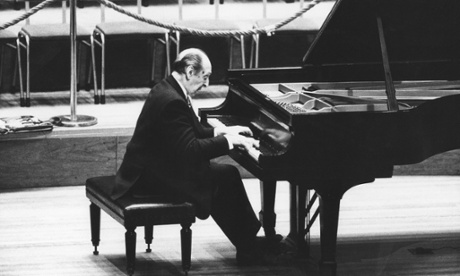
Vladimir Horowitz: here is all the evidence you need for what’s possible when you turn 84: this concert from the Musikverein in Vienna in 1987, with Mozart, Schubert, Schumann, Liszt, Chopin and Moskowski – a programme that wouldn’t be bad going for a pianist half – or even a third! – his age.
Herbert Blomstedt: the Swedish conductor is probably the youngest-looking 88 year-old in conductorial history; he brings a combination of directness and fearless honesty to his music-making that seems to become more refreshing and revitalising the older he gets. I remember a performance of Bruckner’s 9th Symphony at the Proms in 2010 with the Gustav Mahler Jugendorchester that was one of the most bold and revelatory I’ve ever heard.