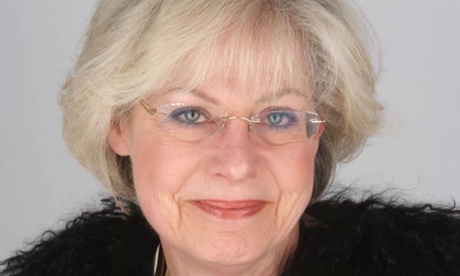
Lynne Sanders is the co-founder and CEO of makeup company, A La Carte London. She tells us about how work has changed in the last 40 years and why she believes that post-menopause is the best time for a career reinvention.
Tell us a bit about the business and how it came to be.
I took chemistry A-level because the teacher was brilliant. I loved it because you were making things, but I grew up in a time when it was felt that women shouldn’t be “overeducated” and there was no money to send me to university. At 18 I left school and went to work for Unilever, in research and development for their haircare brands.
While there I met my former business partner and together we decided to set up our own makeup business. Makeup can be a very uncreative industry: marketing departments set the colours they want based on what your rival is producing. We wanted to make our own colours, to be more inventive and experimental so we borrowed all the money we could and set up our own independent cosmetics company, A La Carte London. We had a shop at the front and a laboratory in the back, we’d create a lipstick for a customer in front of them.
That was over 40 years ago. Then five years ago my business partner decided she wanted to retire and I was faced with the decision of either selling the business or running it myself.
Why did you decide to stay with the business?
We had run it for over 40 years and I liked the lifestyle. In that time I’d got married, had a daughter, looked after my parents but when my daughter went to university, I realised I really wanted to do more with it. It needed recharging. I was just coming up to 60 and was about to get my pension. I thought, I’ve got two choices: either I fold it and go off and travel the world, or I put some money into it and resuscitate it.
I had to prove to the bank that I could run it on my own and I surprised myself. I’d always thought of myself as the backroom girl, the one who made everything but I didn’t deal with the daily running of the business. Luckily the bank were supportive, I actually had the most difficulty with our accountants who couldn’t believe I could run the business on my own.
We are launching A La Carte London in Fortnum & Mason next week and I actually now have a new partner coming into the business, he’s the CEO of a brand management company.
How have you changed since you launched the business?
I’ve got older, so my emphasis is less on wild colours and more on trying to create cheekbones that I don’t have. Although that’s coming back into fashion, I saw the Kim Kardashian contouring video on YouTube. Also, there are new uses for our products. The original concept was always about makeup that didn’t look like makeup so now we’re in demand from film companies coming to use us for HD television because the makeup is invisible.
Do you feel more confident with age?
I did get more confident as I got older, but I think that’s true for all of us. What I’d never done was practise taking responsibility: I didn’t think I was that sort of person. Now I’m starting to realise that I’m good at organising; I’m good at strategy; I’m good at seeing the problems before they arise. I don’t mind getting things wrong or being criticised because I think there are always lots of ways of doing things, so there isn’t really a right or wrong.
The other thing that’s really good for confidence is the menopause. Okay, you end up with hairs in the wrong place but you can deal with that. It doesn’t stop you wanting to be a woman but suddenly you don’t have to deal with your hormones, it’s such a relief. People treat you differently too. Older men of my generation can still be a bit daunted by me, because I am a bit in their face but younger men have no problem with me. There’s no sexual competition there, it’s just two people having a conversation and a laugh. That’s a real positive from getting older.
Older women can often feel as though they are written off at work, what advice would you give them?
Don’t let them write you off! Brands have to redefine themselves all the time, so do the same for yourself. I am desperate for older women to come back into my business: just employing twenty-somethings doesn’t work, not least because the people who work the hardest are the female returners. Other businesses need to latch onto this. It is changing but very, very slowly.
Younger men do seem more open to helping but it’s still difficult when children come along, as one of you always ends up taking responsibility for the home. I do think, though, that women need to earn their own money to have a sense of independence.
What advice would you give older women wanting to boost their careers?
It’s very easy to get stuck in a rut and miss things. Life is about the things happening around you that might not be exactly what you’re looking for. Take an interest in them, think about how they could apply to you and then grab at the opportunity even if it isn’t exactly where you thought you were headed. And look after yourself. It can feel self-indulgent but it’s so important.