The idea of the "best" country to live in rarely comes down to a single factor. A place with strong wages may struggle with housing costs. A country known for safety might offer fewer economic opportunities than a larger neighbour. Climate, healthcare, education, public services, social trust, and simple day-to-day comfort all shape how people experience where they live.
That is partly why annual happiness rankings attract so much attention. They do not focus solely on wealth or economic output. Instead, they attempt to capture a broader picture of life as it is actually lived. The latest World Happiness rankings place a familiar group of countries near the top, though the list is not limited to Europe's wealthiest states. The countries that performed best in 2025 offer different lifestyles and histories, yet they share certain characteristics that continue to support a high quality of life.Strong social connections, trust in institutions, access to essential services and a sense of personal wellbeing all contribute to their success. Together, these factors help explain why some nations consistently rank among the happiest places in the world.
Get breaking news anytime, anywhere. Download the TOI app now!
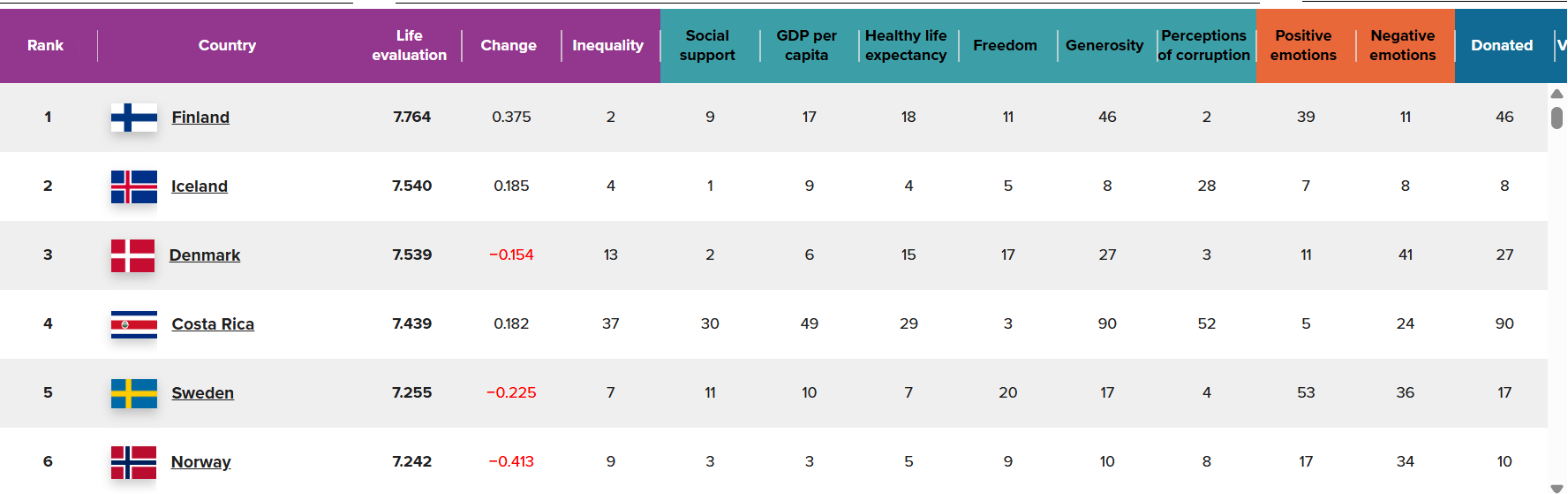
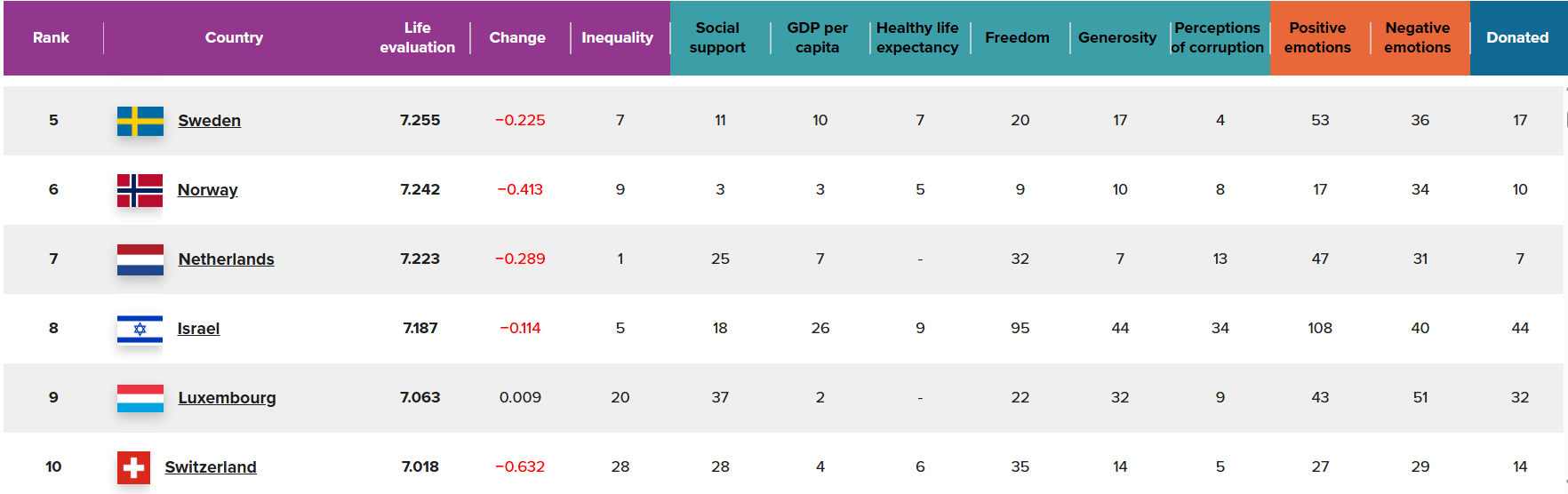
According to the World Happiness Report, check the list of the happiest countries in the world.
Source: World Happiness Report 2025
World's 10 happiest countries to live in
1. Finland
Finland remains at the top of the ranking, continuing a run that has now stretched across several years. The country combines modern public services with a landscape that still feels closely connected to nature. Forests cover much of the land, while lakes shape both recreation and local identity. Even in Helsinki, access to green space is part of ordinary life rather than a luxury.
Public institutions generally enjoy a high degree of trust. Education performs strongly by international standards, and healthcare is widely accessible. Daily life tends to be orderly without feeling overly rigid, which may help explain why Finland repeatedly appears near the top of wellbeing surveys.
2. Iceland
Few countries combine dramatic geography with modern living in quite the same way as Iceland. Volcanoes, glaciers and geothermal landscapes dominate images of the country, yet everyday life is shaped more by strong public institutions and a relatively close-knit society. The population remains small, creating a social environment that differs noticeably from larger European nations.
Renewable energy plays an unusually large role in national life. Combined with low crime rates and broad access to healthcare, it contributes to living conditions that continue to place Iceland among the world's highest-ranked countries.
3. Denmark
Denmark follows closely behind, supported by a society where trust remains a defining feature. People often point to the country's balance between work and personal life. Long hours are not typically celebrated, and leisure time is treated as an important part of wellbeing rather than something secondary to employment.
Copenhagen receives much of the international attention, though the qualities associated with Danish life extend well beyond the capital. Reliable public services, extensive cycling infrastructure and strong local communities are found across much of the country.
4. Costa Rica
Costa Rica's presence in the top ten stands out because it reaches this position without matching the wealth levels of many other countries on the list.
The country's reputation has grown around different strengths. Environmental protection forms a significant part of national policy, and large areas of forest and coastline remain protected. Access to nature is not limited to remote regions but influences everyday life across much of the country.
Community ties also remain important. Many assessments of well-being suggest that social relationships continue to play a major role in how residents view their quality of life.
5. Sweden
Sweden's position near the top of the table reflects strengths that have developed over decades rather than years. Public services are deeply established, and social policies often place considerable emphasis on family life, healthcare and education. Workers benefit from protections that many countries still debate.
The country has also built a reputation for blending innovation with social stability. Large global companies sit alongside extensive welfare programmes, creating a model that remains distinctive within Europe.
6. Norway
Norway's economic success is often linked to its natural resources, though that explanation tells only part of the story.
Revenue generated over decades has helped support extensive public services and a strong social safety net. Healthcare, education and infrastructure consistently perform well by international standards.
Life in Norway is also shaped by geography. Mountains, fjords and long stretches of coastline remain central to the national identity. Outdoor recreation occupies a larger place in daily culture than in many comparable countries.
7. Netherlands
The Netherlands occupies a relatively small area, yet it consistently ranks among the most desirable places to live.
Its cities are known for practicality. Public transport is extensive, cycling is woven into daily routines and urban spaces are designed to remain accessible despite high population density.
There is also a strong international dimension to Dutch society. Trade, education and business have long connected the country to the wider world, helping create communities that often feel outward-looking and adaptable.
8. Israel
Israel ranks eighth in the latest standings, reflecting a combination of economic development and strong social networks.
The country has become a major centre for technology and innovation, particularly in sectors linked to research, engineering and digital services. This has contributed to a dynamic economy despite the challenges associated with the region.
At the same time, family and community relationships remain highly significant in everyday life. Those social connections often appear as an important factor in measures of well-being and life satisfaction.
9. Luxembourg
Luxembourg is among Europe's smallest countries, yet it continues to achieve some of the highest living standards on the continent.
Its economy is highly developed and internationally connected. Cross-border movement is a normal part of daily life, with many people commuting from neighbouring countries. The country also benefits from efficient public services and relatively high incomes. Despite its financial importance, Luxembourg often feels more relaxed than larger urban centres elsewhere in Europe.
10. Switzerland
Switzerland rounds out the top ten, reflecting the country's long-standing reputation for stability, prosperity and high living standards. It performs particularly well in economic measures, ranking fourth for GDP per capita and sixth for healthy life expectancy, indicating both strong financial security and favourable health outcomes.
The country is also viewed positively for its low levels of perceived corruption, placing fifth in that category. Efficient public services, political stability and a highly developed economy have helped build trust in institutions and support a strong quality of life.