

Heads up, skywatchers! There's just one month to go until the annular solar eclipse of 2026.
At 4:56 a.m. EST (0956 GMT) on Feb. 17, the moon will begin to turn the sun into an impressive "ring of fire" during an annular solar eclipse. Maximum eclipse, whereby the largest proportion of the sun is covered, will occur at 7:12 a.m. EST (1212 GMT)
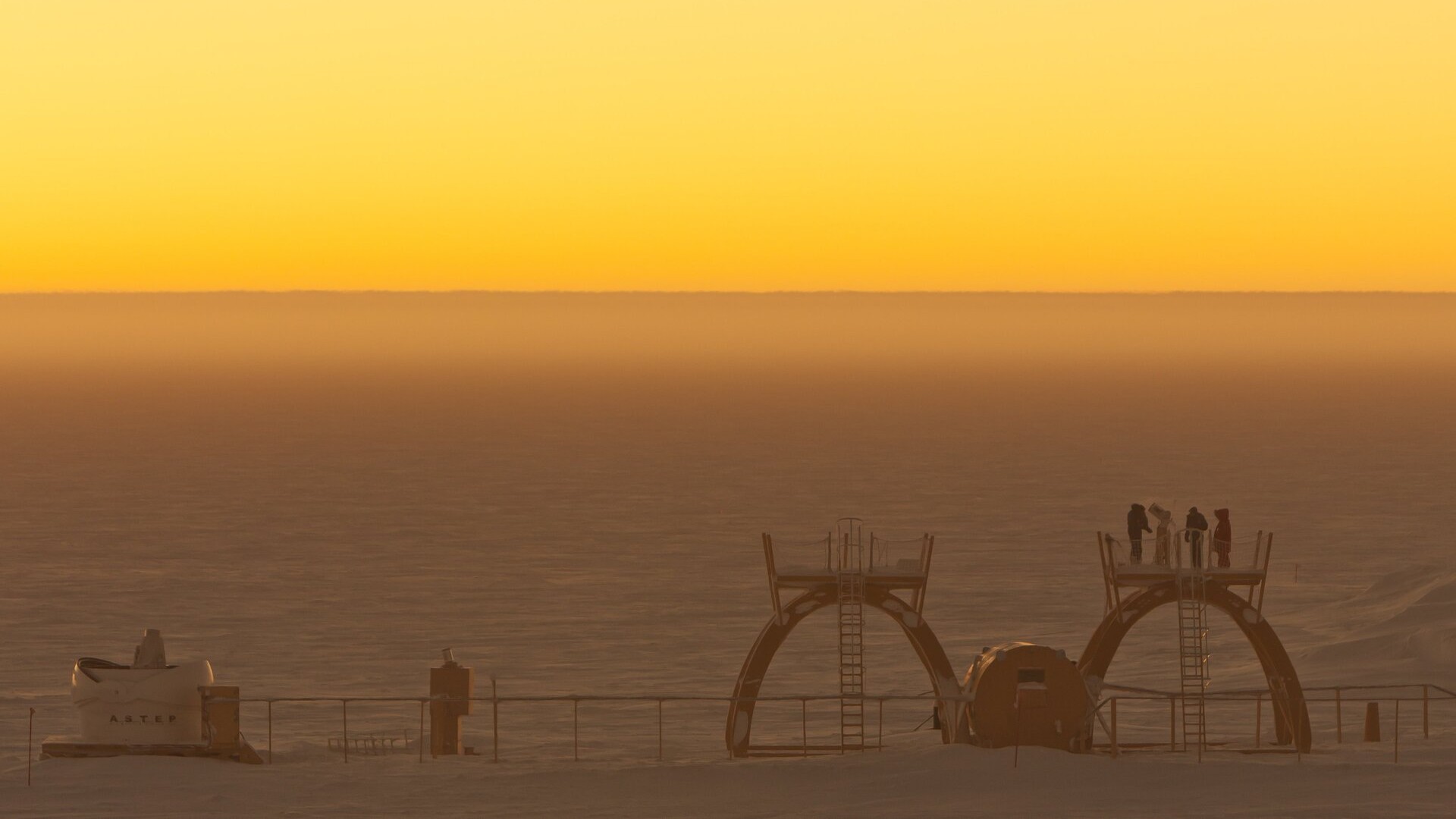
The striking phenomenon will be visible only to those watching from within the path of annularity, a 2,661-mile-long and 383-mile-wide (4,282 by 616 kilometers) route where the moon will cover about 96% of the sun's disk. Few will witness this eclipse, as the annular stage will only be visible from a remote region of Antarctica.
Viewers across the rest of Antarctica, along with parts of southern Africa and the southernmost regions of South America, will be treated to a partial solar eclipse. The rest of us will be able to follow the event online: official livestream details have not yet been released, but we'll share them as soon as they become available. You can also track the event as it happens via our solar eclipse live blog.
Solar eclipses happen at new moon, when the moon lines up perfectly between Earth and the sun, casting its shadow onto our planet. In a total solar eclipse, the moon is close enough to Earth that it appears the same size as — or slightly larger than — the sun, allowing it to fully cover the sun's disk and briefly turn day into night.
An annular eclipse, by contrast, occurs when the moon is farther from Earth in its slightly elliptical orbit and looks a little smaller than the sun. Instead of blocking the sun completely, it leaves a bright ring of sunlight encircling the moon — the striking "ring of fire" effect.
Where and when can I see the Feb. 17, 2026 annular solar eclipse?
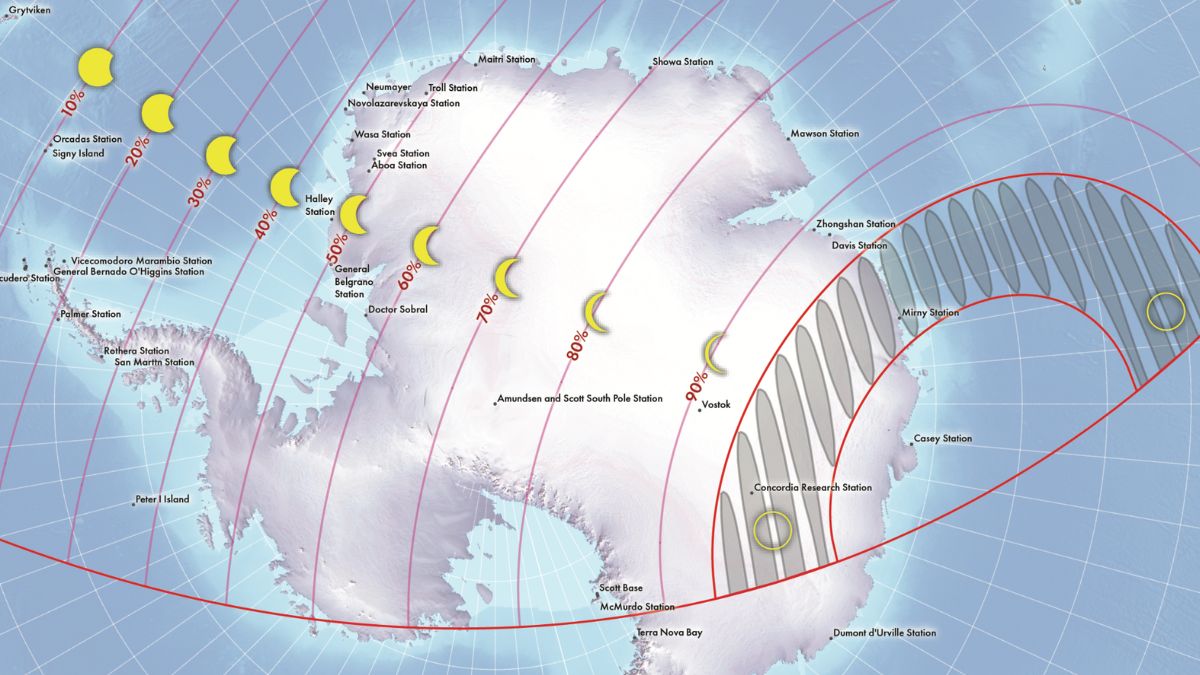
Here are the very limited places the ring of fire may be seen during the annular solar eclipse on Feb. 17, 2026:
Location: Concordia Research Station (French-Italian)
Annularity duration: 2 minutes, 1 second
Time: 11:46 GMT
Sun height: 5 degrees above 241 degrees azimuth
Location: Mirny Station, Queen Mary Land, Antarctica (Russia)
Annularity duration: 1 minute, 52 seconds
Time: 12:07 GMT
Sun height: 10 degrees above west 264 degrees azimuth