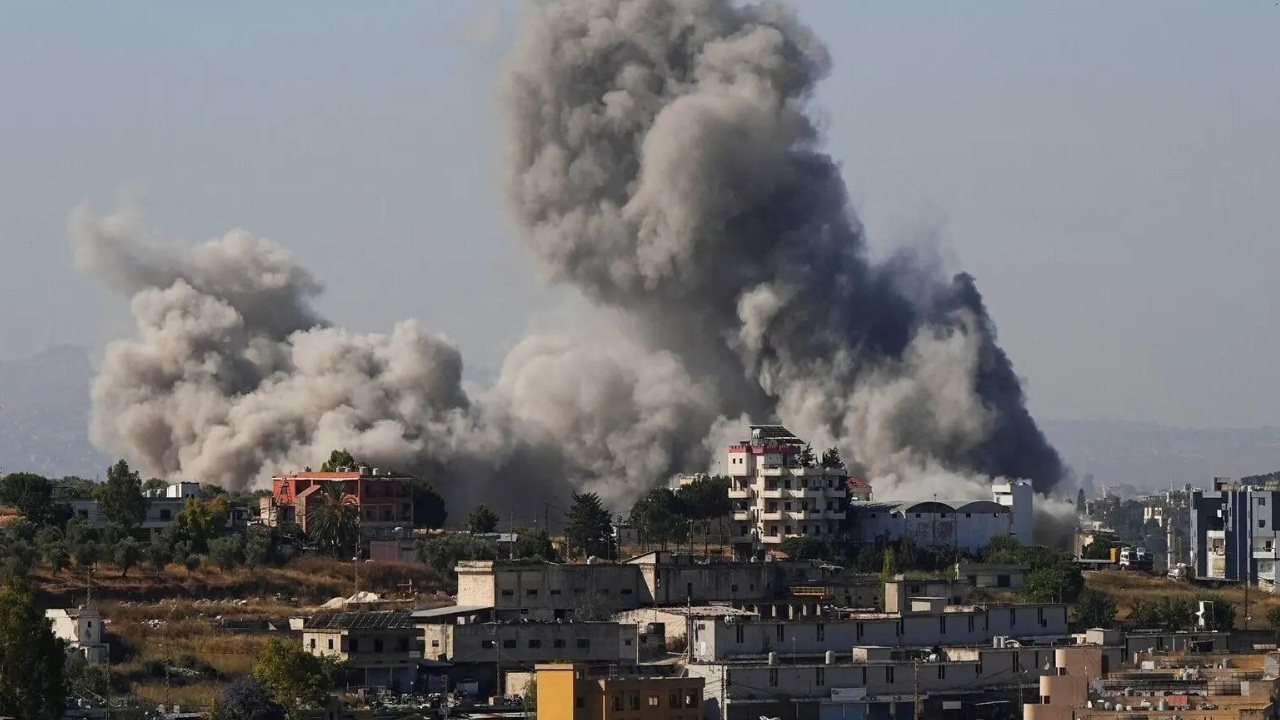
Israel identified around 1,000 potential targets each day during the first two years of the wars in Gaza and Lebanon using its command-and-control system, according to a presentation by the country's largest arms supplier, Elbit Systems.
Get breaking news anytime, anywhere. Download the TOI app now!
The company said its Tzayad digital army programme detected 850,000 targets in real time across all Israeli military theatres between October 7, 2023, and the end of 2025.
The figures represent the number of people, vehicles and other objects detected in real time for possible strikes from land, sea or air during Israel's military operations over the past three years.
The figure of 850,000 was presented last week at a land warfare conference organised by the Royal United Services Institute by Miki Edelstein, an Israel Defense Forces reservist major general and executive vice-president of Elbit Systems, as cited by The Guardian.
Britain's Air Chief Marshal Sir Johnny Stringer, Nato's second most senior military commander, shared the panel with Edelstein. A brigadier from the British Army also spoke at the session.
Describing the targets, Edelstein said they included "an enemy that we are not aware of before" that "pops up" from underground or through manoeuvres. He said the objective was to "hit it accurately," but added that there was "not enough ammunition" to strike every target immediately.
Bryant said Gaza had a population of 2.2 million people and around 300,000 buildings before October 2023, adding that the figures suggest the Israel Defense Forces may have, at one point or another, targeted "up to or over half the entire population and infrastructure" of the territory.
Bryant said it was impossible for soldiers in any military to adequately assess every piece of information at the volumes indicated to determine whether a threat was genuine and whether a target was lawful.
“I will say, definitively, that there is no way each and every one of the 1,000 targets a day – let alone 850,000 targets in aggregate – are thoroughly and effectively characterised in terms of collateral damage analysis and assessed risk to civilian populations. Even characterising 50 a day is hard enough (but possible),” the former US military officer was quoted as saying by The Guardian.
An Elbit Systems spokesperson denied that the figure of 850,000 cited by Edelstein referred to targets, despite the presentation slide stating otherwise. The spokesperson said the figure reflected "aggregated system activity and operational data generated through the IDF's digital army program across all operational theaters since October 7, 2023."
The spokesperson added that the figure demonstrated the volume of information processed by the Israeli military, saying, "the figures represent system activity and operational data, rather than the number of enemy targets or actual strikes."
Edelstein said the Elbit-operated digital army programme reduced the time required to coordinate external fire support, from "40 to 50 minutes to one to seven minutes", for attacks on targets confirmed by the Israel Defense Forces using artillery, warships or fighter jets.
A separate line on the presentation slide, which Edelstein did not specifically address, stated that there had been more than 46,000 "joint strikes and closing fire on real-time intel," averaging just over 50 a day.
Edelstein said a "man in the loop" made the final decision on whether fire support missions proceeded because it was "the right thing to do."
A United Nations inquiry has found that Israel is committing genocide in Gaza, an allegation Israel is contesting in international courts.
According to the World Health Organization, 71,269 Palestinians had been killed in Gaza by the end of 2025, covering the period referenced by Edelstein. More than half of those killed were children, women and elderly people.
In Lebanon, 3,961 people were killed during the 2024 war, according to the country's Ministry of Public Health. About a quarter of the dead were women and children. The 2026 conflict falls outside the period cited by Edelstein.