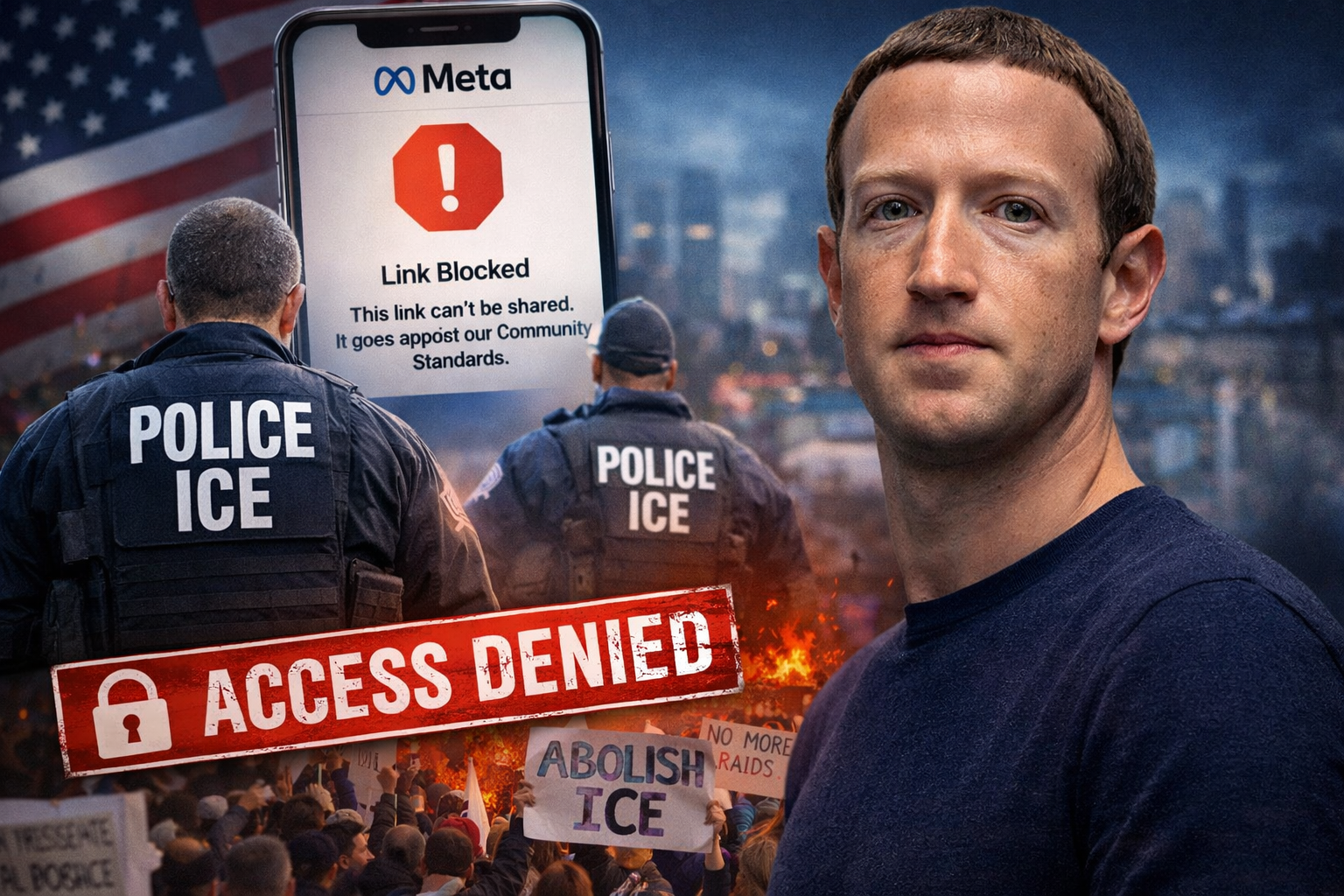
Mark Zuckerberg and Meta find themselves at the centre of a growing controversy after the company began blocking links to a website that compiles information on Immigration and Customs Enforcement (ICE) and Department of Homeland Security agents across its flagship platforms: Facebook, Instagram and Threads. The move comes amid mounting public anger over recent federal law enforcement actions, especially in Minneapolis, where two civilians were killed by immigration agents in January, sparking national outrage and protests.
Reports highlight that Meta’s platforms have restricted users from sharing links to the so-called “ICE List”, a site intended to document names and roles of ICE and Border Patrol employees. Previously, these links could be posted freely on Facebook and Instagram without moderation. Meta cited its community standards, particularly those around privacy and personally identifiable information, as the reason for the blocks, even though the data was largely compiled from public sources like LinkedIn.
What is the ‘ICE List’ and why does it matter?
The ICE List website was created to hold US immigration enforcement agents accountable by publishing details about employees of agencies such as ICE and Border Patrol. Its creators said they intended the tool as a form of public oversight, especially in the context of controversial enforcement actions nationwide. Activists argued that the list helped communities track and respond to federal enforcement activities.
When they find out Mark Zuckerberg meta glasses are being utilized by ice the protesters are going to go crazy 😆 pic.twitter.com/3P8MCX2ke7— Roxann Reyes FB (@GirlPatriot4) January 27, 2026
However, critics, including Meta itself, contend that sharing such information on a major social platform runs afoul of privacy and safety policies aimed at protecting individuals from doxxing and coordinated harassment. By blocking links to the site, Meta appears to be prioritising user privacy and platform rules over unfettered political expression.
Meta faces backlash and debate across the web
Meta’s decision has provoked strong reactions across social media and tech circles. On Reddit and other platforms, users have expressed frustration and distrust, with some viewing the move as another example of big tech exerting control over public discourse. One thread on r/Fauxmoi drew thousands of upvotes as users declared “F*** Zuck” and called for alternatives to centralized social media, arguing that platforms like Facebook and Instagram shouldn’t have the power to “control the Internet.”
Meanwhile, other observers have raised concerns that blocking ICE List links could shield federal agents from public accountability at a moment of intense scrutiny over enforcement practices. Some commentators argue that by restricting access to such directories, Meta may inadvertently be protecting controversial actors from visibility at a time when protesters and journalists are seeking transparency.
The broader context: ICE, Minneapolis and tech industry pressure
The backlash against Meta’s actions does not exist in a vacuum. It forms part of a broader national conversation about how technology companies manage politically sensitive content, especially in the wake of the twin fatalities in Minneapolis linked to ICE and Border Patrol operations earlier this month. Critics of the federal response have highlighted the deaths of civilians as evidence of excessive force, triggering condemnation from political leaders, celebrities and corporate voices alike.
At the same time, some tech executives and employees from companies like Google, OpenAI and Apple have publicly criticised ICE’s tactics and called for de-escalation and policy reform. According to reports, more than 60 CEOs and hundreds of tech employees signed a letter urging the government to pull back federal enforcement operations from cities and to reconsider contracts with immigration enforcement agencies, a signal that the tech sector’s stance on immigration enforcement is shifting toward accountability and restraint.
Meta’s balancing act: Safety rules vs free expression
Meta says its decision is rooted in standard policy enforcement, specifically, limits on sharing personally identifiable information that could lead to targeted harassment, abuse or safety risks. In blocking ICE List links, the company cited its rules against doxxing and coordinated harmful actions by users.
Supporters of the move note that unrestricted doxxing of government agents, even when intended as “accountability”, can quickly devolve into harassment or threats against individuals and their families. Advocates for strong moderation argue that social media platforms must be vigilant in preventing their systems from being used to foment real-world harm or vigilante activity.
However, detractors counter that Meta’s enforcement may be overly broad or politically motivated, particularly in a moment of public dissent against immigration enforcement actions. Some activists contend that platforms should differentiate between harmful doxxing and legitimate journalistic or civic oversight, especially when tied to questions of government transparency and the use of state violence.
What comes next: Legal, social and platform impacts
Meta’s move could have far-reaching implications. Regulators and public advocates may intensify examination of how platforms enforce privacy rules versus political expression rights online. Decisions that influence what content is permissible around hot-button political issues can affect user trust in tech platforms as impartial spaces for discourse.
If pressure increases from federal authorities or civil liberties groups, Meta may be drawn into legal debates over free speech, privacy rights and platform responsibilities. As the controversy over immigration enforcement and policing continues to unfold, Meta’s actions reflect the increasingly difficult position tech companies occupy: mediating between public safety rules, political activism, and the demand for transparency and accountability online.
Zuckerberg’s Meta is being criticised both for blocking access to information about ICE agents, a move framed as privacy protection and for helping stifle public discourse during a moment of intense national debate over law enforcement’s use of force. The unfolding situation highlights the ongoing struggle over how powerful social platforms shape political narratives and public awareness.