The meeting at Downing Street between Volodymyr Zelensky and the leaders of his country’s principal allies in Europe is designed to demonstrate, both to Mr Zelensky and the wider world, that the Ukrainian people are not alone in their struggle for freedom. Specifically, it is a reminder to the Americans and the Russians that there can be no lasting peace settlement without the freely given consent of Ukraine.
The prime minister, Sir Keir Starmer, is joint leader of the “coalition of the willing” with President Macron, Europe’s pre-eminent military and nuclear powers, while the chancellor of Germany, Friedrich Merz, is at the helm of its largest economy, and one that remains a formidable industrial player.
The triumvirate represents a potentially powerful alliance, and all the more so with other staunch European friends, from Ireland to Finland. Together they should reassure Mr Zelensky that he need not capitulate to Russian and American pressure if he feels any deal they try to foist on him is unacceptable. He will be asked to trust his fellow Europeans – but they must stand by him unconditionally.
President Zelensky was right to say out loud, on his journey to London: “There is one question I – and all Ukrainians – want to get an answer to, if Russia again starts the war, what will our partners do?”
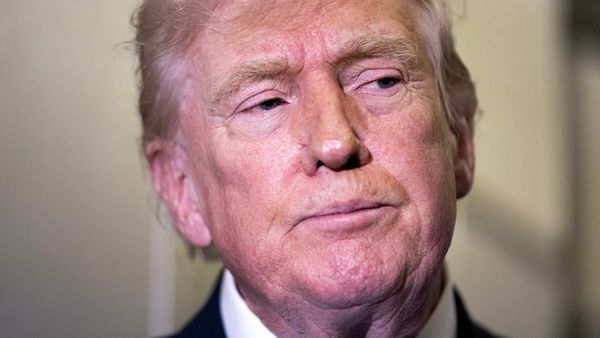
This summit is especially important given that President Trump has remarked, with that edge of frustration that Mr Zelensky seems so often to draw out of his American counterpart, that he’s “a little disappointed” that the Ukrainian leader hasn’t yet read the peace plan that Washington has constructed.
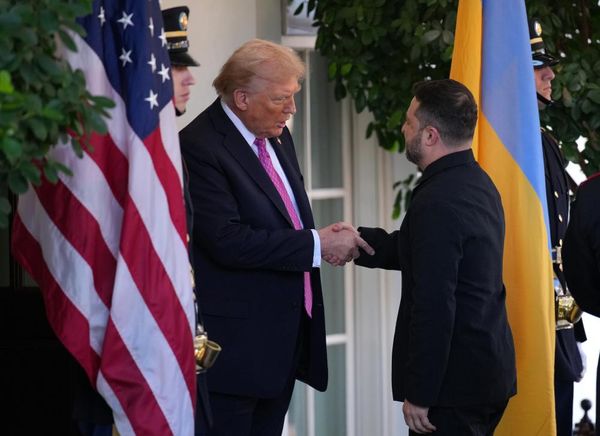
This seems unlikely, and may surely be based on a misunderstanding of what President Zelensky said about awaiting a briefing from his negotiating team. It also says a lot, ominously, about the difficult personal relationship between Mr Trump and Mr Zelensky, which was witnessed by the whole world at its worst during their infamous meeting in the Oval Office at the end of February.
They are not natural buddies, and the contrast with the deference shown by the American president towards Vladimir Putin is as obvious as it is painful.
The outlook for the peace talks is not hopeful, and would not be even if Mr Trump and Mr Zelensky had a little more chemistry between them. Territory in the Donbas and proper security guarantees for Ukraine remain the stumbling blocks, and there is little sign that Kyiv and Moscow will be able to reach a compromise. Mr Trump has a well-known habit of reflecting the opinions of the last person to speak to him, and has never been known for his constancy.
Things are still in clearly in flux, but whether a deal can be reached or not, it is becoming ever clearer that the future of Ukraine is a question for Europe. The new US National Security Strategy makes it very plain that the “America First” foreign policy means just that, and that, like the isolationists of the Thirties, America is not today interested in fighting “Europe’s wars”, misguided though that policy is.
Given that, anything like a meaningful US guarantee of Ukrainian territorial integrity looks doomed. Yet even if Ukraine somehow manages to resist the Russian attempts to grab ground it has not yet conquered, and preserves its armed forces and secures some vague assurances about keeping the peace from the Americans, the security of Ukraine would still inevitably fall to the European powers. It would be even more the case if no deal is reached, the war drags on, and America just “walks away”, as Donald Trump Jr suggests.
The key question is how “willing” the so-called coalition of the willing really is. Mr Zelesnky would be right to ask them some difficult questions about that. For example, the plan to seize frozen Russian financial assets to pay for the defence and reconstruction of Ukraine depends on whether the European Union can agree to underwrite the Belgian government’s exposure to legal action – given that the money is technically in Brussels.
The prime minister of Hungary, Viktor Orban, is vetoing this scheme and generally acting as President Putin’s ally in this whole process, as are one or two others. What will happen there? Then there is the wider question of defence spending, and the ability and willingness of Britain, France, Germany and others to deploy forces in Ukraine. Is it something their electorates would support? Would their voters pay the taxes needed to build a deterrent and fight Russia? Is a European defence entity even feasible? What, if any, role would Nato play?
Some signs in this respect are encouraging; others, not so much. The Germans have introduced voluntary “conscription”, while the French and the British seem ready to station “assets” – troops or aircraft – on Ukrainian soil. On the other hand, the Poles have said their substantial defence budget is being devoted to their own front line, and the Italians will not deploy resources.
Spain continues to spend too little on its armed forces; the Baltic and Nordic nations, understandably, seem far more realistic about the Russian threat. The body language between the leaders at the Downing Street mini-summit was as warm as ever, but it has to be backed up with the kind of resources and resolve that have, thus far, not quite been so visible. Put simply: will Europe fight for Ukraine?
Donald Trump is selling out his allies while he still has time
There is still a way European leaders can help achieve a positive outcome for Ukraine
Keir Starmer’s power is draining away as the assumption grows that he won’t last
Labour’s child poverty strategy is a great step forward for social justice
It is scarcely believable that so many in Britain are in detention indefinitely