As the White House looks to take control of Greenland, US President Donald Trump is eyeing not just a strategic foothold in the Arctic but the territory's vast underground resources. While the melting of the island's glaciers could make land and minerals easier to exploit, it could also wipe hundreds of thousands of cities off the map.
Greenland is vast, and highly coveted. Covering some 2 million square kilometres, it is almost four times the size of France.
Above all, it is the second-largest body of ice on Earth after Antarctica, at the opposite pole.
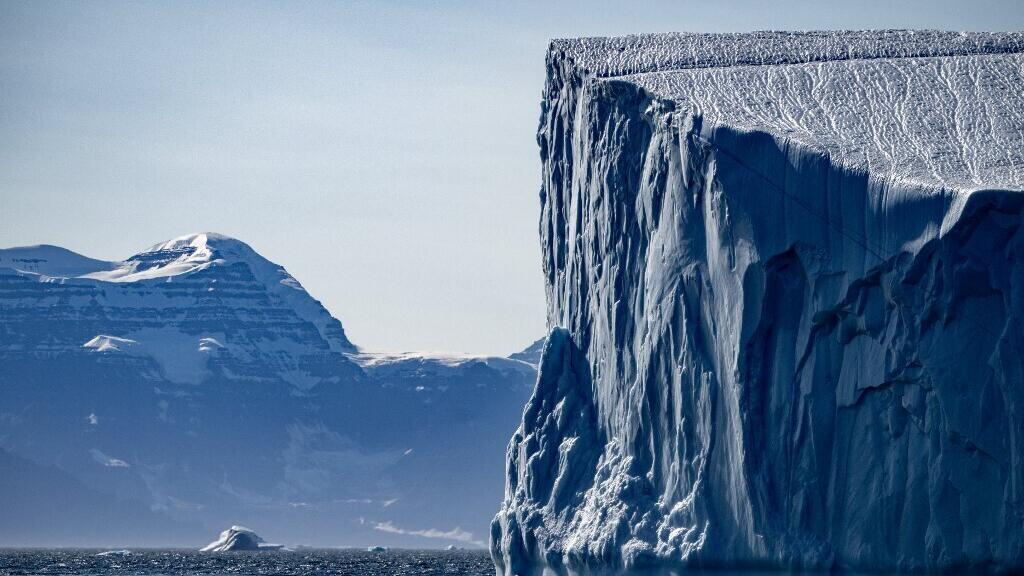
The ice mass is beginning to melt and could ultimately trigger a dramatic rise in sea levels. Unlike sea ice, which floats, Greenland’s ice sheet lies on land. And that makes all the difference.
"In Greenland, we are dealing with extremely large masses, enormous volumes, covering the entire island," says Glenn Yannic, a lecturer and researcher at Savoie Mont Blanc University. "We're talking about an ice sheet that can be several hundred metres thick. It is estimated that the complete melting of Greenland could raise sea levels by five, six or seven metres."
The melting of the ice sheet – rather than the summer thaw of Arctic sea ice – is what causes sea levels to rise, the Greenland specialist explains. "When sea ice melts, it's like putting an ice cube into a glass filled to the brim: the ice cube melts, but the water level does not rise," he tells RFI.
Greenland melted recently, says study that raises future sea level threat
Accelerating warming
According to Copernicus – the Earth observation component of the European Union's Space programme – for every centimetre of sea level rise, around 6 million more people are exposed to coastal flooding.
A rise in sea levels of five to seven metres by the end of the century would lead to the disappearance of thousands of coastal cities worldwide, affecting millions of people.
Such a scenario is becoming increasingly plausible, because Greenland is one of the fastest-warming regions on the planet. Last spring, glaciers melted 17 times faster than average amid record temperatures.
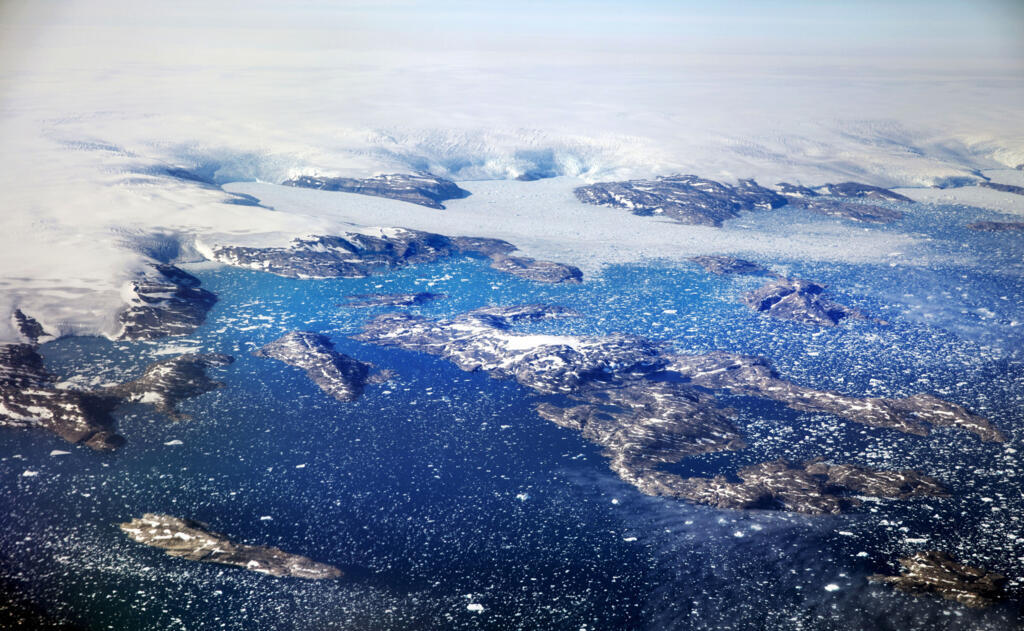
New research, published by US scientists on 5 January in Nature Geoscience, has also alarmed the scientific community. Using ice core samples, researchers found that Greenland's ice dome last melted around 7,000 years ago, during the early Holocene period, when "temperatures were three to five degrees C higher than those currently observed", Yannic says.
"They showed that part of northern Greenland was ice-free. That's the whole significance of this study, and why it's had such an impact. Three to five degrees C – we are almost there, we are on the brink. By the end of the century, we can predict that all the ice currently covering Greenland will have melted."
Arctic sees unprecedented heat as climate impacts cascade
In Trump’s sights
A wealth of natural resources lies beneath Greenland’s ice, including rare earth elements and suspected fossil fuel reserves.
Trump has made no secret of his desire to exploit them.
And since the US ousting of Venezuela’s president Nicolás Maduro, partly to secure Venezuelan oil, Trump has renewed calls for a US takeover of the Arctic territory.
On Sunday, he said that he needed Greenland "very badly" for reasons of "national security", given its strategic position between the US and Russia. But Trump is also eyeing resources such as hydrocarbons, minerals and even water – so pure it is said to be worth its weight in gold.
Access to Greenland's ice-capped resources has remained a challenge, but "the acceleration in the melting of the ice sheet will free up areas and make it easier to access certain mineral deposits", says Yannic.
Trump weighs military option to acquire Greenland
If Trump were to succeed, the man who called climate change a "con job" could could end up benefitting from global warming.
“The issue of the search for minerals and hydrocarbons, and their exploitation, has already been put before the Greenland government, which decided several years ago to impose a moratorium on such activities,” Yannic says.
Prospecting was halted in order to protect the environment. For the moment, Greenland is holding firm – but for how long?
This article, adapted from the original in French by RFI's Florent Guinard, has been lightly edited for clarity.