Preliminary and partial results of Honduras' presidential contest, released late on Sunday, showed conservative candidates Nasry Asfura and Salvador Nasralla leading with the ruling party trailing, as the country moved to elect a new president, days after US President Donald Trump endorsed Asfura.
The results came from roughly 34% of polling places, as poll workers began tallying Hondurans’ votes Sunday evening.
Voting was extended an hour beyond the original closing time in many locations to accommodate remaining voters. Electoral authorities initially reported no major voting problems.
In addition to a new president, voters were casting ballots for a new Congress and for hundreds of local positions.
Among the five presidential candidates on the ballot, polls indicated three had a chance to win and were finishing in close competition.
Rixi Moncada, who served as finance and later as defence secretary in the current administration of President Xiomara Castro, is running for the social democrat LIBRE, or Liberty and Re-foundation party.
Moncada is promising to “democratise” an economy still defined by extreme wealth and poverty.
Also on the ballot is Salvador Nasralla, who is making his fourth bid for the presidency, this time as the candidate for the conservative Liberal Party. He casts himself as an outsider who can clean up the country’s endemic corruption.
And in no particular order, former Tegucigalpa Mayor Nasry “Tito” Asfura, endorsed by Trump and trying to restore the conservative National Party as a pro-business force after former party presidents were embroiled in corruption scandals, with one sent to prison in the US, is amongst the frontrunners.
Trump intervenes in favour of the National Party
Trump shocked Hondurans on Friday by endorsing Asfura and announcing that he would pardon ex-President Juan Orlando Hernández, who was serving a 45-year sentence in a US prison for helping drug traffickers move cocaine to the United States.
Trump lashed out at Nasralla and Moncada just days before the vote, warning they could lead Honduras down the same path as Venezuela.
It was unclear what impact Trump would have on the election. However, it was the latest example of the US government’s willingness to directly involve itself in the region. It came at a time of already heightened tensions because of the US military buildup in the Caribbean and Trump’s threats against Venezuelan President Nicolás Maduro.
When asked why he pardoned Hernández, Trump argued that he was answering the calls of Hondurans who believed the case was politically motivated.
“The people of Honduras really thought he was set up, and it was a terrible thing,” Trump told reporters travelling with him on Air Force One later Sunday.
“They basically said (Hernández) was a drug dealer because he was the president of the country. And they said it was a Biden administration setup. And I looked at the facts, and I agreed with them.”
Many Hondurans, left unnerved by the sudden US attention, said it would not affect their votes.
In announcing the start of voting Sunday, National Electoral Council President Ana Paola Hall called on the candidates to respect rules barring candidates from declaring victory before the council confirms a winner.
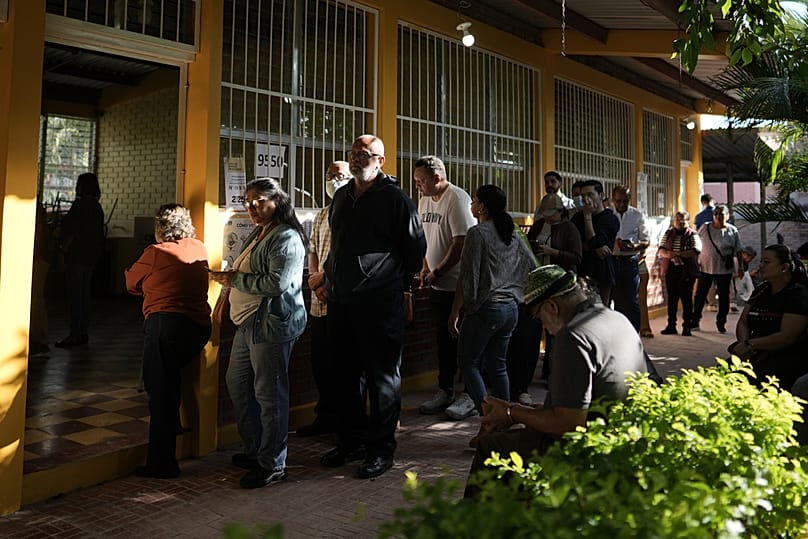
There were reports of some polling places opening late, but apparently, voting was relatively smooth. The council planned to provide preliminary results at 9 pm local time but has up to 30 days to officially announce the final result.
More than 4,000 Honduran and foreign election observers had fanned out across the country's nearly 6,000 polling places.