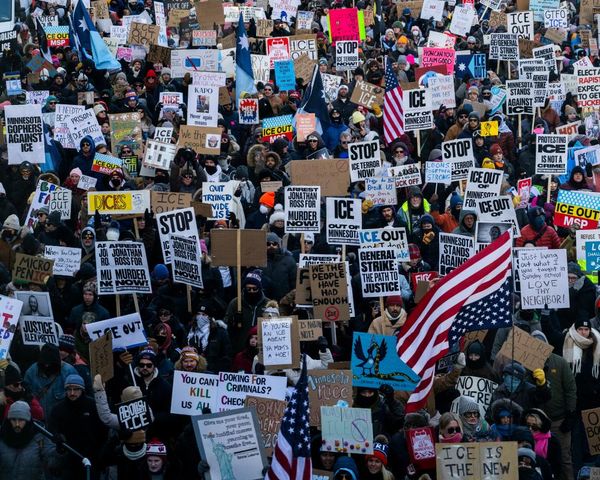
A high-stakes redistricting measure approved in Virginia is now being read as a quiet turning point in the 2026 US midterm elections. The change allows the state to redraw its congressional map ahead of schedule, a move that could hand Democrats a clearer path to control of the House of Representatives.
Democrats currently hold six of Virginia's 11 House seats. Under the new configuration, House Bill 29, Virginia Use of Legislative Congressional Redistricting Map Amendment, analysts suggest they could realistically compete for up to 10. That scale of movement, in a chamber where margins are tight and often fragile, carries weight far beyond state borders.
This is not an isolated adjustment. It is part of a broader, increasingly aggressive effort by both parties to reshape the electoral terrain before voters step into polling stations. What makes Virginia stand out is timing and intent. Redistricting is typically tied to the decennial US Census, and it arrived mid-cycle, driven by political urgency rather than demographic necessity.
Democratic state House Speaker Don Scott framed the outcome in stark terms, saying Virginia had 'changed the trajectory of the 2026 midterms.' The measure interrupts Republicans' attempts to secure structural advantages before the electorate has its say.
'This started in Texas when Trump launched an unprecedented power grab to rig the midterms and tonight Virginia voters ended it and voted YES to stop his power grab,' he wrote on X.
Tonight, Virginians sent a message heard across this country: we will not let Donald Trump or MAGA Republicans rig our democracy.
— Speaker Don Scott (@SpeakerDonScott) April 22, 2026
This started in Texas when Trump launched an unprecedented power grab to rig the midterms and tonight Virginia voters ended it and voted YES to stop…
'We trusted the voters, not politicians. We put this question on the ballot because we believe power belongs to the people. And tonight, the people of Virginia answered.'
Trump's Warning And The Stakes For Congress
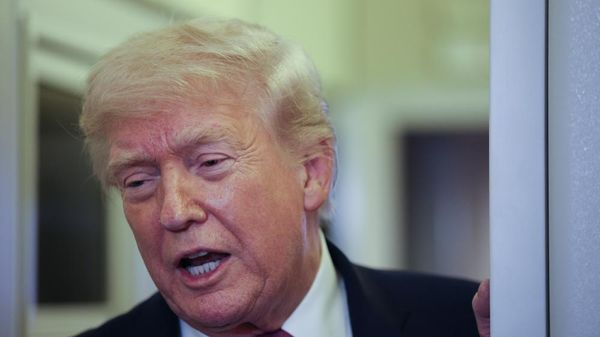
US President Donald Trump, on Monday, speaking publicly after the result, warned that a Democratic majority in the House would be 'a disaster' if Democrats control the House and determine legislative direction. This would also shape oversight power, committee leadership, and the scope for investigations into a sitting president.
Accordingly, states redraw their voting maps every 10 years, and midterms traditionally punish the party in the White House. Structural interventions like redistricting are designed to blunt that pattern, or at least complicate it.
Trump also took aim at the practice itself, saying, 'I don't know if you know what gerrymandering is, but it's not good.' His earlier calls for conservative states to revisit their own maps helped trigger the current wave of mid-decade redraws.
An Expensive Battle Over Boundaries
The Virginia referendum did not come cheaply. It has become the most expensive ballot measure in the state's history, with more than $80m (£59m) raised by opposing campaigns. That level of spending signals how much is riding on lines that, on paper, might appear technical or procedural.
Behind the funding is a network of national interests. Political action committees, advocacy groups, and party-aligned organisations have poured resources into what is effectively a pre-election contest, with the real vote coming in November.
Gerrymandering itself occupies a legally complex space in the US, and redrawing districts to favour a political party is largely permitted. It crosses a legal line only when it discriminates on racial grounds. That distinction has allowed increasingly sophisticated map design to flourish, often with the help of detailed voter data and modelling.
Statement from NRCC Chairman @RepHudsonNC on the Passage of the Virginia Democrats' Redistricting Power Grab pic.twitter.com/2e7XDyR9LJ
— NRCC (@NRCC) April 22, 2026
A National Arms Race Gains Speed
Virginia is one front in what has become an accelerating redistricting race across the country. Texas moved early, launching a mid-decade redraw under pressure from Trump allies. The result is expected to give Republicans an advantage in five additional seats.
Democratic-led states have responded in kind. California voters approved changes in a special referendum that could deliver a similar boost to Democrats. Elsewhere, Republican-controlled legislatures in North Carolina and Missouri have pushed through new maps designed to consolidate their position.
Utah adds a wrinkle to the pattern. Court-imposed districts there may create a single competitive seat favourable to Democrats, illustrating how judicial intervention can still disrupt political calculations.
What emerges is not a coordinated national strategy but a series of state-level manoeuvres, each feeding into a larger contest for congressional control. The cumulative effect is significant. Individual district changes, when aggregated, have the potential to determine which party holds the Speaker's gavel.