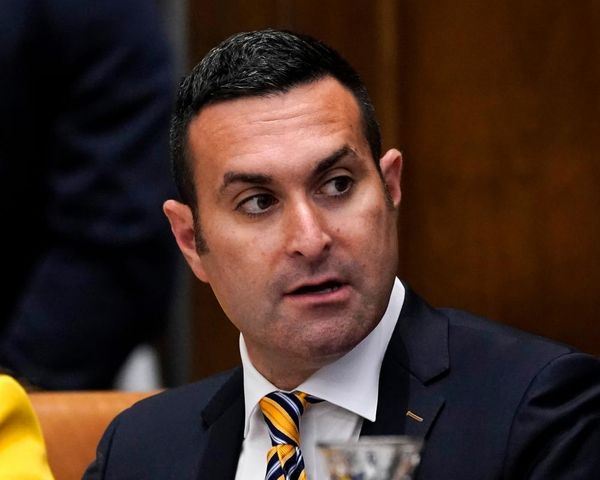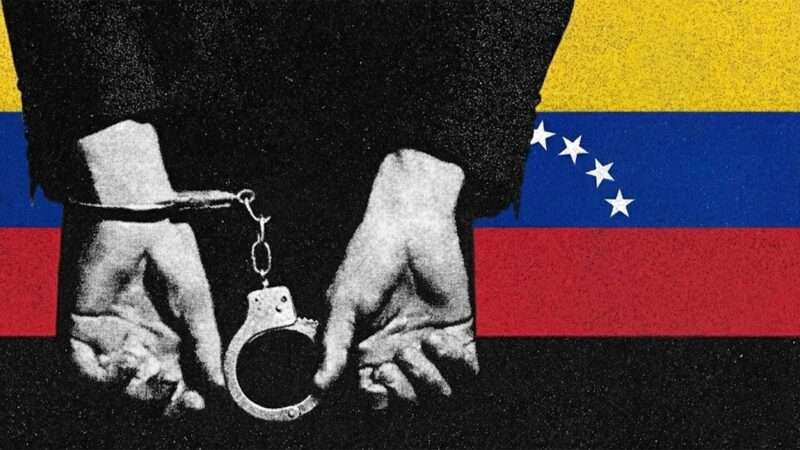
Jorge Rodríguez, president of Venezuela's National Assembly and brother of acting dictator Delcy Rodríguez, announced Thursday that the regime will be releasing a "number of important Venezuelan people and foreigners" as a "gesture" to keep "the peace."
While Jorge Rodríguez didn't provide a list of who would be set free, the human rights lawyer Rocío San Miguel has already been released, according to her family. San Miguel, whose arrest last February drew public outcry, was detained in Caracas' main airport along with five relatives. Venezuelan Attorney General Tarek William Saab accused her of plotting to assassinate dictator Nicolás Maduro and other officials. She was subsequently held at the notorious El Helicoide prison on charges of treason, conspiracy, and terrorism, and denied access to her lawyer or family for months.
Another prominent political prisoner is María Oropeza, a young Venezuelan libertarian activist arrested in 2024 for speaking out against the regime's political persecution and for declaring Edmundo González the legitimate president-elect on social media. Oropeza managed to livestream her arrest through Instagram. Two days after she was taken into custody, Venezuela's military counterintelligence agency released a chilling video showing Oropeza being held in an armored vehicle, set to music from the movie A Nightmare on Elm Street. There's no word yet on whether Oropeza has been released.
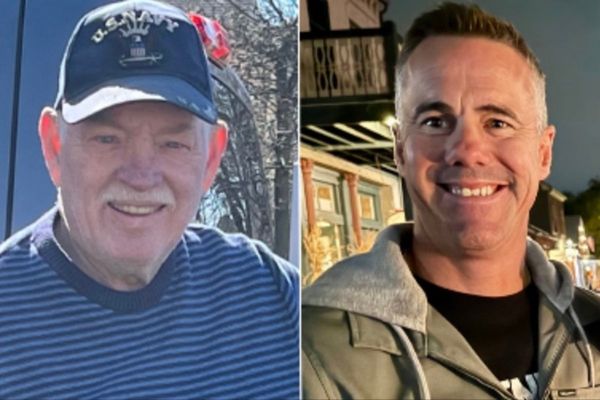
Similarly, Pablo and Lubin Montilva were arrested just a couple of days ago for firing a revolver into the air in the middle of the deserted countryside when Maduro was captured. The two were accused of "celebrating the kidnapping of President Maduro," and charged with terrorism, treason, and illegal weapons possession, offenses that could carry a maximum 30-year prison sentence under Venezuelan law. It is unknown whether they've been released.
Under Maduro's rule, more than 53,000 Venezuelans have been victims of illegitimate deprivation of liberty for political reasons, according to Provea, a Venezuelan human rights organization. The regime has used a "revolving door" tactic—releasing current political prisoners and then arresting new ones right afterwards.
In Venezuela, prisoners are routinely tortured. Such is the case of Fernando Albán, a 52-year-old opposition councilman, who was arrested at Caracas' main airport in October 2018 after denouncing the Maduro regime at the United Nations. He was reportedly suffocated, submerged in water, and given electric shocks. He died from his injuries, and his body was thrown from the 10th floor of the regime's intelligence service headquarters.
Gen. Raúl Isaías Baduel, a former defense minister under Hugo Chávez who later broke with the regime, died on October 12, 2021, at El Helicoide prison. Authorities blamed COVID-19, but his family reported prolonged isolation and systematic denial of medical care. Baduel died in his son Josnar Adolfo's arms in the cell they shared.
Since Maduro's capture, political repression in Venezuela has increased. One of the first actions taken by Rodríguez was decreeing a state of emergency and ordering police nationwide to carry out the "search and arrest of any person involved in the promotion or support of the armed attack by the United States." Dozens were arrested. One video shows Marioxis Martínez, a Venezuelan woman arrested allegedly over a social media post celebrating Maduro's arrest, surrounded by two masked police officers dressed entirely in black, neither of whom displays any form of identification indicating their affiliation or name. In the footage, Martínez repeatedly asks Maduro for forgiveness.
On Monday, the regime detained 14 journalists and media workers covering the swearing-in of the newly elected National Assembly, including 13 from international outlets and one from a national outlet. Most were held for several hours before being released, while Steffano Pozzebon, a foreign correspondent for CNN, was deported.
For decades, the Venezuelan socialist regime has used systematic repression against dissidents as a tool to maintain control over its citizens. It remains unclear whether the release of political prisoners aims to reduce U.S. pressure for a transition or is part of a broader move toward democratic change.
The post Venezuelan Socialist Regime Announces Release of a 'Number of Important' Political Prisoners appeared first on Reason.com.