

Without warning or explanation, Iran suddenly shuttered its skies to commercial aircraft in the pre-dawn hours of Thursday, cutting off a crucial aviation corridor connecting East and West. The abrupt four-hour closure—the kind of dramatic gesture typically reserved for moments when military conflict looms—rippled instantly across global aviation networks, forcing international carriers to reroute around the country's borders.
The move came at a flash point of escalating tensions between Tehran and Washington, as the United States bristled over Iran's brutal crackdown on nationwide protests that has now claimed an estimated 2,615 lives.
The airspace closure coincided with an ominous shift in military positioning. Personnel stationed at a key US military base in Qatar were instructed to evacuate, whilst the American Embassy in Kuwait ordered its diplomatic staff to temporarily cease visiting multiple military installations scattered throughout the Gulf nation.
These moves suggested Washington was taking seriously Iran's recent threats that it would strike US military facilities should Trump authorise military action.
Iran's Airspace Closure Signals Escalation of Unresolved Tensions
The closure ran for more than four hours according to pilot guidance issued by Iranian authorities, though the country offered no justification for the decision. International airlines—faced with mounting uncertainty—quickly diverted north and south around Iranian territory, their flight plans now skirting an unpredictable nation.
After one extension, the closure finally expired around 7 a.m. local time, allowing domestic flights to resume operations.
Iran's Civil Aviation Authority released a statement at midday claiming that the nation's 'skies are hosting incoming and outgoing flights, and airports are providing services to passengers,' but notably refused to acknowledge the closure itself. The silence proved more unsettling than any explanation.
This was not Iran's first such manoeuvre. The country had previously closed its airspace during the 12-day conflict with Israel in June and when it exchanged fire with Tel Aviv during the Israel-Hamas war. Yet those closures came amid active hostilities. This time, there were no signs of fighting—only preparations for it, or at least the possibility of it.
The implications alarmed aviation specialists. 'Several airlines have already reduced or suspended services, and most carriers are avoiding Iranian airspace,' said SafeAirspace, a website tracking conflict zones and air travel patterns. 'The situation may signal further security or military activity, including the risk of missile launches or heightened air defence, increasing the risk of misidentification of civil traffic.'
Why the Airspace Closure Haunts the Aviation Industry
That concern carries particular weight given Iran's history of catastrophic miscalculation. In 2020, Iranian air defence shot down Ukraine International Airlines Flight PS752 with two surface-to-air missiles, killing all 176 people on board. Iran spent days flatly denying it had downed the plane, dismissing reports as Western propaganda, before finally acknowledging the tragedy.
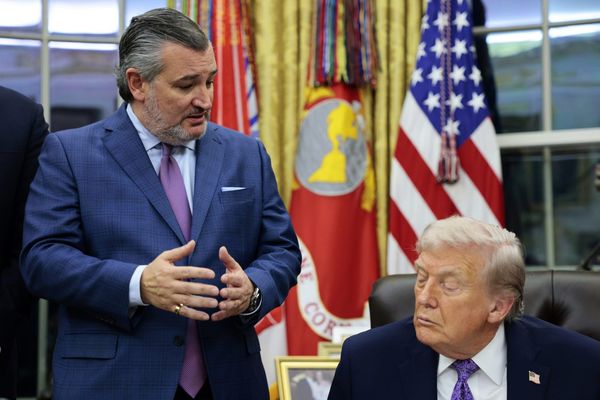
The airspace closure occurred as US President Donald Trump issued a series of ambiguous statements Wednesday that left the world guessing about American intentions. Trump claimed he had been informed that plans for executions of detained protesters in Iran had ceased, yet provided few details.
He also told Iranian demonstrators that 'help is on the way' and that his administration would 'act accordingly' to respond to Tehran's deadly security crackdown.
Yet by Thursday, Trump appeared to modulate his tone slightly. Iranian Foreign Minister Abbas Araghchi, meanwhile, made a direct appeal to the American president. Asked what message he would convey to Trump, Araghchi replied: 'My message is: Between war and diplomacy, diplomacy is a better way, although we don't have any positive experience from the United States. But still diplomacy is much better than war.'
The diplomatic softening came just hours after Iran's judiciary chief declared that the government must move swiftly to punish the thousands of detainees held since protests erupted, raising fresh alarm amongst human rights activists who feared imminent executions could follow.
The death toll from Iran's crackdown now stands as the deadliest period of civil unrest in the nation in decades, exceeding anything witnessed since the 1979 Islamic Revolution. The scale of the violence has forced the world to contemplate not just the tragedy unfolding inside Iran, but the terrifying possibility of what could happen if Washington and Tehran collide militarily.





.jpg?w=600)



