A US delegation walked out of a United Nations Security Council meeting on Monday as France's ambassador began addressing the chamber, escalating a public row between the two allies over Washington's human rights record.
The walkout, while brief, was a symbolic escalation in a relationship already strained by disputes over trade, defence spending and Donald Trump's stated interest in Greenland. The meeting had been called to discuss Russian attacks on Ukraine, but the walkout stemmed from an entirely separate dispute that had been simmering online for days.
Why the US Walked Out
The dispute began three days earlier, when the UN General Assembly approved a second four-year term for human rights chief Volker Türk by 144 votes to 10, with 13 abstentions. The United States voted against the reappointment, joining Russia and North Korea among the small bloc of dissenting nations.
France's UN Mission in Geneva posted on social media over the weekend, stating that the US was no longer a 'beacon of human rights' and stood isolated alongside countries such as North Korea and Russia. That post landed two days before the Security Council session and set the tone for what followed.
The US used to be a beacon of human rights. Not anymore. Today, it stands alongside North Korea, Nicaragua, Mali & Russia, isolated. And the world no longer listens to it.#AmericaAlone https://t.co/GLNMsYEH9n pic.twitter.com/UTVvljTMeO
— France ONU Genève 🇫🇷🇺🇳 (@FranceONUGeneve) July 25, 2026
Waltz Delivers Rebuke Before Walkout
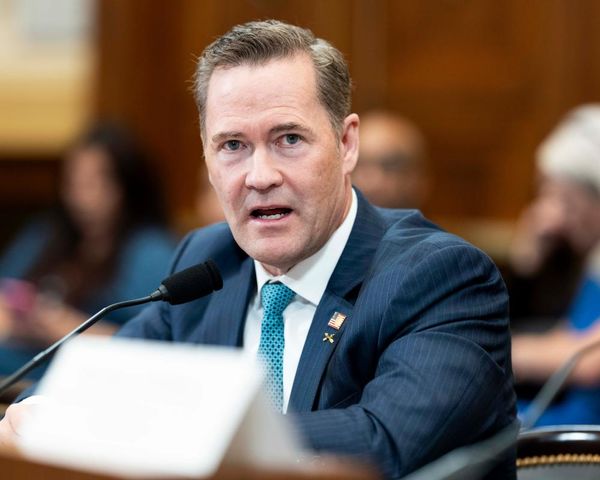
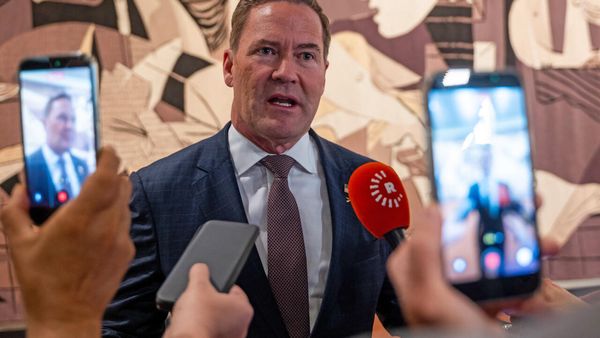
Deputy US Ambassador Mike Waltz responded during Monday's session before leading the delegation out of the room. He told the council: 'Today, I remind them that it is the United States that remains the beacon of liberty for the world.'
Waltz added that Washington would not be 'affording them the benefit of listening to their politicized drivel until they renounce their condescending and disrespectful rhetoric'. He said the delegation would not re-engage until France behaved 'in a manner commensurate with their seat on this council'.
The US delegation returned to the chamber later in the meeting, once France had finished speaking.
A rare diplomatic clash between the US and France has erupted at the UN Security Council. Washington walked out during a French speech after a dispute over the re-election of the UN human rights chief, sparking a public war of words between the allies. pic.twitter.com/UoscCp8Dar
— Al Jazeera English (@AJEnglish) July 28, 2026
France's Measured Response
French Ambassador Jérôme Bonnafont did not address the walkout directly when he took the floor. Instead, he referenced France's role in America's founding and its participation in the July 4 celebration marking the 250th anniversary of US independence.
Bonnafont said the United Nations 'was created with the goal of working towards international peace and security, human rights and development', and that this remained the spirit guiding France's work within the institution. His measured remarks appeared designed to avoid escalating the row further, even as he affirmed France's commitment to the UN's founding principles.
Türk himself has criticised human rights violations by both the US and Israel in relation to Palestine and Iran, a record that has fuelled Washington's objections to his reappointment.
Not Just the UN. Trade, Defence and Greenland Fuel the Rift
The walkout is the latest flashpoint in a strained relationship between the Trump administration and its European allies. Disagreements over NATO spending, Trump's stated interest in Greenland, and his broader scepticism toward multilateral institutions have all added friction in recent months.
The US has also cut funding to several UN agencies and withdrawn from dozens of UN entities since 2025, a pattern that underscores its growing scepticism toward the institution and its human rights machinery specifically.
President Emmanuel Macron has, meanwhile, positioned France as a leading voice pushing for greater European military independence, including efforts to extend a nuclear umbrella across the continent, a stance that has occasionally put Paris at odds with Washington's preferences on defence policy.
The exchange signals that friction between Washington and its longtime European allies is no longer confined to trade or defence spending, but is now playing out publicly inside UN chambers, in full view of the diplomatic corps and press. For readers tracking US foreign policy under the current administration, the episode offers a concrete marker of how far relations with France, and Europe more broadly, have shifted, with implications for future cooperation on issues from Ukraine to human rights oversight.