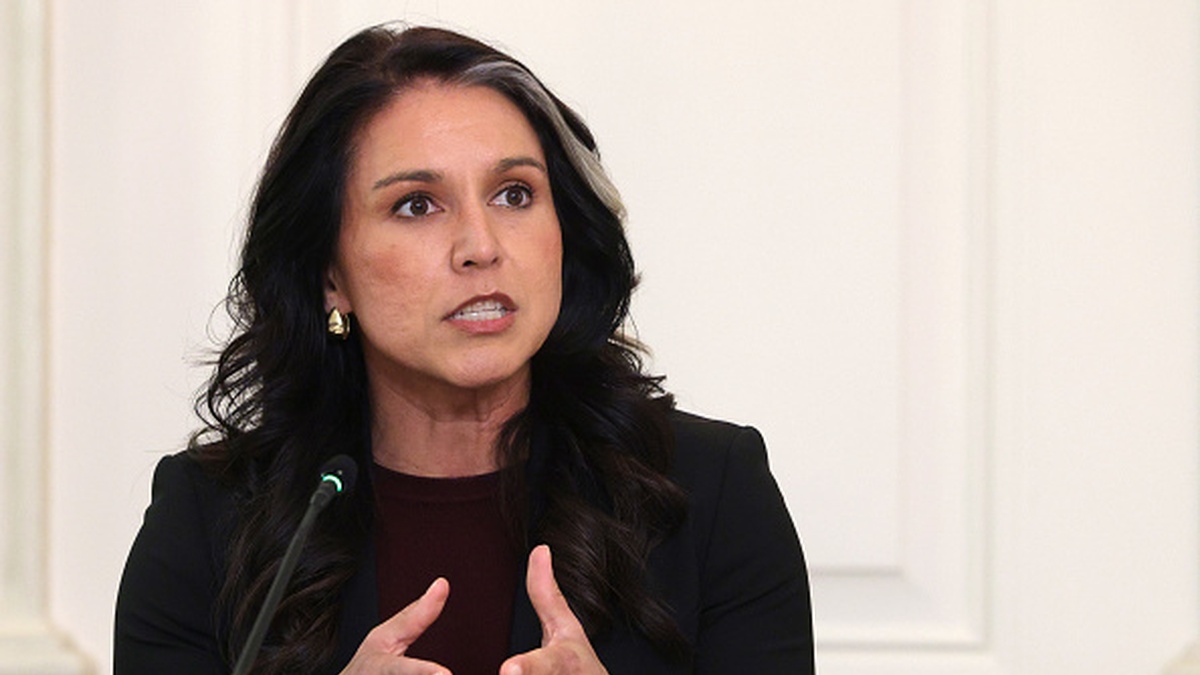
President Donald Trump‘s intelligence chief, Tulsi Gabbard, ordered an investigation into voting machines in Puerto Rico last spring. The results completely contradicted the initial theory they were trying to prove. Gabbard’s Office of the Director of National Intelligence, or ODNI, confirmed they examined the electronic voting systems.
According to Reuters, three sources familiar with the events claimed the probe was trying to find evidence that Venezuela had hacked the machines. The investigation didn’t produce any clear proof of foreign interference in the U.S. territory’s elections. ODNI officials insisted the investigation’s focus was mainly on identifying general weaknesses in the island’s electronic voting systems, not specifically targeting Venezuela.
The intelligence team found “extremely concerning cyber security and operational deployment practices that pose a significant risk to U.S. elections.” This is a big deal, especially since similar voting infrastructure is used elsewhere across the United States. ODNI pointed out two major flaws: some security gaps came from the use of weak cellular technology, and there were software flaws that could give hackers deep access into vital electoral systems.
The investigation raises serious concerns about intelligence agency overreach
To conduct their analysis, a spokesperson for Gabbard’s office confirmed that her team took an unspecified number of Puerto Rico’s voting machines and additional copies of data. They defended this action, calling the seizure of the hardware and data “standard practice in forensics analysis.” This move instantly raised red flags among national security experts and lawmakers who worry about intelligence agencies overstepping their bounds.
U.S. Senator Mark Warner, the top Democrat on the Senate Intelligence panel, was quick to criticize the action. “What’s most alarming here is that Director Gabbard’s own team acknowledges there was no evidence of foreign interference, yet they seized voting machines and election data anyway,” Senator Warner explained. “Absent a foreign nexus, intelligence agencies have absolutely no lawful role in domestic election administration.”
Exclusive: US spy chief Tulsi Gabbard's office investigated voting machines in Puerto Rico last spring, according to sources https://t.co/z1brOb9j1o pic.twitter.com/POg48r9dfJ
— Reuters (@Reuters) February 4, 2026
This whole operation appears to be part of a larger effort by officials in the Trump administration to pursue unproven claims of voting fraud. The focus on potential fraud dates back to President Trump’s 2020 election loss and clearly hasn’t slowed down.
Gabbard’s direct involvement in these domestic security matters was recently highlighted by her appearance at an FBI raid of an election facility in Fulton County, Georgia, last week. Reports of a whistleblower complaint against Gabbard have also emerged recently.
Gabbard’s office maintains they had the authority to carry out the investigation, citing the broad authority ODNI has to coordinate and analyze intelligence related to election security. Despite ODNI’s public denial about targeting Venezuela, three sources familiar with the operation claim the FBI team involved was actively looking into the theory that Venezuela’s government had hacked U.S. voting systems.
This claim has strong support among some of President Trump’s supporters, even though no credible evidence has surfaced publicly. Gabbard’s shift to the Republican party has aligned her with Trump’s political movement.
Pablo Jose Hernandez Rivera, a Democrat elected in 2024 to represent Puerto Rico in the U.S. House of Representatives in a non-voting capacity, said the problems are internal. “We have had widely reported problems in election administration,” he stated. “But they are all attributable to incompetence and corruption, not foreign interference.”