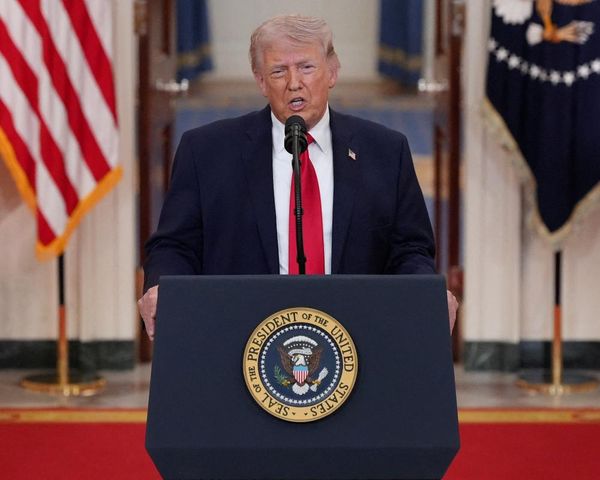
A single, almost casual sentence has sent shock waves through Washington and beyond. When Donald Trump appeared to suggest that the United States had carried out a land strike in Venezuela, panic followed quickly.
The Comment That Set Off Global Alarm
The controversy began with audio from a little noticed radio interview that resurfaced on CNN. In it, Trump appeared to say that a major facility in Venezuela had been knocked out just days earlier. There was no warning, no formal announcement and no explanation of why such an action would have taken place.
On The David Pakman Show, David Pakman summed up the disbelief, saying, 'Did Donald Trump declare war or is he simply confused? I honestly do not know.'
For a president who often styled himself as anti war, the implication was explosive. A US strike on Venezuelan soil would represent a serious escalation in a region already sensitive to American intervention. Yet Trump's tone suggested none of the gravity such an act would normally demand.
What Officials Later Confirmed About The Strike
Days later, clarity emerged, but only partially. CNN confirmed that a CIA drone strike had indeed taken place earlier in the month at a remote port facility along the Venezuelan coast. According to multiple sources, the target was believed to be linked to drug trafficking operations. There were no reported casualties.
Crucially, this marked the first known American attack on a land-based target in Venezuela. Analysts described it as a clear escalation, even if it was framed internally as counter-narcotics enforcement.
What alarmed critics was not only the strike itself, but how the public learned about it. There was no address from the White House, no legal justification offered, and no explanation of authorisation. Instead, the news arrived through an offhand comment in a radio interview, as if it were an afterthought.
Pakman noted that Trump 'appears to acknowledge a covert strike offering no details and no sense of the gravity of what he is doing'.
Trump's State of Mind Matters
Perhaps the most troubling aspect was the initial reaction from many listeners. Instead of assuming a major military development, some dismissed the comment as another muddled statement. Years of erratic remarks have conditioned the public to wait for clarification before taking Trump at his word.
Pakman argued that this hesitation is itself dangerous. 'We are so used to Trump being confused that people thought he probably did not even know what he was talking about,' he said.
This pattern has repeated often. Trump makes a dramatic claim about military action, and the country waits to hear from aides or officials to determine whether it is real. The result is a president whose words no longer reliably signal reality, especially on matters of war and peace.
A Wider Pattern of Escalation
The Venezuela comment did not occur in isolation. The US has already destroyed dozens of boats in international waters, imposed pressure on oil shipments, and built up military assets in the Caribbean. Officials have openly discussed efforts to weaken the Maduro government.
Pakman, who grew up in Argentina, warned against regime change efforts in Latin America, saying the region knows too well how such interventions can end. He criticised what he described as a lack of honesty about the true goals of US involvement.
At the heart of the controversy lies a deeper problem. When the president speaks about military action, the public should not be left asking whether a war has begun or whether the speaker is confused. That uncertainty, critics argue, is itself a national security risk.
As Pakman put it, 'When the president speaks, we should not be wondering if he has just declared war or lost track of what is going on.' Whether this episode reflects secrecy, recklessness or something more concerning, it has once again raised fears about leadership, transparency and stability at a dangerous moment.