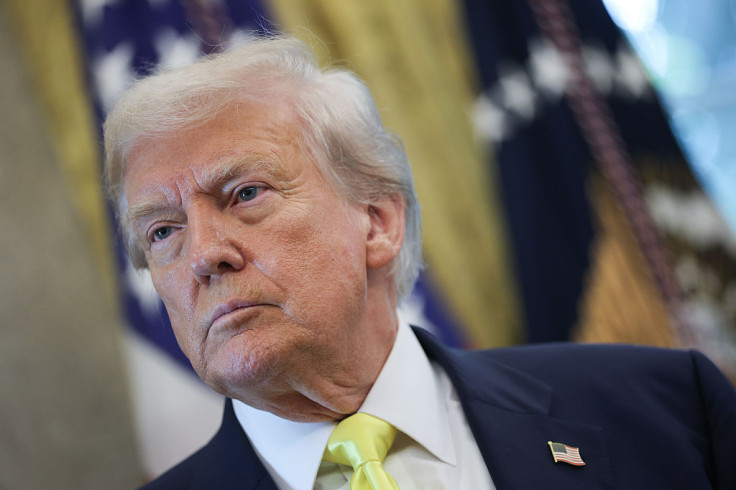
President Donald Trump on Thursday unveiled a new pharmaceutical trade crackdown, imposing tariffs of up to 100% on imported branded drugs from companies that have not agreed to lower U.S. prices or move production into the United States, escalating his long-running effort to pressure the drug industry on costs.
The measure, announced in a White House proclamation dated April 2, frames foreign dependence for patented medicines and pharmaceutical ingredients as a national security risk.
Under the policy, companies that fully execute, or are actively negotiating, so-called most-favored-nation pricing agreements with the administration can avoid the tariffs altogether. Drugmakers that commit to onshoring production can receive a reduced 20% tariff rate, although that rate would rise to 100% after four years under the proclamation.
The White House said the action follows a Commerce Department investigation under Section 232 of the Trade Expansion Act, which concluded that heavy reliance on imported pharmaceuticals threatens both the economy and public health security of the United States.
The administration says the goal is twofold: bring prescription drug prices closer to what patients pay in other developed countries and rebuild domestic manufacturing capacity for critical medicines. According to the White House, about 53% of patented pharmaceutical products distributed in the U.S. were produced abroad as of 2025. Reuters reported that large pharmaceutical companies will have 120 days to announce plans to avoid the full 100% tariff, while smaller companies will get 180 days. Generic drugs, which account for more than 90% of medicines sold in the U.S., will be exempt for at least one year.
The move comes after months of pressure from the Trump administration on major drugmakers. As of now, 16 major pharmaceutical companies have already publicly agreed to pricing deals tied to the administration's most-favored-nation model, which aims to align U.S. drug prices with the lowest prices available in other wealthy countries. Those agreements also include participation in TrumpRx.gov, a government-backed direct-to-consumer channel, and, in several cases, commitments to invest billions in U.S. manufacturing.
Among the companies that have already struck deals are Pfizer, Johnson & Johnson, AstraZeneca, Novo Nordisk, Merck, Roche, Novartis, Amgen, Sanofi and GSK. Some of those agreements included steep price cuts on high-profile drugs sold through TrumpRx.gov. Regeneron appeared to be the major holdout as of Thursday, although Reuters reported the company said it expects to finalize an agreement soon.
Originally published on Latin Times