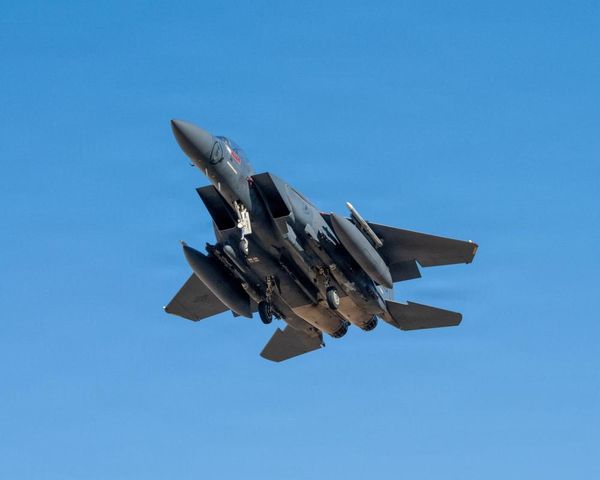
US wants Ukraine troops to withdraw from Donbas
You can read our report on today’s developments here
Closing summary
… and on that note, it’s a wrap for today!
Nato’s secretary general Mark Rutte has warned allies “we are Russia’s next target,” in a stark speech in Berlin in which he said “too many don’t feel the urgency, too many believe that time is on our side” (13:35) and painted a vision of European war with Russia within next five years (13:39, 13:44)
The alliance’s top political chief warned that Russia’s Vladimir Putin “will not stop with Ukraine,” and urged allies to step up their defence spending to deter Moscow’s plans (13:06).
During his visit to Germany, German chancellor Friedrich Merz and foreign minister Johann Wadephul repeatedly urged the EU to back proposed measures to use frozen Russian assets to fund Ukraine (10:52, 13:49).
Their comments came as the EU member states have agreed to freeze indefinitely Russian assets held in the union, paving the way for their use to aid Ukraine (17:40).
The Coalition of the Willing has met this afternoon to discuss the latest peace plan draft emerging from talks with the US (18:11), which Ukraine’s Volodymyr Zelenskyy said included proposals to withdraw Ukrainian troops from Donbas and create a special “free economic zone” (17:18).
In other news,
Bulgarian prime minister Rosen Zhelyazkov has resigned from the post after growing street protests (13:29, 16:15).
Greece’s finance minister, Kyriakos Pierrakakis, has been elected the new president of Eurogroup, the group of finance ministers from countries that use the euro (17:52).
Lawmakers in Austria have voted overwhelmingly to ban headscarves in schools for girls under the age of 14, despite concerns the legislation will deepen societal divisions and marginalise Muslims (13:01).
And that’s all from me, Jakub Krupa, for today.
If you have any tips, comments or suggestions, email me at jakub.krupa@theguardian.com.
I am also on Bluesky at @jakubkrupa.bsky.social and on X at @jakubkrupa.
Ukraine holds talks with US on security guarantees under proposed peace deal, Zelenskyy says
Ukrainian president Volodymyr Zelenskyy has also posted about a separate “constructive and in-depth discussion” with the US on “one of the three documents we are currently working on,” on security guarantees.
The meeting was attended by US state secretary Marco Rubio, defence secretary Pete Hegseth, peace envoy Steve Witkoff, Trump's son-in-law Jared Kushner, and generals Keane and Grynkewich and commissioner Gruenbaum.
The group was also joined by Nato secretary general Mark Rutte.
“We greatly value the active engagement of the American side at all levels – not only in working to end the war, but also in ensuring Ukraine’s security and preventing a new Russian invasion,” Zelenskyy said.
He said the discussion “reflects the seriousness of America’s intentions and its clear focus on achieving outcomes.”
“Security guarantees are among the most critical elements for all subsequent steps. We have already got the negative experience of the Budapest Memorandum. Everyone remembers this, as well as the occasions when Russia repeatedly violated all its other commitments. That is why it is essential that this document on security guarantees provides concrete answers to what concerns Ukrainians the most: what actions partners will take if Russia decides to launch its aggression again,” he explained.
Coalition of Willing meets virtually to discuss latest on Ukraine
We also have some first snaps from today’s virtual meeting of the Coalition of the Willing on the latest on Ukraine, co-chaired by France’s Emmanuel Macron and Britain’s Keir Starmer.
Updated
Greek finance minister Pierrakakis elected new Eurogroup president
In other news coming to us from Brussels, Greece’s finance minister, Kyriakos Pierrakakis, has been elected the new president of Eurogroup, the group of finance ministers from countries that use the euro.
The Greek will replace Ireland’s Paschal Donohoe, who left the position to take a senior job at the World Bank.
In his motivation letter, he said he would “build on” Donohoe’s approach based in “trust, pragmatism and consensus” and call for “even greater clarity and structure” for the group.
Pierrakakis, a 42-year-old MIT and Harvard graduate, said he would prioritise actions to advance a savings and investments union, complete the EU’s single market, work on the digital euro, and strengthen Europe’s economic foundations.
His main rival was Belgium’s Vincent Van Peteghem, but his candidacy was believed to be burdened by the country’s continuing opposition to the plans to use frozen Russian assets to help fund Ukraine, which frustrates a number of countries involved in planning.
The new president will take office tomorrow and will serve a two-and-a-half-year term, the European Council said in a statement confirming the result.
Updated
EU agrees to freeze indefinitely Russian assets held in union
in Brussels
EU member states have agreed to freeze indefinitely Russian assets held in the union, paving the way for their use to aid Ukraine.
A majority of ambassadors from EU member states on Thursday approved a plan to ensure the estimated €210bn Russian central bank assets in the bloc will remain immobilised for the foreseeable future, with no requirement to renew the measures every six months, the current situation.
The decision, which takes effect from 5pm CET on Friday, is an important step to use the funds for Ukraine, although a final agreement on a so-called reparations loan remains far away.
The European Commission last week proposed using a little-known provision of the EU treaty, article 122, to keep the assets frozen. Effectively the EU’s emergency powers act, article 122, gives the EU broad leeway to take “measures appropriate to the economic situation”, although some lawyers argued this latest use went far beyond the original intention of the provision.
Russia’s sovereign assets, frozen by EU sanctions law in the early days of the full-scale invasion, need to be immobilised indefinitely if they are to be used as the basis for an urgently needed loan for Ukraine, the commission’s preferred funding option. Otherwise the plan could unravel, if a Kremlin-friendly government in Hungary or Slovakia vetoed the sanctions, which need to be rolled over every six months.
The commission, backed by Germany and central and eastern EU member states, wants to use the immobilised assets to provide Ukraine with an initial €90bn loan to ensure Kyiv can continue to pay for military equipment and keep the country running in 2026 and 2027. It insists its plan does not amount to confiscation, as Russia’s claim on the assets remains untouched.
Keeping the assets frozen is an important step towards a reparations loan for Ukraine, although Belgium, which hosts €185bn of the assets, continues to argue the plan is too risky.
Belgium’s deputy prime minister and economy minister, Vincent Van Peteghem, said on Thursday that “Russia really has to pay for the unjust war” and the frozen assets would be used eventually, but his country “would not take any reckless compromises”.
Updated
We will have more for you from Shaun in Kyiv on the latest US proposal on Ukraine later, so keep an eye on the blog.
US pushing Ukraine to withdraw troops from Donbas, create 'free economic zone' in peace deal concessions
in Kyiv
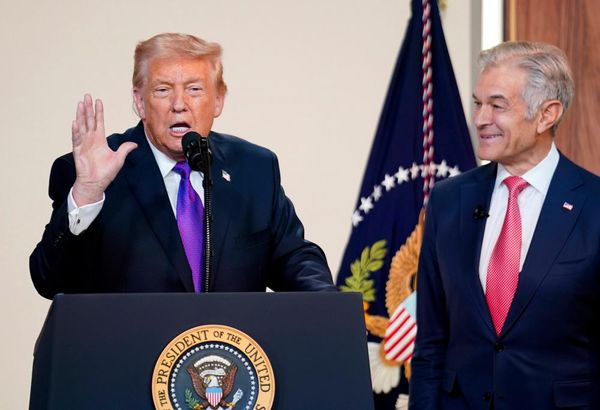
The United States is pushing Ukraine to withdraw its troops from the Donbas and create a “free economic zone” in the parts of the region Kyiv now controls, president Volodymyr Zelenskyy said on Thursday.
Previously, the US had suggested Ukraine should hand over the parts of Donbas it still controls to Russia, but now Washington has suggested a compromise version in which Ukrainian troops would withdraw, but Russian troops would not advance into this territory, said Zelenskyy.
“Who will govern this territory, which they are calling a ‘free economic zone’ or a ‘demilitarised zone’, they don’t know,” said the Ukrainian president, speaking with journalists in Kyiv on Thursday.
Zelenskyy said Ukraine did not believe the plan was fair without guarantees that Russian troops would not simply take over the zone after a Ukrainian withdrawal.
“If one side’s troops have to retreat and the other side stays where they are, then what will hold back these other troops, the Russians? Or what will stop them disguising themselves as civilians and taking over this free economic zone? This is all very serious. It’s not a fact that Ukraine would agree to it, but if you are talking about a compromise then it has to be a fair compromise,” said Zelenskyy.
He said if Ukraine did agree to such a scheme, there would need to be elections or a referendum to ratify it.
‘Censorship pure and simple’: critics hit out at Trump plan to vet visitors’ social media
Robert Booth and Jakub Krupa
Free speech advocates have accused Donald Trump of “shredding civil liberties” and “censorship pure and simple” after the White House said it planned to require visa applicants from dozens of countries to provide social media, phone and email histories for vetting before being allowed into the US.
In a move that some commentators compared to China and others warned would decimate tourism to the US, including the 2026 Fifa World Cup, the Department for Homeland Security said it was planning to apply the rules to visitors from 42 countries, including the UK, Ireland, Australia, France, Germany and Japan, if they want to enter the US on the commonly used Esta visa waiver.
The checks will be carried out when a traveller applies for their Esta and “will require Esta applicants to provide their social media from the last five years” as well as “telephone numbers used in the last five years” and “email addresses used in the last 10 years”, government documents show.
In Brussels, Trump’s move was described as “ironic” given his criticism of the EU’s €120m fine of Elon Musk’s X platform last week as “nasty”. The border measures were “a dramatic overreach and breach of fundamental rights,” said the German MEP Birgit Sippel, a member of the European Parliament’s committee on civil Liberties, justice and home affairs.
Minky Worden, the director of global initiatives at Human Rights Watch, said the new entry requirements were “an outrageous demand that violates fundamental free speech and free expression rights”, according to Politico.
Asked on Thursday how it would protect its employees from the checks, the European Commission described the policy as “floated plans”. “We haven’t seen any confirmation of this plan, so there’s no need for us to further speculate,” a spokesperson said.
EU governments start process of freezing Russian assets long-term
Meanwhile, there is a breaking news line from Brussels, with Reuters reporting that the European Union governments have started a process to freeze Russian central bank assets immobilised in Europe for the long-term to avoid votes every six months on rolling over the freeze and pave the way for the use of the money for Ukraine.
The decision to launch the process, under which a qualified majority of EU governments has to agree, is part of the EU’s legal system which allows governments to take special measures if they believe they need to protect the economic stability of the EU in special circumstances under Article 122 of the EU treaty.
“The Danish Presidency can inform that COREPER (ambassadors of EU governments in Brussels) has agreed on a revised version of the Art. 122-proposal and approved the launch of a written procedure for formal Council decision by tomorrow around 5 pm,” the Danish presidency of the EU said in a statement, quoted by Reuters.
The move is likely to prompt angry reaction from Hungary and Slovakia, who had previously threatened to block the rollovers in disputes over other parts of the EU policy towards Russia, particularly on energy (which is, erm, exactly why the majority is progressing with this proposal).
Updated
Bulgarian prime minister Zhelyazkov resigns after weeks of street protests
I have promised you an longer update on the resignation of the Bulgarian prime minister, Rosen Zhelyazkov, so here is a bit more context, via Reuters.
Zhelyazkov announced the decision in a televised address just minutes before parliament was due to vote on a no-confidence motion after weeks of street protests over its economic policies and its perceived failure to tackle corruption.
Thousands of Bulgarians rallied last night in Sofia and dozens of other towns and cities, the latest in a wave of demonstrations highlighting public anger over endemic graft and successive governments’ inability to root it out.
Last week, Zhelyazkov’s government withdrew its 2026 budget plan, the first drafted in euros, after protests erupted over proposals to raise social security contributions and taxes on dividends to fund higher state spending.
Despite the retreat, demonstrations have continued in a country that has held seven national elections in the past four years, most recently in October 2024, amid deep political and social divisions.
Zhelyazkov’s resignation comes less than three weeks before Bulgaria is scheduled to join the euro zone on 1 January.
Under Bulgaria’s constitution, president Ruman Radev will now ask parties in parliament to try to form a new government. If they fail – as appears likely – he will appoint an interim administration to run the country until new elections can be held.
Nato chief tells allies 'we are Russia's next target' – video
And here’s a video of one of the key passages from Nato’s secretary general Rutte’s speech in Berlin we reported earlier.
Ukrainian journalist Viktoriia Roshchyna was captured by Russian troops while reporting from behind enemy lines in the summer of 2022, one of an estimated 16,000 civilians detained by Russia since the beginning of the full-scale invasion.
Details of her last days in captivity have now emerged with the witness account of a soldier who was with her when she was transported to a prison deep inside Russia.
Read more here:
Russia calls for UK to disclose what soldier killed in Ukraine was doing
On Tuesday, 28-year-old L/Cpl George Hooley of the Parachute regiment died in Ukraine, in what Keir Starmer, the British prime minister, described as a “tragic accident” away from the frontlines.
Russian Foreign Ministry spokeswoman Maria Zakharova on Thursday said the British government needed to disclose what Hooley was doing in Ukraine, accusing London of playing a larger role in the conflict.
“Let the UK government not lie to its subjects,” Zakharova said in a live Russian broadcast. “Don’t lie about those who are being sent there from the United Kingdom. Those who are sent there, they conduct direct instructions of the UK government in Ukraine. They commit acts of sabotage, terrorist acts, extremist tasks as well.”
Britain has been tight-lipped in acknowledging the presence of its military personnel in Ukraine, in part because it is reluctant to allow their presence to be exploited by Russia for propaganda purposes. Starmer said on Wednesday that Hooley died while watching a test of “a new defensive capability” with members of the Ukrainian military.
Zakharova did not provide any evidence to back up her accusations of an alleged wider UK involvement, but said that Russia would regard any foreign military contingents in Ukraine as “legitimate targets”.
This comes as the UK prepares to join with France and more than 30 other countries in deploying troops to Ukraine to act as a stabilization force when there is a durable ceasefire. Members of the “coalition of the willing” are set to meet on a video call with Ukraine’s president, Volodymyr Zelenskyy, on Thursday.
Updated
EU watchdogs raid Temu’s Dublin HQ in foreign subsidy investigation
Temu’s European headquarters in Dublin have been raided by EU regulators investigating a potential breach of foreign subsidy regulations.
The Chinese online retailer, which is already in the European Commission’s spotlight over alleged failures to prevent illegal content being sold on its app and website, was raided last week without warning or any subsequent publicity.
“We can confirm that the commission has carried out an unannounced inspection at the premises of a company active in the e-commerce sector in the EU, under the foreign subsidies regulation,” a commission spokesperson said on Thursday.
Temu was approached for comment.
Read more here:
'Coalition of Willing' set to hold call
Another “Coalition of the Willing” call is set to begin this afternoon. Ukraine’s president, Volodymyr Zelenskyy, will be on Thursday’s call, along with British prime minister Keir Starmer, French President Emmanuel Macron, Germany’s Chancellor Friedrich Merz and numerous other leaders of nations supporting Ukraine.
This call comes at a delicate time, with Donald Trump voicing impatience with European allies amid chaotic American efforts to push through a peace deal. Zelenskyy was expected to hand over a revised version of a peace plan to US negotiators on Wednesday.
“This week may bring news for all of us,” Zelenskyy wrote on X. “We believe that peace has no alternative, and the key questions are how to compel Russia to stop the killings and what specifically will deter Russia from a third invasion.
Updated
Rutte's Berlin speech - in pictures
Europe will 'have to step up,' Rutte says, but denies 2027 US target
Rutte also says that Europe will see a shift in its approach to defence, as it will have to take more and more responsibility for its own security.
He says the Reuters report from last week suggesting US plans to shift the majority of burden for defending Europe on European countries by 2027 was “not right” and “the US has also confirmed that.”
“But more generally, yes, it’s clear that Europe will have to step up, and that’s exactly what we are doing.”
And that ends this somewhat explosive debate in Berlin.
'I've long stopped guessing what's in his head,' Rutte says of Putin
Rutte now talks on his detailed dealings with Putin as former Dutch prime minister, including after the Russian invasion of Crimea and the downing of the MH17 passenger plane flying from Amsterdam.
“I had a lot of calls with Putin then and met him later in G20 meetings on that subject, and I stopped long time ago to guess what’s up in his head and what I look at is the facts.
The fact that you have a dictator willing to sacrifice 1.1 million of your own people … if you have a dictator are willing to do this because you have this crazy idea of some historic goal … then you have to be very careful and we have to stand ready.
…
If you love the German language and you do not want to speak Russian, it is crucial, it is a sine qua non, because otherwise this guy will not stop with Ukraine.”
Rutte says that the US is also in Nato because “it is providing them with the direct security they need for their future,” as he talks about the broader relevance of Nato.
Wadephul joins in and says he asks commentators “not to put things in doubt which nobody puts in doubt in Washington,” but only benefits Moscow and Beijing.
He says “we have to be engaged with the US more than before,” and says that Europe has been able to find a common ground with the US on key issues so far, including amending the original 28 point plan for Ukraine.
Rutte gets asked if he can imagine Nato without US or with a much-reduced US participation.
He says, essentially, no.
“I think it is crucial that we keep the transatlantic bond as strong as it is today, and it’s very strong,” he says.
He adds that while the US national security strategy sparked a debate in Europe on other points critical of Europe, on this specific issue it has shown “complete commitment to European security” and Nato.
Germany's Wadephul stresses importance of getting deal on using frozen Russian assets
German foreign minister Johann Wadephul says that it’s important to increase pressure on Russia, and he stresses Germany’s backing for the EU’s proposal on using frozen Russian assets to fund Ukraine.
He says Berlin is “slightly optimistic” this can be voted through.
“This is absolutely our target. And Putin has to know whatever happens he may be ready for an agreement or not, we will be supporting Ukraine, defending the sovereignty of Ukraine and be with the people there,” he says.
Wadephul also says that while it would be great to get a peace deal before Christmas, it needs to be “sustainable” and not rushed.
'Difficult to say,' Nato's Rutte on timeline for Ukraine peace deal
Asked about the potential timeline for a peace deal on Ukraine, Rutte says “it’s difficult to say, this is the honest answer.”
He praises Trump and key allies – naming Germany, France, UK, Poland, Italy and Canada – for work on the deal.
He says there are some difficult questions on reconstruction, security guarantees, and territory.
He says the US and Europe can get to a place where they agree, but he’s not sure if that’s the same for Russia’s Putin.
“I don’t know, this is a test which I also said to my speech – we have to test Putin,” he says.
Nato's Rutte delivers stark warning on Russian threat facing Europe
Rutte warns that “at the end of this first quarter of the 21st century, conflicts are no longer fought at arm’s length – conflict is at our door.”
He warns of a scenario of the scale “our grandparents or great-grandparents endured” with “conflict reaching every home, every workplace facing destruction, mass mobilisation, millions displaced.”
That’s a terrible thought, but if we deliver on our commitments, this is a tragedy we can prevent.
He says that further support for Nato is Europe’s only hope of the Ukrainian war not spreading to Europe.
“I have a duty as secretary general to tell you what lies ahead if we don’t act faster, invest in defence and continue our support for Ukraine.
And I know this is a hard message as we head towards the festive season, when our thoughts turn to hope, light and peace.
But we can take courage and strength knowing that we stand together in Nato with determination and the knowledge that we are on the right side of history.”
He ends the speech here, and will now take some questions.
Updated
'Ukraine's security is our security,' Rutte warns, as he warns again Putin getting his way on Ukraine
Rutte now describes a theoretical scenario of what would Europe face is Putin got his way on Ukraine.
“Ukraine under the boot of Russian occupation, his force pressing against a longer border with Nato, a significantly increased risk of an armed attack against us.
It would require a truly gargantuan shift in our deterrence and defence. Nato would have to substantially increase its military presence along the eastern flank, and allies would have to go much further and faster on defence spending and production.
In such a scenario, we would long for the days when 3.5% of GDP on core defence was enough. The number would grow massively, and with that imminent threat, we would have to act fast. There would be emergency budget cuts to public spending, economic disruption and further financial pressure. In that scenario, painful trade offs would be unavoidable, but absolutely necessary to protect our people.
So let’s not forget Ukraine’s security is our security.”
He says “we must strengthen Ukraine so they can stop Putin in his tracks.”
He says that “Nato’s own defences can hold for now, but with its economic economy dedicated to war, Russia could be ready to use military force against Nato within five years.”
Rutte specifically references growing disinformation and misinformation campaigns against “our societies,” as well as attempted sabotage attacks on critical infrastructure, defence industry, and military facilities.
“There have been attacks on commercial warehouses and shopping centres, and explosives hidden in parcels. And Poland is now investigating sabotage against its railway network,” he says.
He says:
“Nato’s response to Russias provocations has been calm. Decisive and proportionate. But we need to be prepared for further escalation and confrontation.
Our enduring commitment to Nato’s Article Five, that an attack on one is an attack on all sends a powerful message. Any aggressor must know that we can and will hit back hard.”
Updated
'We are Russia's next target,' Nato's secretary general Rutte warns
Meanwhile, Rutte delivers a very stark warning in the opening lines of his speech in Berlin as he says:
“I’m here today to tell you where Nato stands and what we must do to stop a war before it starts. And to do that, we need to be crystal clear about the threat: we are Russia’s next target, and we are already in harm’s way.”
He says that while the decision to accelerate defence spending at Nato’s Hague summit earlier this year was welcome, “this is not a time for self-congratulation.”
“I fear that too many are quietly complacent. Too many don’t feel the urgency. And too many believe that time is on our side. It is not. The time for action is now. Allied defence spending and production must rise rapidly. Our armed forces must have what they need to keep us safe.”
Rutte says that Russia “has become even more brazen, reckless and ruthless towards Nato and towards Ukraine.”
“During the cold war, President Reagan warned about the aggressive impulses of an evil empire. Today, President Putin is in the empire building business again.”
He warns that “in his distorted view of history in the world, Putin believes that our freedom threatens his stranglehold on power and that we want to destroy Russia.”
He says that China is Russia’s “lifeline” that allows it to pursue its aggressive line, and its supported by North Korea and Iran.
Rutte pointedly praises Trump for his efforts, saying “he is the only one who can get Putin to the negotiating table.”
“So let’s put Putin to the test. Let’s see if he really wants peace or if he prefers the slaughter to continue,” he says.
(I think we know the answer by now, Mark.)
But he says it’s important “all of us keep up the pressure on Russia and support the genuine efforts to bring this war to an end.”
Bulgarian prime minister Zhelyazkov resigns
As Rutte takes to the stage in Berlin, let me just note a breaking news line coming out from Bulgaria, where the country’s prime minister Rosen Zhelyazkov has resigned from the post.
'If you want to know Russia’s actions, listen to what it accuses others of,' German minister says
German foreign minister Johann Wadephul is now speaking at the Munich Security Conference’s Berlin event, where he appears alongside Nato’s Mark Rutte.
He does not mince his words about Russia.
He says that “if you want to know Russia’s actions, listen to what it accuses others of.”
“We all get used to constant Russian lament about supposed western plots to influence the Russian society. In reality, of course, it is Russia that is spending millions of dollars subverting democratic processes around the world,” he says.
He says that “when Putin tells Russian media his country is not planning to fight European countries, but if Europe were to start a war, he is in, I quote, ‘ready right now,’ we should all be worried.”
“Russian hybrid actions are already targeting us in Europe as we speak,” he adds, mentioning attacks on logistics hubs, and drone appearances across Europe.
“These actions are calling for an adequate response,” he says.
He says that European partners “need to urgently step up” its defence work.
On Ukraine, Wadephul says “we are yet to see meaningful Russian readiness to negotiate.”
“The Russian position today seems to almost boil down to if we don’t get for free, what we couldn’t get during 11 years of fighting, we won’t even talk,” he says.
“That is not a serious negotiation position, but it is a potent reminder that this war would probably only end when Putin feels that the consequences of continuing it having become too painful to get there,” he adds.
The minister says Europe should increase pressure on Moscow and maintain cohesion within Nato, including with the US.
Austrian parliament passes controversial school headscarf ban
Meanwhile over in Austria, the country’s lawmakers approved a law banning headscarves in schools for girls under 14, AFP reported, a move rights groups and experts say is discriminatory and could deepen society divisions.
The conservative-led government – under pressure from rising anti-migration sentiment – proposed the ban this year, arguing it is to protect girls “from oppression”.
The opposition Green party voted against the ban saying it was unconstitutional.
The European Commission also got asked about the reported “extended” version of the US national security strategy, which it was reported in the press identified a few EU countries – including Italy, Austria and Poland – as “targets” to weaken its links with the EU.
But the commission is not keen to offer a comment on this issue either.
Chief spokesperson Paula Pinho says:
“We’ve read in the press, actually, about, this alleged extended version of the national security strategy. [As] it’s through the press, we have no information of any official document in the sense. Therefore you will understand that, indeed, there’s nothing that we can be saying about it.”
The European Commission has also been just asked about the latest on the EU reparations loan for Ukraine.
The top line is that “discussions are taking place as we speak with all member states with where all questions, can be asked and are being replied,” with the commission confident about its legal analysis.
The key European Council summit where a decision on the proposal will need to be taken is next week.
Meanwhile, we are about to hear from Nobel peace prize winner María Corina Machado again as she’s about to take stage in Oslo at a Nobel committee press conference.
You can watch it live here:
I’m watching the European Commission’s daily press briefing, and they repeatedly declined to comment on the reported US proposals to screen social media of foreign visitors to the country.
One to watch, I suppose.
Updated
'At last, we are not fighting against it alone,' Orbán says as he welcomes US criticism of EU's 'civilisational-scale decline'
But Hungarian prime minister Viktor Orbán offered his full backing for the US criticism of the EU in recent days, saying that it captured well “the civilisational-scale decline that we in Hungary have been fighting against for fifteen years.”
In a post on X, he said that the new US national security strategy was “the most important and most interesting document of recent years,” as it “speaks about Brussels in the same tone that the Biden administration and Brussels used when speaking about us – what goes around comes around.”
“The Americans also see that Europe has hit the wall of a long economic dead end. A weak ally cannot defend itself and cannot be relied upon in international affairs either. They see Europe’s civilisational crisis as well. They see that Europe’s civilisational values, democracy, and the free market are all in danger,” he said.
Orbán also said that the US position noticed that “European liberals have burned the network of relations that once existed with Russia, which was a mistake.”
“In summary: America has a precise understanding of Europe’s decline. They see the civilisational-scale decline that we in Hungary have been fighting against for fifteen years. At last, we are not fighting against it alone,” he said.
Merz also gets asked about his recent suggestion that the US should at least have a good relationship with Germany, if not with the EU.
He explains what he meant by saying that the US administration “obviously has great difficulty understanding the European Union as a union of states,” which he says he can understand that as the set up is fairly unique globally.
He says that if the US finds it difficult to deal with the EU, Germany is always ready to step in as a mediator, using its longstanding close relations with the US.
And that ends the press conference.
No reason to doubt US commitment to Nato, Merz and Rutte say
Asked about the recent noises from the US, Merz says he has “no reason to doubt the agreements we have made with the US within the Nato alliance.”
He says that the US national security strategy’s language on Nato shows clear commitment.
In other areas, the US government is more critical, he concedes, and says that Germany will have to analyse it.
But he generally says that “we know we must do much more for our security than in the past.”
Nato’s Rutte strikes a similar tone, as he says the US NSS “clearly states that the US is committed to Europe, to keep Europe safe,” and he says it’s clear that European countries are “stepping up.”
Merz also gets asked about the use of frozen assets to fund Ukraine, and he praises the EU’s proposal on this and points to next week’s European Council summit as the key moment, but signals – once again – Germany’s backing for the proposal.
Germany's Merz plays down suggestions of clash with Trump, says they had 'constructive' call
Asked about Trump’s comments about his recent calls with Europeans, Merz plays down the tensions between the two sides.
He says they had “a very detailed conversation” discussing some proposals, with the focus on “what territorial concessions Ukraine is prepared to make.”
But Merz said “it was a question that … the Ukrainian president and the Ukrainian people must answer.”
He says that if the talks progress as he expects them to, there will be further conversations with US officials over the weekend, and then “possibly a meeting here in Berlin beginning of next week,” which could see US participation.
But he says that overall Trump gave the impression that “he is prepared to go down this path with us,” and that the US president “knows that the Europeans must also be heard.”
He calls the call “constructive” with both sides showing “mutual respect.”
Updated
Nato’s Rutte largely sticks to usual pleasantries, but says the clear political signal from Germany and other European partners is that “Europe is ready to take on more responsibility,” and “a signal that burden sharing is not just a slogan.”
We will not let anyone or anything to divide Europe, Germany's Merz says
In his opening remarks, Merz says that Nato plays “a key role in a time of great geopolitical upheaval,” as he recalls his numerous meetings with Rutte in recent months.
He also pushes back on the recent US criticism, saying that the US national security strategy confirms that Germany was right to focus on strengthening the European pillar of Nato, and on its security, migraton and economy policy.
“We are doing this out of our own conviction, not because anyone is pressuring us,” he says, as he insists that Europe “can stand firmly on its own feet.”
He says the focus is on keeping European unity intact, and says “we will … not allow anything or anyone to divide us.”
He says that in this context, he sees Europe as going beyond the EU membership, as he name checks the UK and Norway as important partners.
Merz also criticises Russia’s Putin, and says Germany and partners will continue putting more pressure on Moscow to end the war, secure “robust legal and material guarantees,” and make sure no peace settlement can take place above the heads of Europeans.
He says the leaders are in agreement, however, that they can’t pressure Ukraine’s Zelenskyy into making concessions that would be unacceptable for the Ukrainian people.
Germany's Merz, Nato's Rutte brief press after talks
Germany’s Merz and Nato’s Rutte are now giving a press conference after their talks this morning.
I will bring you all the key quotes.
'Quite an experience,' Machado says of her secret trip to leave Venezuela for Oslo
Machado also gets asked about her incredible trip to get to Oslo (9:38).
She says she doesn’t think the Maduro regime had any idea where she was hiding, “and certainly they would have done everything to stop me from coming here.”
She doesn’t want to give away any details of how she got to Oslo, but says she wants to “thank all those men and women that risked their lives so they could be here today.”
“One day I will be able to tell you because certainly I don’t want to put them in risk right now. It was quite an experience, but I think it’s worthwhile being here with you, telling the world what’s happening in Venezuela,” she says.
'I'm just one of millions of mothers longing to embrace their children,' Machado says of family reunion in Oslo
Machado movingly talks about the experience of seeing her family for the first time in 16 months last night.
She says:
“I couldn’t sleep last night going over and over again that first instant when I saw my children, and for many weeks I had been thinking of that possibility, and which one of them I would hug first.
And, to tell you something, I hugged them, the three, at the same time, and it’s been one of the most extraordinary spiritual moments of my life.
And that happened in Oslo, so I’m very grateful to this city, something I will never forget, because at the end, I’m just one of millions of innocent mothers that are longing to embrace of children and are not able to do that.”
'I am very hopeful Venezuela will be free,' Nobel prize winner Machado says
Over in Oslo, María Corina Machado is now appearing at a press conference with the Norwegian prime minister, Jonas Gahr Støre.
Welcoming her to the Norwegian capital, her Nobel prize lecture, read by her daughter, “brought your message, your story and your struggle for democracy very close to the Norwegian public.”
Responding, she thanks for the warm welcome, and says:
“I would say to all citizens of the world in this hour and assure you that I am very hopeful Venezuela will be free and we will turn a country into a beacon of hope and opportunity, of democracy.”
She adds “peace ultimately is an act of love,” and says “that’s what brought me here: the love of millions of Venezuelans for country, for freedom and for children.”
Russia sent US proposals on collective security guarantees to end Ukraine war, Lavrov says
In the last hour, we have also heard from Russia’s foreign minister Sergei Lavrov, who said Russia insisted in its talks with the US on “a set of agreements for lasting, sustainable peace with security guarantees for all countries involved.”
He said that Russia has sent to the US its own proposals on security guarantees.
“Our talks with the US president and his team are focused precisely on finding a long-term solution to eliminate the root causes of this crisis,” he said.
“The root causes of this crisis” is the key phrase here, as Russia has repeatedly used it to describe its maximalist demands towards Ukraine.
More broadly, Lavrov was complimentary of US president Donald Trump’s “genuine” efforts to end the war.
Czech Republic’s Babiš has arrived to Berlaymont for his meeting with EU’s Ursula von der Leyen, and if I heard him correctly, he promised journalists to come back and chat with them after their meeting.
I will look out for any lines coming from that – the billionaire is not afraid to speak his mind, and it will be interesting to hear what he thinks on the latest on Ukraine and the bloc’s plans for a reparations loan backed by frozen Russian assets.
Nobel peace prize winner Machado arrives in Oslo
In other news, we will also hear from Nobel peace prize winner María Corina Machado later today, as she arrived in Oslo overnight after a truly incredible trip from Venezuela.
The Wall Street Journal reported on the details of the operation to get her out of the country and over to Norway, describing how she “slipped through 10 military checkpoints to reach a fishing boat bound for Curaçao and a private jet headed to Norway,” where she met members of her family for the first time in almost two years.
Speaking to the BBC, she did not confirm or deny details of her trip, but acknowledged that “I am here because many men and women risked their lives in order for me to arrive in Oslo.”
“They [the Venezuelan government] say I’m a terrorist and have to be in jail for the rest of my life and they’re looking for me,” she said. “So leaving Venezuela today, in these circumstances, is very, very dangerous.”
She appeared on the balcony of the Grand Hotel in Oslo at 3am local time to greet her supporters, later joining them on the street.
Machado said she plans to bring her award back to Venezuela, but declined when she would return to her home country, which previously threatened her with sanctions for leaving it as a “fugitive” wanted by the Maduro regime.
“I came to receive the prize on behalf of the Venezuelan people and I will take it back to Venezuela at the correct moment. Of course I will not say when that is,” she told reporters in Oslo.
We will hear more from her this morning as she is due to give a press conference at 11.30am UK (12.30 Oslo).
Morning opening: Strong words, but what's next?
The US president, Donald Trump, said that he “discussed Ukraine in pretty strong words” in his last call with British prime minister Keir Starmer, French president Emmanuel Macron and Germany’s chancellor Friedrich Merz.
Given the US language on Europe, European leaders and Ukraine in recent days, it’s not difficult to imagine that the three Europeans felt the need to push back a bit on the rhetoric coming from the White House.
Oh, to be a fly on the wall.
But the key thing is what’s next. Trump revealed that the Europeans are trying to get him to come over to Europe for a meeting this weekend to discuss the latest in person, possibly joined by Ukraine’s Volodymyr Zelenskyy.
But he didn’t sound too keen, at least for now.
“I think we had some little disputes about people, and we’re going to see how it turns out. And we said, before we go to a meeting, we want to know some things.
They would like us to go to a meeting over the weekend in Europe, and we’ll make a determination depending on what they come back with. We don’t want to be wasting time”.
In the meantime, the Europeans continue to coordinate their positions between themselves, with another “Coalition of the Willing” call planned for this afternoon.
Separately, Germany’s Merz will welcome Trump whisperer and Nato secretary general Mark Rutte in Berlin, hoping the two can come up with a plan to get Trump – or “daddy” (rolls eyes) – on board again.
In Brussels, the European Commission president Ursula von der Leyen will meet with Czech Republic’s incoming prime minister, Andrej Babiš.
But already this morning she has met with Serbia’s Aleksandar Vučić, who seemingly unaware of just how sensitive the pool microphones are told her that he “got a message from Moscow.” Oh.
I will bring you all the key updates throughout the day.
It’s Thursday, 11 December 2025, it’s Jakub Krupa here, and this is Europe Live.
Good morning.
Updated