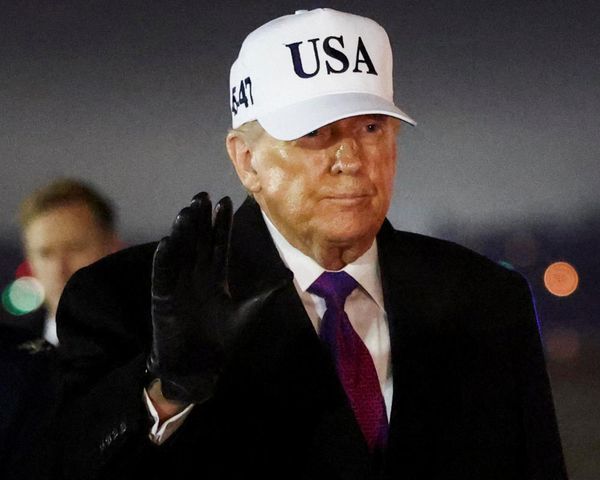
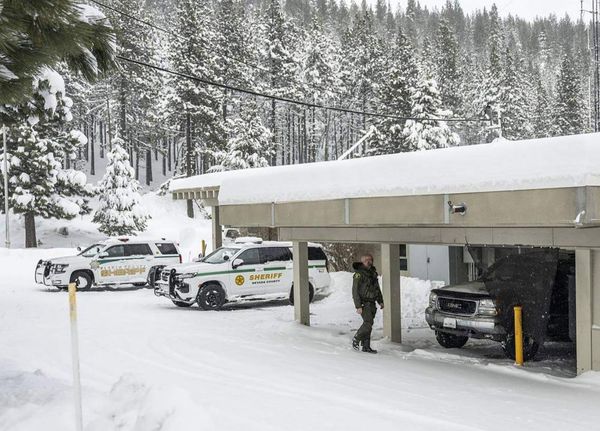
After two national guard members were ambushed in Washington DC last week, killing one and leaving the other in critical condition, Donald Trump went on a hate-filled social media rant and vowed to “permanently pause migration from all Third World countries”.
Trump’s late night Thanksgiving posts devolved into a fury, evidently because the suspected gunman is an Afghan national. He had worked with the US government, including the CIA, and was evacuated to the US in 2021 after the American military withdrew from Afghanistan.
The president lashed out at millions of immigrants, painting them as “illegal and disruptive populations” and he pledged to “end all federal benefits and subsidies to noncitizens”. Trump also proclaimed that US citizenship should be stripped from naturalized immigrants “who undermine domestic tranquility”, and called for deporting those he deemed “non-compatible with western civilization”.
Within hours of the shooting on 26 November, it became clear that Trump and several of his top aides would use the tragedy not only to collectively punish thousands of Afghans in the US, but to further intensify the administration’s crackdown on immigrant communities across the country. After the Wall Street Journal warned in an editorial against blaming all Afghan refugees for the violent actions of one man, Stephen Miller, the architect of Trump’s nativist immigration policy and White House deputy chief of staff, retorted on X: “This is the great lie of mass migration.” Miller added: “You are not just importing individuals. You are importing societies … At scale, migrants and their descendants recreate the conditions, and terrors, of their broken homelands.”
Trump and Miller’s grandstanding obscures an inconvenient reality: it was the US that largely broke Afghanistan, and destroyed the ability of many Afghans to live in their homeland – after the US invaded in 2001 following the 11 September terrorist attacks. In the generation since George W Bush’s administration unleashed its global war on terror – invading and occupying Afghanistan and Iraq, and carrying out repeated airstrikes in other countries – the US has failed to reckon with all the ways its legacy of violence abroad eventually comes home. Under both Democratic and Republican presidents, the US is also prone to shifting blame for its foreign policy disasters on to others, and to abandon any sense of moral responsibility for the local allies it leaves behind in places like Afghanistan and Iraq – and Vietnam before that.
What we know so far about the suspect in last week’s shooting, 29-year-old Rahmanullah Lakanwal, fits the classic pattern of “blowback”, a term coined by intelligence officials to describe the unintended consequences of violence perpetuated by US military operations. Lakanwal, who has pleaded not guilty to charges of murder and assault, was part of a CIA-backed Afghan military group known as a “Zero Unit”, which carried out missions to capture or kill suspected militants in southern Afghanistan. For years, these paramilitary units were dogged by accusations that they mainly functioned as CIA-sanctioned death squads. In 2019, a Human Rights Watch report found that the Zero Units were “responsible for extrajudicial executions and enforced disappearances, indiscriminate airstrikes, attacks on medical facilities, and other violations of international humanitarian law, or the laws of war”.
Lakanwal entered the US in September 2021 through Operation Allies Welcome, a program launched by Joe Biden’s administration to evacuate and resettle tens of thousands of Afghans, after the chaotic US military withdrawal in late August. Many of those evacuated had worked alongside US troops and diplomats, and would likely be branded as traitors by the Taliban if they had stayed in Afghanistan.
But Lakanwal had trouble adjusting to life in the US, and his mental health seemed to be unraveling for years, according to emails obtained by the Associated Press. He was unable to hold a steady job, and alternated between dark stretches of isolation and taking sudden cross-country drives that lasted for weeks. At times, according to the emails sent to a refugee service organization, he spent weeks in a “darkened room, not speaking to anyone, not even his wife or older kids”.
A childhood friend of Lakanwal, who was interviewed in Afghanistan last week by the New York Times, said Lakanwal had struggled with mental health issues and was distressed by the casualties his unit had caused during its operations, especially night-time raids intended to capture Taliban members. “When he saw blood, bodies, and the wounded, he could not tolerate it, and it put a lot of pressure on his mind,” the friend said.
It will take time to understand Lakanwal’s motivation for allegedly shooting two national guard members – and a potential trial could reveal new details about the CIA’s role in recruiting and training Afghans into paramilitary units that allegedly committed human rights abuses. But Trump and others in his administration seem eager to weaponize this attack as part of their foundational myth of US exceptionalism: foreigners import violence and chaos into the US from broken and bankrupt homelands. Without immigrants, Trump’s argument goes, the US would be safe and would thrive.
In his second term, Trump has taken his message as a populist demagogue to a global stage, bragging about the US immigration crackdown in his unhinged hour-long speech to the UN general assembly in September. He called on European countries to emulate his policies, close their borders and expel migrants. “It’s time to end the failed experiment of open borders. You have to end it now,” Trump lectured western leaders, adding casually: “Your countries are going to hell.”
Trump is more open in his demagogy than other politicians, who prefer to stay quiet about their notions of national superiority and US exceptionalism. But Trump’s transactional worldview lays bare a core tenet of US foreign policy: America will always prioritize its short-term security and economic interests over promoting democracy and human rights – no matter what lofty rhetoric past presidents used to obscure US military interventions and foreign meddling.
Even before the Bush administration invaded in 2001, Afghanistan had suffered from at least a decade of past US interference. In the 1980s, the CIA funneled billions of dollars (mostly through Pakistan’s intelligence service) to arm and train thousands of Afghan mujahideen to fight against the Soviet occupation of Afghanistan. It was the last great cold war battle between the US and the Soviet Union – and some experts argue the Afghanistan war was a significant factor behind the Soviet empire’s collapse. After the Soviets withdrew in defeat in 1989, the US largely left the country to the mercy of Afghan warlords and neighboring Pakistan. Afghanistan suffered through years of civil war, until the Taliban emerged in 1994 and consolidated control over most of the country within a few years.
Aside from driving out the Soviets, the CIA-financed jihad in the 1980s left another legacy: an estimated 20,000 foreign volunteers, most of them Arabs, had joined the fight in Afghanistan over a decade. These so-called “Afghan Arabs” received military training, set up networks and gained battlefield experience that they were eager to use elsewhere. Among those who joined the anti-Soviet jihad was Osama bin Laden and the Egyptian militant Ayman al-Zawahiri, along with other founding members of al-Qaida.
While there’s no public evidence that the CIA financed or trained foreign fighters in Afghanistan, the Afghan war produced enormous blowback that reverberated for decades. The foreign veterans fought in multiple conflicts in the 1990s, including Algeria, Bosnia, Kosovo and Chechnya. Other veterans went back to their home countries, including Egypt and Saudi Arabia, where they took leading roles in jihadist groups and sometimes carried out terrorist strikes. And of course, Bin Laden and Zawahiri planned the 9/11 attacks on New York and Washington while they were sheltered by the Taliban in Afghanistan.
Those attacks became the rationale for the US invasion of Afghanistan, which turned into America’s longest overseas war, stretching for two decades. That conflict has shaped a generation of Afghans, who have experienced the terror that US military power and its proxies can inflict. But rather than confront the devastation that Americans have wrought on Afghanistan, Trump and his acolytes are eager to demonize the people of a “broken” country – one the US helped destroy.
Mohamad Bazzi is director of the Center for Near Eastern Studies, and a journalism professor, at New York University