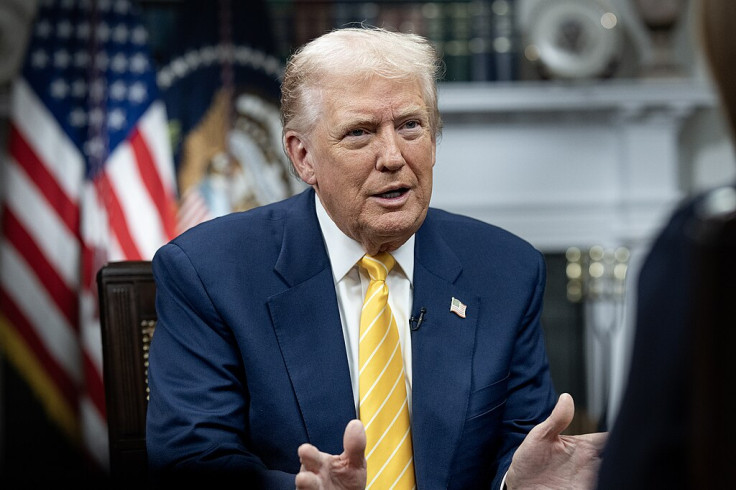
It was intended as a grand gesture of executive clemency — a demonstration of shared victimhood against what Donald Trump deems a 'weaponised' justice system. Yet, barely four days after the president granted a full and unconditional pardon to Henry Cuellar, the truce has spectacularly collapsed. The president has launched a scathing attack on the Texas congressman, branding him disloyal for immediately launching a reelection campaign under the Democratic banner rather than stepping aside or defecting.
The outburst, posted on Sunday, Dec. 7, shattered the brief alliance between the two men. Taking to his Truth Social platform, Trump did not mince words, expressing disbelief that Cuellar would accept a presidential lifeline only to return to work with the opposition party. Trump accused Cuellar of showing a 'lack of LOYALTY' by choosing to run again as a Democrat, aligning himself with what Trump termed 'Radical Left Scum'. The post highlighted the transactional nature of Trump's political worldview: mercy was granted, and in his eyes, a political debt was incurred but unpaid.
'Only a short time after signing the Pardon, Congressman Henry Cuellar announced that he will be "running" for Congress again, in the Great State of Texas...as a Democrat,' Trump wrote, his frustration evident in the punctuation. He noted that Cuellar was returning to the very party that 'just weeks before wanted him and his wife to spend the rest of their lives in Prison'. The post concluded with an ominous warning for the future: 'Oh well, next time, no more Mr. Nice guy!'
The Corruption Charges Against Henry Cuellar
To understand the magnitude of the pardon — and the subsequent fallout — it is necessary to revisit the severity of the legal peril Cuellar faced. Before the intervention of the president, the congressman and his wife, Imelda Cuellar, were staring down the barrel of a federal trial that could have resulted in decades of incarceration.
The couple had been indicted for allegedly accepting nearly $600,000 in bribes. Federal prosecutors claimed these illicit payments originated from an Azerbaijani state-owned oil company and an unnamed bank based in Mexico. The indictment painted a picture of classic corruption, alleging that in exchange for these significant sums, Cuellar agreed to use his influence in Washington to advance the interests of foreign entities.
For Trump, however, the specifics of the Henry Cuellar case were secondary to the broader narrative he has cultivated since leaving office: that the Department of Justice has been turned into a political weapon. Trump has repeatedly described the indictment against the Texas moderate as a 'witch hunt', deliberately using the same lexicon he applies to his own numerous legal battles. By pardoning Cuellar, Trump was not just freeing a politician; he was attempting to delegitimise the federal justice system established under former President Joe Biden.
This narrative of persecution is personal for Trump. He was convicted last year in New York on 34 felony counts of falsifying business records regarding a hush-money scheme during the 2016 campaign. Although he received an unconditional discharge in January — sparing him jail time, fines, or probation — the conviction remains a matter of record, fueling his empathy for others he views as targets of the state.
Henry Cuellar and the Family Letter That Moved Trump
The decision to grant clemency was remarkably personal, despite the two men having no prior relationship. In his social media barrage, Trump revealed that he had never actually met Cuellar or his wife. Instead, the catalyst for the pardon was a poignant appeal from the couple's children.
Trump cited a 'beautiful letter' dated Nov. 12, 2025, written by Cuellar's daughters. In the emotional correspondence, they pleaded with Trump to show 'mercy and compassion to our parents', portraying them not as the corrupt officials described in the indictment, but as 'two of the kindest, most selfless people we know'.
This human element appears to be what stings Trump the most. He viewed his intervention as a benevolent act for a family in distress — an act of grace based on the daughters' plea. For Cuellar to then immediately pivot back to professional politics, specifically within the Democratic party structure that Trump despises, was perceived as a rejection of that grace.
In an interview with CNN, Cuellar attempted to walk a fine line. He expressed profound gratitude for the pardon and even echoed Trump's rhetoric regarding the 'weaponisation' of the justice system in his specific case. He was also keen to emphasise that, despite the indictment, he was never convicted of the crimes.
However, his refusal to abandon his party identity has clearly severed whatever goodwill existed, leaving the congressman with his freedom, but with a powerful enemy in the White House.