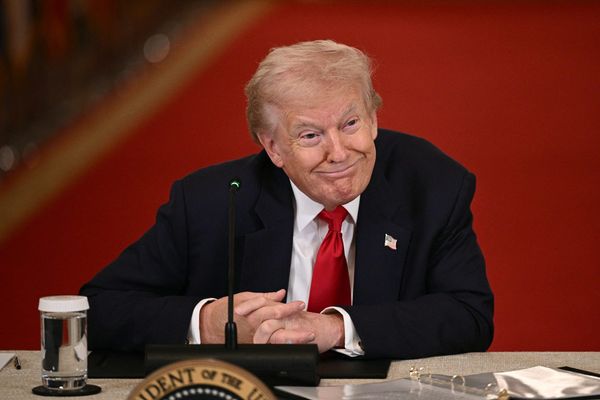
President Donald Trump has declared the upcoming 2026 midterm elections will hinge on 'pricing' as he champions his tariff policies for creating what he calls 'great wealth', despite consumer confidence plummeting to near-historic lows.
Trump took to Truth Social on Saturday morning to boast about his economic record, writing: 'Tariffs are creating GREAT WEALTH... 4.3% GDP, and going way up. No inflation!!!' The president's optimism comes as the University of Michigan's Consumer Sentiment Index registered a 28.5% drop from the same period last year, with 47% of consumers citing high prices as a major financial burden.
Pricing to Decide Electoral Fate
In an exclusive interview with Politico published Friday, Trump signalled a dramatic shift in Republican messaging ahead of the crucial midterm elections, where control of Congress hangs in the balance. 'I think it's going to be about the success of our country. It'll be about pricing,' Trump told the outlet. 'Because, you know, they gave us high pricing, and we're bringing it down. Energy's way down. Gasoline is way down.'
The president's focus on pricing marks a notable pivot after spending months dismissing Democratic concerns about affordability as a 'hoax' and 'scam'. Now, with Republicans clinging to a narrow 220-213 majority in the House whilst controlling the Senate 53-47, Trump appears to be betting that voters will credit his administration for economic improvements rather than punish the party over lingering cost-of-living pressures.
Trump pointed to falling petrol prices, which have dropped below $3 per gallon for the first time since 2021, as evidence that his policies are working.
Economic Data Shows Mixed Picture
The president's rosy assessment stands in stark contrast to how Americans actually feel about the economy. The University of Michigan's Consumer Sentiment Index registered 52.9 in December, down 28.5%, nearing historically low levels. The index sits below its value at the start of all six recessions since its inception in 1978.
The survey found that 47% of consumers spontaneously mentioned high prices are weighing down their personal finances, well above the 35% seen a year ago. The disconnect between strong GDP figures and weak consumer sentiment reflects what economists have dubbed a 'K-shaped economy', where higher-income households drive growth whilst broader swathes of the population struggle with affordability.
Despite Trump's claims of 'no inflation', the November inflation report showed food prices up 2.6% annually, whilst year-ahead inflation expectations in the Michigan survey stood at 4.2%—well above the Federal Reserve's 2% target.
Americans are even pulling back charitable contributions as the year-end approaches, according to an AP/NORC poll, suggesting financial strain persists despite positive headline numbers.
Tariff Revenue Faces Legal Uncertainty
Whilst Trump celebrates the $200 billion in tariff collections, the policy's future remains uncertain. The US Supreme Court is currently weighing challenges to the tariffs, examining the broad application of the International Emergency Economic Powers Act that underpins many of the administration's trade measures.
'CBP's enforcement delivers results,' said CBP Commissioner Rodney Scott in a statement. 'By combining intelligence-led targeting, rigorous oversight, and swift action, we are safeguarding the US economy, protecting American industries, and holding accountable those who seek to break our trade laws.'
If the Supreme Court rules against the administration, companies that have paid the duties could potentially be entitled to refunds, undermining Trump's claims of economic gains from the policy. The US.Court of Appeals for the Federal Circuit ruled 7-4 in August that Trump did not have the power to impose the tariffs without congressional consent, finding that 'the core congressional power to impose taxes such as tariffs is vested exclusively in the legislative branch by the Constitution'.
Democrats Seize Affordability Message
Trump's new emphasis on pricing comes after Democrats successfully campaigned on affordability in off-year elections, including gubernatorial races in New Jersey and Virginia. The issue proved potent enough to help Democrats overperform expectations in November local elections, prompting Republican strategists to urge a messaging shift.
The economic headwinds facing Republicans heading into 2026 appear formidable. The unemployment rate rose to 4.6% in November, the highest since 2021, whilst hiring has slowed considerably. The 43-day government shutdown that ended in November could further dampen fourth-quarter growth, economists warn.

High Stakes for 2026
The 2026 midterms carry enormous stakes for Trump's legislative agenda. Historically, the president's party loses seats in midterm elections, and Trump himself saw Republicans suffer significant losses during his first midterm cycle in 2018. If Democrats were to retake the House, it would stymie the administration's policy priorities and subject Trump to intense oversight scrutiny.
The question now is whether Trump's bet on pricing as the decisive issue will resonate with voters who continue to express deep pessimism about their economic prospects, despite the administration's claims of success. With consumer confidence at multi-year lows and inflation expectations remaining elevated, Republicans face an uphill battle to convince Americans that the economy is working for them.