Donald Trump accidentally exposed a classified military strike plan while trying to take credit for stopping it, and his own allies promptly contradicted him.
On 18 May 2026, Trump posted on Truth Social that he had cancelled a 'scheduled' military attack on Iran, originally planned for 19 May, after personally being asked to stand down by three Gulf heads of state. The post named the Emir of Qatar, Tamim bin Hamad Al Thani, Saudi Crown Prince Mohammed bin Salman, and UAE President Mohamed bin Zayed Al Nahyan. Trump framed the cancellation as a diplomatic triumph and as proof that only he could pull the region back from the brink. Within hours, Qatar issued a public statement that said nothing of the sort, and the contradiction has since widened into a damaging credibility crisis for the White House.
The Post That Exposed the Plan Nobody Was Supposed to Know About
Trump's Truth Social announcement was the first public confirmation that a major military strike had been actively scheduled. He wrote that he had instructed Defence Secretary Pete Hegseth, Joint Chiefs Chairman General Daniel Caine, and the US military that 'we will NOT be doing the scheduled attack of Iran tomorrow', but that they should remain ready for 'a full, large scale assault of Iran, on a moment's notice.'
The disclosure was remarkable in itself. No prior public announcement had indicated a strike was imminent for 19 May. Trump himself had previously boasted about his talent for strategic unpredictability, famously telling reporters during the lead-up to the current war: 'Nobody knows what I'm going to do.'
Yet in seeking to cast Gulf leaders as validators of his authority, Trump achieved the opposite. He confirmed that America's closest regional partners believed the ceasefire was collapsing, feared a new wave of Iranian retaliation against their own territory, and felt compelled to personally lobby the US president not to strike.
Qatar Pushes Back And Rewrites The Story
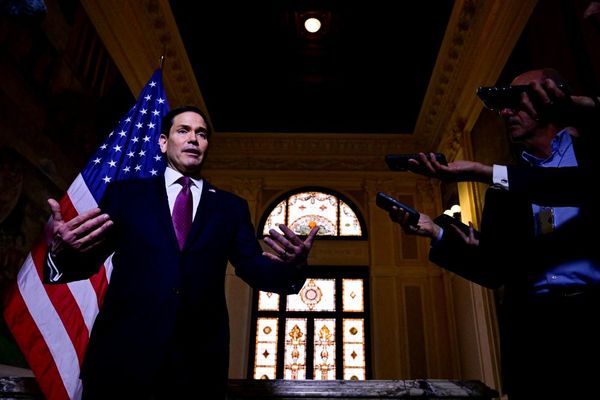
The Qatari response came on 19 May 2026, when Foreign Ministry spokesperson Dr Majed Al-Ansari addressed the situation at a press briefing in Doha. He declined to confirm or deny the details of the Emir's conversations with Trump. Instead, he issued a statement that pointedly reframed the entire episode.
'Qatar's position has been clearly stated to our partners in the United States,' Al-Ansari said. 'The region must not be engulfed again in war, and any escalation would have an immediate effect on its peoples.'
He made no mention of a deal being imminent, which was the central premise of Trump's post. He made no endorsement of US war aims. He called instead for 'giving diplomatic channels a chance for further discussions' and stressed that negotiations 'need more time.' Qatar's Foreign Minister then held separate phone calls with both his Saudi and Emirati counterparts to align messaging, calls that Al-Ansari confirmed publicly, emphasising that the Gulf position was about preventing war, not enabling US strategy.
This was not the picture Trump painted. He had written that the Gulf leaders told him 'a Deal will be made, which will be very acceptable to the United States of America.' Qatar's public messaging made clear their concern was regional survival, not American satisfaction.
Dr. @majedalansari , Advisor to the Prime Minister and Spokesperson for the Ministry of Foreign Affairs, during the weekly media briefing:
— Ministry of Foreign Affairs - Qatar (@MofaQatar_EN) May 19, 2026
Qatar’s position has been clearly stated to our partners in the United States: the region must not be engulfed again in war, and any… pic.twitter.com/tDWsMwQy7I
Tehran Calls Trump 'Deceitful' And Points To A Pattern
Tehran's response was blunter. Iran had already been here before. In March 2026, Trump declared on Truth Social that 'they called, I didn't call', claiming Iran had initiated nuclear talks. Iran's IRGC-affiliated Fars News agency denied any negotiations had taken place. The Iranian foreign ministry said it was 'merely reviewing proposals sent through mediators.'
The pattern recurred on 18 May. After Trump announced he had postponed strikes because 'serious negotiations are now taking place' with Iran, Tehran flatly disputed his characterisation of the diplomatic situation. Iranian President Masoud Pezeshkian insisted that 'dialogue does not mean surrender' and that his country was entering any talks 'with dignity and while preserving national rights.' Iran's foreign ministry spokesperson Esmail Baghaei warned that Iran was 'monitoring all movements' and 'prepared for any possibility.' Iran's supreme leader adviser Ali Shamkhani had earlier dismissed Trump's desired control over the Iranian nuclear programme as a 'fantasy.'
These contradictions extend beyond messaging. Trump claimed that a former president had told him in a private conversation that they wished they had attacked Iran as Trump did, but aides to all four living former presidents told CNN they had not spoken to Trump about the war. Trump also repeated his long-debunked claim that a book he released in 2000 warned that Osama bin Laden was going to commit a major terrorist attack, when in fact the book contained no such warnings about bin Laden.
@hal_for_ny__ Donald Trump is now fighting to save face! #trump #donaldtrump
♬ original sound - Hal_for_NY__
🔥🇺🇸MAJOR BREAKING: Yesterday, President Trump said he called off a US attack on Iran.
— Brian Allen (@allenanalysis) May 19, 2026
He said the leaders of Qatar, Saudi Arabia, and the UAE asked him to hold off.
Today, the Wall Street Journal reported that officials from all three of those countries say they had no idea…
A War Built on Competing Narratives
The 18 May episode sits within a broader credibility problem that has characterised the entire Iran war, which began with US and Israeli strikes on 28 February 2026. Trump said at 2:30 a.m. EST on 28 February that the purpose of the US strikes was effectively regime change. White House spokesperson Karoline Leavitt insisted the 2025 'Operation Midnight Hammer' had 'obliterated' Iran's facilities, yet days earlier, Trump envoy Steve Witkoff claimed Tehran was 'a week away' from the bomb.
Washington analyst Osama Abu Irshaid told Al Jazeera in February that the administration was 'exaggerating the nuclear threat exactly as the Bush administration did,' noting a key difference: 'In 2003, US intelligence was manipulated to align with the lie. In 2026, the intelligence assessments actually contradict Trump's claims.'
The Gulf states' intervention on 18 May did pause the strike. Oil prices fell sharply after Trump's post. The Strait of Hormuz, effectively blockaded by Iran since the war began, remains closed. At least 13 US service members have been killed since the conflict began, according to the Pentagon. Whether Trump's two-to-three-day deadline produces a diplomatic breakthrough, or another round of strikes, remains, by his own formulation, known only to him.
What is no longer secret is that the region's most powerful Arab governments believe the war is one presidential mood swing away from catastrophe, and that they chose to say so publicly.