In the early hours of Jan. 3, 2026, the United States executed a swift military operation in Venezuela, striking key locations and announcing the capture of President Nicolás Maduro and his wife.
Minutes later, Trump announced on social media that the United States had carried out a 'large scale strike' against Venezuela and that Maduro and his wife have been 'captured and flown out of the country' as part of an operation conducted 'in conjunction with US law enforcement'.
Explosions rattled Caracas and other regions in Venezuela, indicating the rapid escalation of a military campaign that, until now, had been focused largely on targeting alleged drug-trafficking routes rather than national leadership.
A Sudden Escalation: What Happened in Caracas
At approximately 4:30 ET, Trump's Truth Social post signalled an extraordinary escalation. He wrote that the United States had 'successfully carried out a large scale strike against Venezuela and its leader, President Nicolás Maduro'.
Verified video from Caracas and nearby regions showed tracers, smoke and repeated explosions lighting up the night sky. Videos obtained by The Associated Press verified these on-the-ground sounds and scenes, with smoke rising near military installations and several hours of disruption following the strikes.
Venezuela's acting Vice-President Delcy Rodríguez responded on state media, demanding 'proof of life' for Maduro and his wife, whose whereabouts were unconfirmed by Caracas authorities. On the ground, images and reports detailed streets partially devoid of civilians, local power outages and mixed reactions among residents of the capital.
Delcy Rodríguez, vice president of Venezuela: “Nicolás Maduro's instructions have been given. Let us go out to defend our homeland.” pic.twitter.com/c8T5tl1WAE
— Matt Kennard (@kennardmatt) January 3, 2026
From Pressure Campaign to Direct Strike
This sudden attack was the culmination of a months-long campaign. The current administration had incrementally increased military and law-enforcement pressure on Venezuela, framing its actions as part of a broader counter-narcotics effort.
Since August 2025, the United States authorised military force against Latin American drug cartels and deployed warships and thousands of troops to the Caribbean Sea — one of the largest military presences in the region since the 1962 Cuban Missile Crisis.
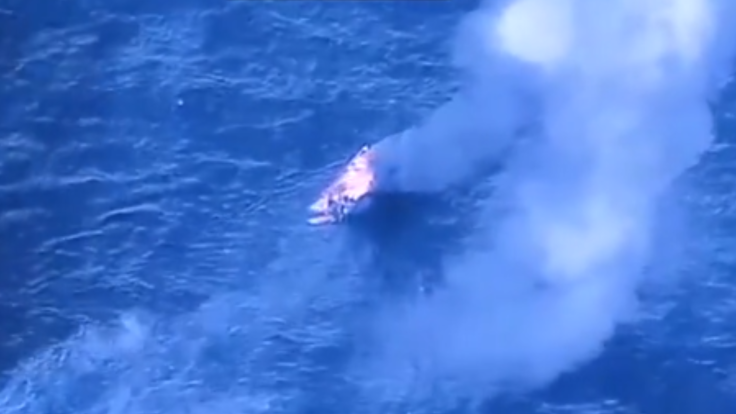
The so-called Operation Southern Spear encompassed air and naval strikes against vessels alleged to be involved in drug trafficking, and culminated in the first land strike in Venezuela at a dock facility in December 2025, targeting alleged narcotics loading operations.
Trump's critics have questioned the legality of these actions under US law, particularly whether Congress was consulted before such extensive use of military force, as required under the War Powers Resolution.
Will Venezuela Strike Back?
Venezuela's official response has been defiant. Within hours of the strikes, the Defence Minister Vladimir Padrino López characterised the US operation as 'the most criminal military aggression' and accused Washington of pursuing regime change to seize control of Venezuela's natural resources. Caracas has called on its citizens to resist what it calls 'imperialist aggression' and to mobilise in defence of the country.
Venezuelan Defense Minister is alive and speaks:
— Clash Report (@clashreport) January 3, 2026
We will not negotiate, we will not surrender, and we will ultimately triumph.
NOTE: Maduro has been captured by U.S. forces. pic.twitter.com/7Dgk2JOauI
While Maduro's detention and removal from power, if confirmed independently, represent a stunning blow to the Venezuelan government, analysts warn that irregular forces, loyalist militias and elements within the Venezuelan armed forces could react violently. Venezuela has repeatedly stated it would defend its sovereignty if attacked, including by mobilising large reserve militias organised under the Bolivarian Militia programme.
El Gobierno de la República de Colombia observa con profunda preocupación los reportes sobre explosiones y actividad aérea inusual registrados en las últimas horas en la República Bolivariana de Venezuela, así como la consecuente escalada de tensión en la región.
— Gustavo Petro (@petrogustavo) January 3, 2026
Colombia…
International allies such as Cuba and Iran have condemned the US action, while some regional governments express concern over the destabilising potential of direct military intervention in Latin America. The Organisation of American States and the United Nations have been urged by neighbouring states like Colombia to convene emergency sessions.
That ranting American sits there talking about the Iranian nation, spewing a combination of slander and promises. False promises! Deception!
— Khamenei.ir (@khamenei_ir) January 3, 2026
#Cuba denuncia y demanda URGENTE reacción de la comunidad internacional contra criminal ataque de E.U a #Venezuela. Nuestra #ZonaDePaz está siendo brutalmente asaltada. Terrorismo de Estado contra el bravo pueblo venezolano y contra Nuestra América.
— Miguel Díaz-Canel Bermúdez (@DiazCanelB) January 3, 2026
Patria o Muerte ¡Venceremos!
In the coming weeks, the possibility of a Venezuelan counter-response, asymmetrical resistance or widening conflict will be among the critical indicators of whether this strike marks the beginning of a longer war.
This attack may be just the opening act in a far larger and far more complex chapter of Western Hemisphere relations.