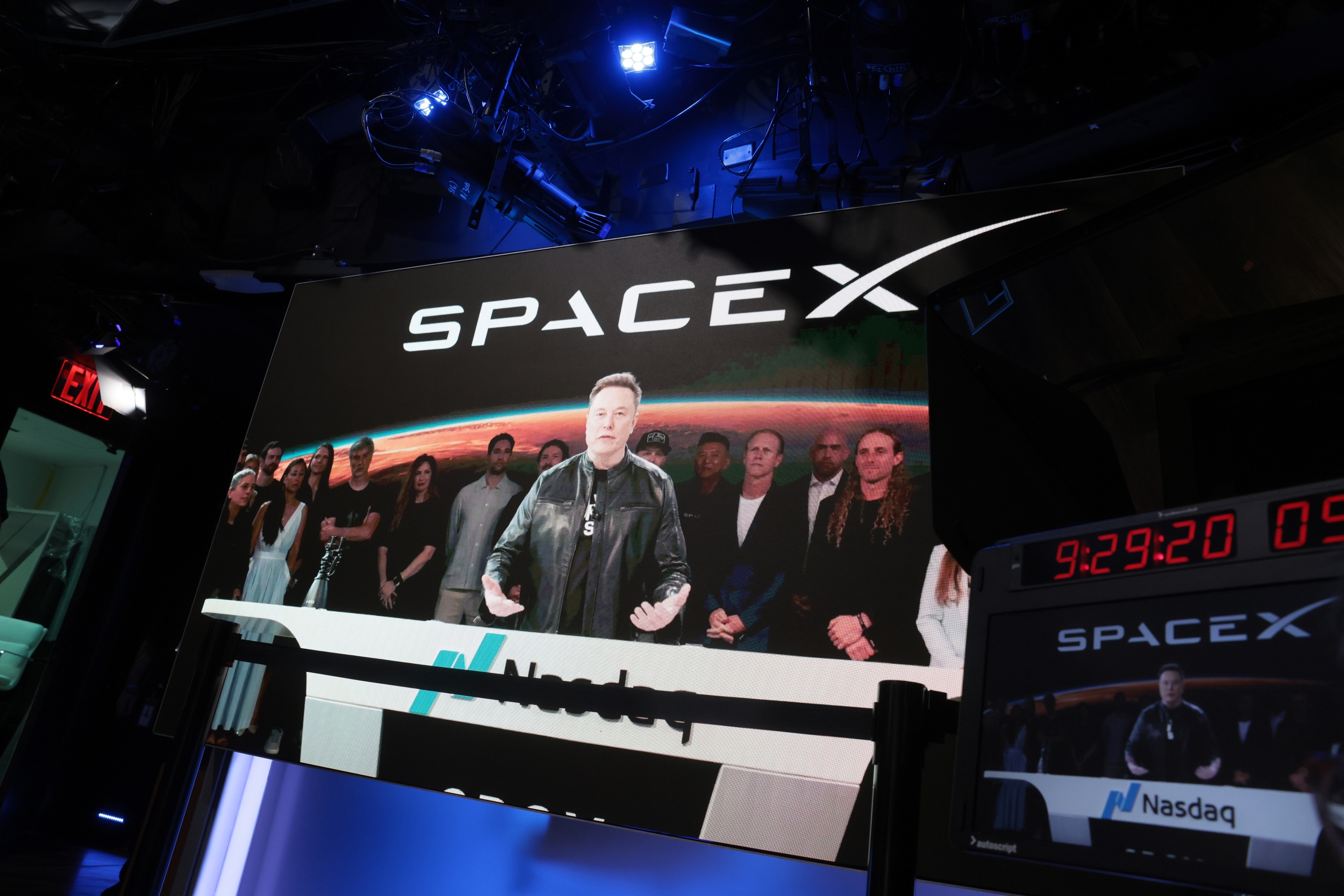
Elon Musk just became the world's first trillionaire, as SpaceX's record-breaking IPO pushed his net worth past $1 trillion this week. To put that in perspective: his fortune now rivals the combined wealth of Larry Page, Jeff Bezos, Sergey Brin, and Larry Ellison. It's a number so large it's hard to picture — so let's try.
A trillion dollars is a million, million dollars. Spend a million dollars every single day, and it would take you over 2,700 years to run out. It's also, fittingly, more than the entire SpaceX offering raised — already the biggest IPO in stock market history.
Where's the money supposed to go? Mars.
Musk's 2026 pay package ties his compensation directly to building a self-sustaining Martian city of roughly one million people, with five uncrewed Starship flights this year and crewed landings targeted for 2029, aiming for a landing zone called Arcadia Planitia, where ice sits just below the surface. Here's the catch: even by SpaceX's own framing, a trillion isn't really enough. The full Mars City Program is estimated to need somewhere between $1 and $3 trillion — meaning a brand-new trillionaire is still short of the goal, and SpaceX is betting that the broader tech bundle (rockets, satellites, orbital AI data centers) represents a $28.5 trillion market it can eventually tap.

Now flip the question: what could a trillion dollars do here, on Earth, right now?
It could end global hunger more than ten times over. The UN's World Food Programme estimates ending hunger worldwide by 2030 would cost about $93 billion a year — for the 300+ million people currently facing crisis-level food insecurity. One trillion dollars could fund that for over a decade.
It could close the global clean water gap nearly seven times over. Achieving universal access to safe drinking water and sanitation by 2030 would take an additional $140.8 billion a year — right now, 2.1 billion people don't have reliably safe water.
And on climate, the World Bank estimates developing nations alone need around $1 trillion a year just to keep pace with climate and development needs — meaning a single trillion-dollar fortune could cover an entire year of that gap by itself.

But here's the part rarely talked about: the footprint of building all this.
The same empire generating this wealth carries a real environmental cost. Musk's plan for orbital AI data centers would require scaling Starship launches from roughly one every few days to potentially hourly, and a 2025 study cited by researchers found that, with current technology, the emissions from that pace of launches would outweigh any carbon savings from moving data centers into space. Rocket exhaust also releases black carbon high in the atmosphere, and environmental groups have already sued U.S. regulators over the impact of expanded Starship launches near wildlife refuges.
That tension — building toward Mars while straining Earth's own systems — is where the "what else could this buy" question gets interesting. Global clean energy investment is on track to hit $2.2 trillion in 2025, but the IEA says that pace still needs to roughly double to meet renewable capacity targets by 2030. A single trillion dollars, redirected, could meaningfully close that gap — funding the kind of grid storage, solar buildout, and electrification that would make the planet we already live on more self-sufficient, long before anyone moves to Mars.
None of this means Mars and Earth are an either/or choice, or that Musk owes anyone a check. But the comparison is worth sitting with: the same number that represents "humanity becomes multiplanetary" could also represent "the planet we're already on stops needing rescue."