A high-stakes rescue mission is unfolding behind enemy lines, where time, terrain and threat converge into a perilous equation.
As US forces scramble to locate a missing F-15 pilot and Iran offers a bounty to capture the "enemy", experts have warned that any attempt to bring the service member home will be fraught with extraordinary risks. Bryan Stern, a former US special forces veteran, described the challenge in stark terms to CNN: "this is not a cinematic extraction, but a deeply complex and dangerous operation where every move could trigger deadly consequences."
US hunts its missing pilot in Iran
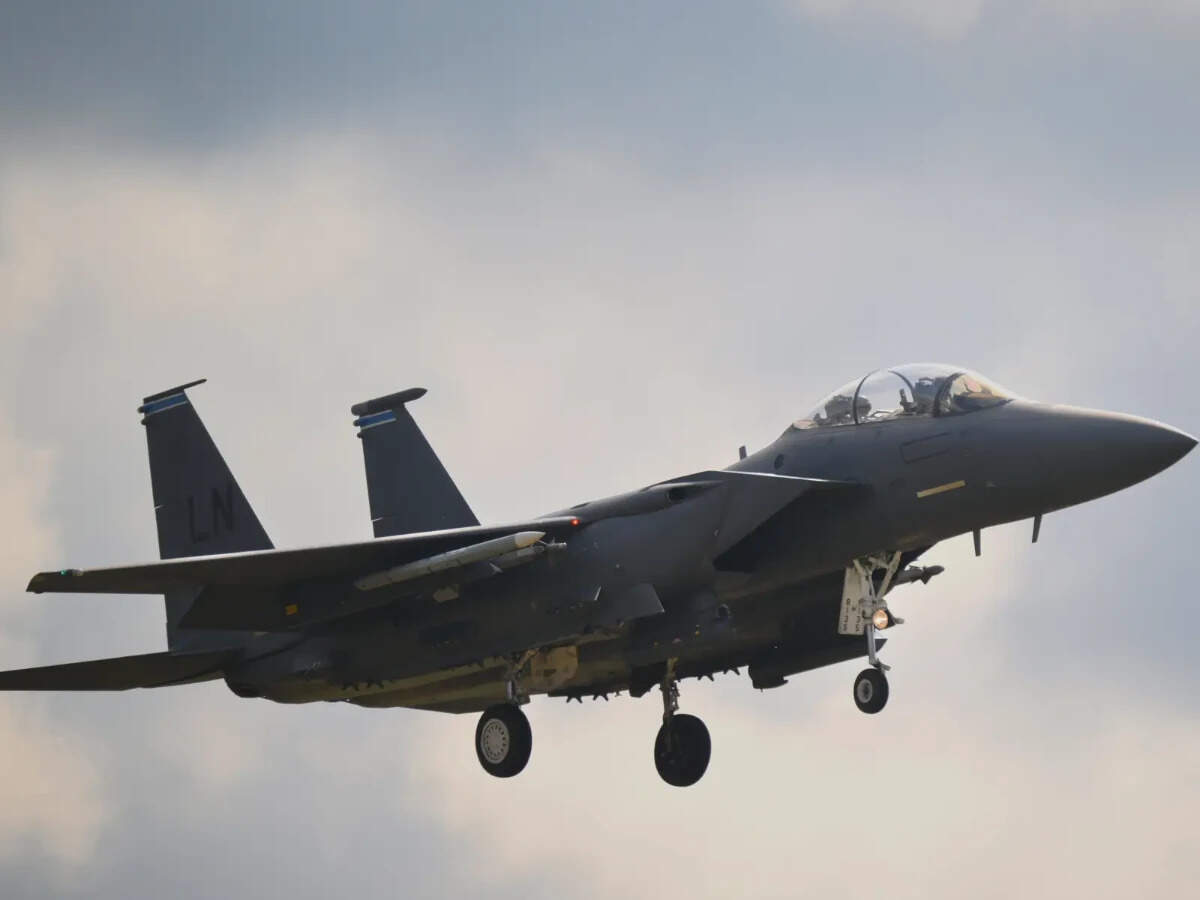
The US military on Saturday intensified its search for a missing pilot in a remote mountainous region of southwestern Iran, a day after Iranian forces shot down an American warplane and publicly urged citizens to report the pilot’s whereabouts.
The aircraft, identified by Iran as an F-15E Strike Eagle, was one of two targeted a day earlier. While one pilot was successfully rescued, at least one remains unaccounted for. The incident marks the first confirmed loss of US aircraft inside Iranian territory since the conflict began six weeks ago, potentially increasing pressure on the administration of Donald Trump to reassess its strategy.
The downing of the US aircraft comes in stark contrast to recent assertions by Trump, who claimed in a national address that Iran had been “completely decimated.” Both the US and Israel had also maintained that Iran’s air defence systems were largely neutralised.
Search operations are now concentrated in the rugged terrain of Kohgiluyeh and Boyer-Ahmad province, where conditions complicate both surveillance and rescue efforts.
Official details remain limited. Neither the White House nor the Pentagon has issued a comprehensive statement. However, a Pentagon communication accessed by the Associated Press confirmed that it had received reports of "an aircraft being shot down" in the Middle East, without elaborating further.
Speaking to NBC News, Trump played down the broader implications, saying the incident would not impact ongoing negotiations with Iran.
Meanwhile, Iranian state media reported that a US A-10 attack aircraft also crashed in the Persian Gulf after being hit by Iranian defences. A US official, speaking on condition of anonymity, said it remains unclear whether the aircraft was shot down or suffered a crash, with no immediate information on the crew or crash site.
In a notable escalation, a presenter on an Iranian state-affiliated channel called on civilians to hand over any “enemy pilot” to authorities, marking a first in the conflict.
'This isn't like TV'
Contrary to popular imagination, rescue operations in combat zones are not as straightforward as dispatching a helicopter and retrieving personnel.
"This isn't like TV," Stern told CNN while underlining the unpredictability of such missions. The airspace itself is contested and hazardous. Reports of Iranian forces firing at low-flying helicopters serve as a chilling reminder that even reaching the extraction zone could invite direct confrontation.
Along with this, the clock is ticking on the rescue operation. For US, the urgency is acute. Israel said one pilot was rescued. However, the second pilot now remains missing and evading capture for over 36 hours.
For the pilot, operating behind enemy lines for such an extended period places immense physical and psychological strain on the individual.
The situation for the pilot is further complicated by rugged mountainous terrain, limited or disrupted communication, the possibility of injury and an active pursuit by hostile forces.
In such conditions, survival becomes a race against exhaustion, exposure, and detection.
Nightfall: Advantage and risk
If a rescue attempt is mounted, it will likely unfold under the cover of darkness.
The US military holds a technological edge in night operations, with superior vision and navigation capabilities. Darkness, in this case, serves as both a shield and a strategy.
Yet, it comes with its own risks.
Flying at night in mountainous terrain demands extreme precision. Pilots must navigate not just geography, but also the invisible threat of enemy fire. For the stranded crew member, moving or signaling in darkness adds another layer of difficulty.
As both the US and Iran move fast to find the missing pilot, the clock ticks on and the war escalates with a fresh wave of missiles and blasts every hour.