Once again on this divisive day of national celebration, Australia’s leaders can be expected to indulge in official monologues of self-congratulation based on assertions of who we supposedly are as a country and a people.
Notwithstanding the perennial affront to many First Nations people’s sensibilities each 26 January, Australia will officially talk over the protests to cast itself as a tolerant, inclusive, egalitarian, self-sufficient, ruggedly individual nation of mates – always underpinned by a reverence for democracy and a hardy streak of anti-authoritarianism.
The truth is that many of these traits are not and never have been unique to Australia or its peoples. But all nations tell stories to themselves – and this is the national narrative of the (white Australian) federation of 1901 that grew from violent dispossession after the tall ships arrived as the apex of invasion in 1788.
Were we to celebrate the national birthday at federation we’d have just turned 125. Hardly part of the old world to be sure, though still disappointingly in too many ways one of its colonial extensions politically and culturally.
Australia is hardly a neophyte nation either. Celebrated from federation as a new beacon of bold democracy within the British empire and a bastion of rights (not least for workers and female voters but never for Indigenous people), but 125 years later we seem more empirically shackled than ever.
Australian republicans have long sought to break the chains with Great Britain, as largely symbolic as they remain – although on 26 January England and its first fleet by definition takes awkward centre stage in the celebrations and, for First Nations peoples and their supporters, the mourning.
And yet today as Australia stops to celebrate itself, more progressive citizens will be uncomfortably preoccupied with their country’s obsequiousness and ever-deeper indebtedness to another more powerful empire with its rapidly eroding democratic institutions, and its threat to global order and peace.
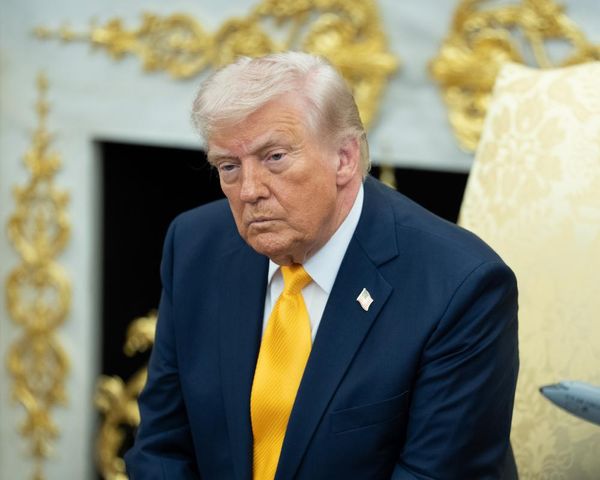
The US under its 45th and 47th president increasingly operates in a mist of White House untruths, with a mob mentality and in a moral vacuum. It functions with waning regard to international law. It has become impossible to predict internationally, as evidenced by its military intervention in Venezuela and the president’s erratic gameshow charade of will I or won’t I? invade Nato ally Greenland in order to “take”.
It should be no small matter when two respected former (Labor) foreign ministers warn that Australia ought reconsider its commitment to the US alliance under the current “fiercely unpredictable” administration which raises a “colossal challenge” for Australia.
And yet strategically – even as the US sabre-rattles at Europe and seeks to supplant the United Nations (an organisation in whose establishment Australia was formative) with a pay-to-play board of peace including dictators of rogue nations and led by Donald Trump – our political leaders remain pretty well mute, the country hocked to America militarily and strategically by the $368bn Aukus submarine deal.
Slavish, unquestioning dedication to Washington by the federal government and the opposition parties lends a bipartisan shield to Aukus, despite serious privately held reservations about it within government and the defence and intelligence establishments.
Where is that much-vaunted ruggedly individual self-sufficiency when it’s needed?
You have to wonder, given the threatening Caligula-like ramblings emanating from the White House, what it would actually take for middle power Australia to ditch Aukus, dispense with its little America cloak and publicly countenance rethinking the alliance under the present US administration.
Given the federal government’s deafening silence (which can, let’s face it, easily be interpreted as another pathetic appeasement of the emperor), we’ve got a long way to go. Indeed, Australia shows no sign of heeding the wake-up call to middle powers by the Canadian prime minister, Mark Carney, at Davos that no longer will “compliance buy safety” amid America’s disruption of the rules based order.
Political race callers may find it instructive that Treasurer Jim Chalmers was initially a lone government voice in his very enthusiastic praise of Carney’s “stunning speech’’ criticising Trump’s US and the need for middle powers to seek more reliable, safe multilateralism elsewhere. His praise for Carney’s sentiments are bound to resonate with the Australian public and their rapidly evaporating faith in America, its capacity to behave with global responsibility and the reliability of its president to back an Australia in need. PM Anthony Albanese has since said he agrees with Carney’s assessment (although his enthusiasm was notably less effusive than Chalmers’.)
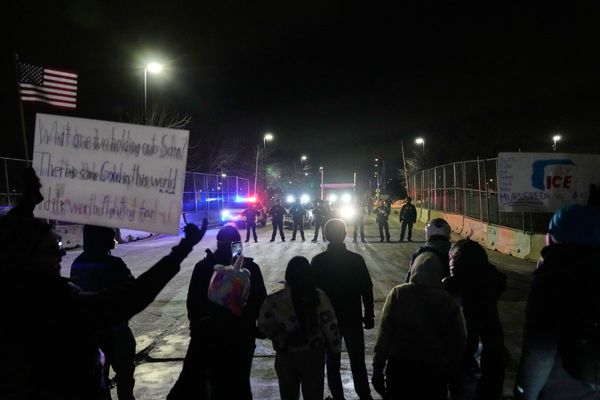
Yet sadly Australia’s official threshold for sycophancy towards a country that deploys paramilitary force against its own people on racial grounds (resulting in shooting dead apparent innocents) and strongman threats to use the US military against American citizens remains starkly at odds with public concern.
In his quest for Greenland, Trump, it should be remembered, cited America’s craving for its natural resources. Ring any alarm bells in the resources rich wide brown land which has already entered a critical minerals deal with the US president? It should.
This 26 January – amid the First Nations protests against the settler state whose founding document doesn’t recognise them and which celebrates national identity on the anniversary of invasion, amid all of the hollow political talk about some supposedly unique Australian individualism, self-sufficiency and rugged anti-authoritarianism – perhaps it pays to ponder just where the nation might actually sit as a global citizen right now.
It’s hard to ignore the discomfiting voice that responds: in the lap of a superpower sliding into tyranny.
Paul Daley is a Guardian Australia columnist