A third No Kings protest will be held on 28 March, organizers announced on Wednesday. Ezra Levin, co-founder of Indivisible, one of the groups coordinating No Kings, said that he expected it to be “the biggest protest in American history”.
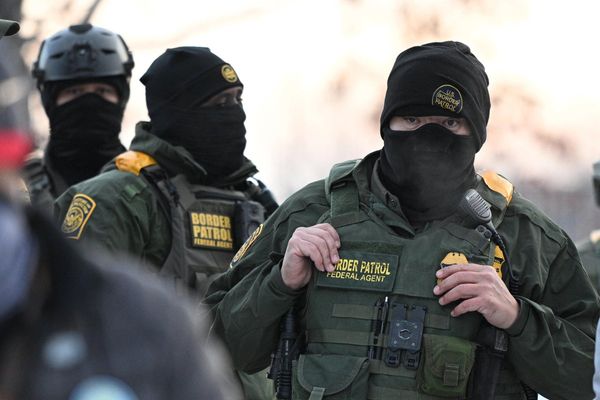
Protests will be held nationwide, with a flagship event in Minnesota’s Twin Cities – Minneapolis and Saint Paul – where this month federal immigration agents killed two residents, Alex Pretti and Renee Nicole Good, amid their escalated operations in the region.
Levin said No Kings 3 was a response to many Americans’ growing outrage over Immigration and Customs Enforcement (ICE) and the Department of Homeland Security’s (DHS) “reign of terror” in communities across the country. The coalition behind the No Kings protests also hosted a mass mobilization “weekend of action” immediately following Good’s death, which included more than 1,000 protests, vigils and other events. According to recent polling from YouGov, more Americans now support abolishing ICE than oppose it.
Levin said while he did not know if ICE would still be on the ground in Minneapolis on 28 March, he expected No Kings “to be a raucous, joyful and non-violent but powerful display of what America’s all about”.
What are the No Kings protests?
The last No Kings protests in October saw an estimated 7 million attenders; Levin said the No Kings Coalition was aiming for these protests to draw 9 million.
The first No Kings protest took place in summer 2025 as a response to what organizers saw as rising authoritarianism from Donald Trump, and built off the success of earlier “Hands Off” rallies coordinated by Indivisible. The No Kings Coalition includes Indivisible, the protest group 50501 (which stands for 50 protests, 50 states, 1 movement), labor unions, legal organizations such as the American Civil Liberties Union, and advocacy groups such as the Movement for Black Lives.
In the statement announcing the event, the No Kings Coalition emphasized the importance of safety and non-violence. Organizers were trained in de-escalation, the coalition said, and were working closely with local partners to make sure protests stay non-violent and lawful.
Do protests work?
Whether or not the No Kings protests will alter the course taken by the Trump administration remains to be seen, though experts and historians say that in general protests do have the power to change policy and public opinion.
In the first year of the second Trump term, Americans have adopted various protest strategies, especially when responding to ICE. When ICE agents arrived in Los Angeles in June, protesters chased them out of their hotels with bullhorns and a band playing Mexican songs. Amid the surge of federal agents in Washington DC in September, residents banged pots and pans in a tactic from Latin America. Whistles, blown to alert neighbors of agents in the area, have become a recognizable symbol of ICE monitoring and an accessory at protests nationwide.
A Guardian analysis of data from the Crowd Counting Consortium found that protests last year outnumbered those in the first year of Trump’s first term. Erica Chenoweth, a protest researcher, told the Guardian: “It is a very historic time, in the sense that people are mobilizing where they live in ways that I don’t think I have seen before in my lifetime.”
According to Levin, the third No Kings rally is designed to not only push back against what he called the Trump administration’s authoritarianism and the lawlessness of ICE agents but also to invite in people who have not participated in protests before.
Levin stressed that the two months between the announcement and the event does not mean that organizers are taking a break.
“Mass mobilizations of this type are necessary and also insufficient and should be joined with a whole bunch of other tactics,” said Levin, pointing to the coalition’s online training to safely document and observe ICE agents, which was held on Monday night. As of Wednesday afternoon, the training has been watched by more than 200,000 people, and the group will host another on 5 February.
Another action Levin is calling for is putting pressure on elected officials such as Hakeem Jeffries, the House minority leader, and Chuck Schumer, the Senate minority leader, to call for the resignation of Kristi Noem, the DHS secretary.
“No Kings 3 is not the end of the movement,” said Levin. “Authoritarians typically do not give up power willingly … you need to develop the muscle and the sophistication of your pro-democracy movement that you’re able to do more than show up on a Saturday in historic numbers. You have to show up in the way the Twin Cities did, but do it everywhere.”