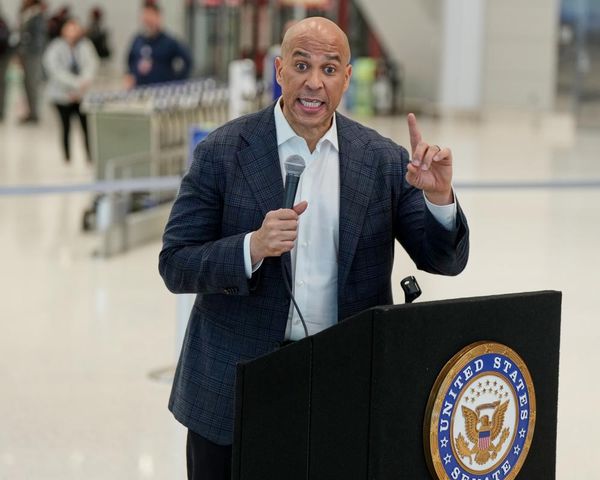
At an unfortunately timed event held in Miami to promote US investment in Saudi Arabia, the president of the United States told his audience that they could ask him about anything, even sex, and that the crown prince of Saudi Arabia, Mohammed bin Salman, although “a great son” to his father, the king, “did not think he would be kissing my ass... He thought he [Trump] would be just another American president that was a loser, where the country was going downhill. But now he has to be nice to me.”
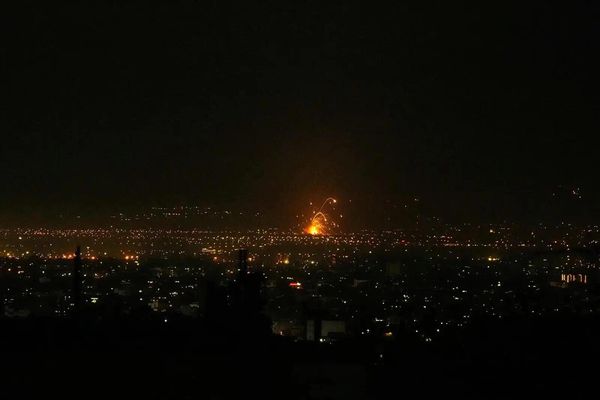
If only those typically off-colour remarks marked the limits of Donald Trump’s foolishness. Far more consequential, and worryingly indicative of delusion, were his declarations that the Iranians were “begging to make a deal” and that they’d “have to” open up the Strait of Hormuz, which he misnamed the “Strait of Trump” as his little joke. As Mr Trump was performing his trademark “weave”, Iranian missiles and drones were raining down on the Prince Sultan US airbase in Saudi Arabia, injuring 12 American service personnel and damaging a number of planes, including an E-3 Sentry, an airborne warning and control system aircraft, a key piece of equipment of which the US Air Force has a very limited fleet. Although ageing, it was worth about $300m.
Elsewhere, the war has, as was widely feared, now drawn in the separatist Houthi rebels in Yemen, long-term associates of Tehran, who’ve been launching long-range missiles into Israel. The Israel Defense Forces, for its part, has extended its operations in southern Lebanon as far as Beirut. Elsewhere, the Iranians knocked out an aluminium plant in Abu Dhabi, and a further 3,500 US marines and sailors have arrived in the Middle East, taking the total number of American troops in the region to some 53,500, with many more on the way. Once there, the natural pressure will be to use them to help win the war.
It certainly doesn’t feel like anyone involved is “begging” for peace. On the contrary, the war is expanding and escalating ever more dangerously. Two immediate and extreme dangers present themselves as a result of the resurgence of Houthi activity. The first is that the long and merciless proxy war between Iran and Saudi Arabia in Yemen will reignite. Aside from a fresh humanitarian disaster for the region, the present circumstances make it far more likely that Iranian and Saudi forces will come into direct contact, something that has been avoided thus far, even as the Iranians have attacked the Gulf Arab states with alarming ease, causing widespread panic and severe damage to their economies. Let down by the Americans, who have singularly failed to protect them, it can only be a matter of time before Saudi Arabia, the United Arab Emirates and Kuwait will feel obliged to hit back.
The second, linked danger of Houthi activity and further chaos in Yemen is that the Red Sea, like the Persian Gulf, will be closed to most maritime traffic, and supplies of oil, gas and much else will be even more constrained. The Bab-el-Mandeb Strait off Yemen is the western counterpart to the Strait of Hormuz, and if this too is effectively closed by Iranian and Houthi action, then shipping to and from the Suez Canal will also be disrupted. The effects on the global economy from both sides of the Arabian peninsula being cut off would be catastrophic – a world slump. Even those countries presently being granted passage, for a fee, through the Gulf, notably China, would not escape the effects of such a collapse in trade and industrial activity.
Iran, in other words, will quite conceivably soon hold the world economy hostage, and the Americans, whose war this is, will have only the most unpalatable of options. Iran, in other words, will quite conceivably soon hold the world economy hostage, and the Americans, whose war this is, will have only the most unpalatable of options. President Trump’s rhetoric and the arrival of thousands of US marines suggest that escalation – including an invasion of the Iranian oil facility on Kharg Island – is an option, but the chances of long-term success seem slim, even for a superpower. “What next?” is the obviously begged question. The air war is not producing regime change, but is making America look bad. As ever, there is no White House plan, merely a series of social media posts and sporadic operations with unknown consequences. Much could easily go wrong, with casualties and humiliation to match.
What’s more, American actions actually point in a different direction – towards disengagement. Why else has the unsinkable US Navy not yet tried to escort tankers through the Strait of Hormuz, instead calling on allies such as Japan, France and the UK to do this hazardous work? Patrolling and defending Bab-el-Mandeb as well as the Strait of Hormuz on an indefinite basis would surely stretch Western navies to breaking point, with little left over for Taiwan or the Arctic.
It is astonishing that a rickety military power such as Iran and a bunch of Yemeni bandits could so leverage their modest formal military prowess in such a manner – but that is the nature of “asymmetric” warfare. As the Viet Cong and the Taliban demonstrated before, a superpower can become a pitiful, helpless giant and be beaten using such tactics. But if the American forces pull out, Iran would be left in an intolerably powerful position, and with, it’s rumoured, still quite a stock of enriched uranium.
The Americans and the Iranians may not be “begging” for peace, nor engaged in direct discussions, but it is an open secret that they are at least passing messages via Egypt, Turkey and, especially, Pakistan. There are back channels, as in all wars, and the hope must be that the stakes for all sides, except for nihilistic Israel, are now so high that their interests in peace shortly become aligned as they peer over the precipice. But, it has to be said, this war will leave America and the West worse off, the Gulf states newly vulnerable, Yemen and Lebanon still more broken, and the Islamic Republic of Iran very much in place. President Trump will have a hard job persuading Americans that this “excursion” was worth it come the November congressional elections. Losing a war and then losing an election in 2026 wasn’t what Mr Trump was aiming for. He, too, will be a loser.