A truce took hold Friday between Israel and Lebanon's Hezbollah, providing relief on both sides of the border and an opening for Iran and the United States to reach a deal to end the wider war.
The ceasefire appears to have led Iran to reopen the Strait of Hormuz, easing the global energy crisis. But major obstacles remain, as Hezbollah has not formally agreed to the truce and wants Israel to withdraw. Israel says it is “not finished” dismantling the Iran-backed militant group and has announced plans to occupy a swath of southern Lebanon.
The 10-day truce appeared to be mostly holding on its first day, as thousands of Lebanese returned to their homes in the south. Hezbollah had launched missiles into Israel in early March, two days after the U.S. and Israel launched their war on Iran. Israel had responded with heavy bombardment and a ground invasion.
Here’s a look at the ceasefire deal.
The agreement says only Israel can act in self-defense
U.S. President Donald Trump announced the ceasefire on Thursday, describing it as a deal between Israel and Lebanon, whose government had been largely sidelined in the war. Israel has long accused Lebanon of failing to disarm Hezbollah in line with previous agreements and the government's own plan.
The U.S. State Department published a text of the deal and described it as a gesture by Israel “to enable good-faith negotiations” toward a permanent peace agreement with Lebanon. It said the 10-day truce could be extended by mutual agreement if the talks progress and “Lebanon effectively demonstrates its ability to assert its sovereignty.”
The agreement calls for the Lebanese state to prevent Hezbollah and other armed groups from attacking Israel, as did the ceasefire agreement that halted the last Israel-Hezbollah war in November 2024.
The 2024 agreement stated that both Israel and Lebanon would have the right to act in “self defense,” without elaborating. Israel continued to regularly strike what it said were militant targets, often killing civilians, while Hezbollah held its fire until last month.
The new agreement, according to the U.S., gives Israel the “right to take all necessary measures in self-defense, at any time, against planned, imminent, or ongoing attacks.” It does not mention any similar right for Lebanon or Hezbollah.
Israel wants Hezbollah disarmed. Hezbollah wants Israel out
Prime Minister Benjamin Netanyahu said Israel agreed to the truce at Trump's request but was “not finished yet” with Hezbollah. Israel has said it will occupy a 10-kilometer (6-mile) deep buffer zone in southern Lebanon — and prevent people from returning — until all threats are eliminated.
With elections later this year, Netanyahu is under mounting pressure to show that he vanquished Israel's enemies in the wars sparked by Hamas' Oct. 7, 2023, attack out of Gaza — which happened on his watch.
Israel and the U.S. want Lebanese authorities to disarm Hezbollah, by force if necessary. But while Beirut had taken significant steps to assert its control over southern Lebanon before the war, authorities have been unwilling to risk a civil war by fully confronting the heavily armed militant group.
Lebanon's President Joseph Aoun said his objective is to “secure the withdrawal of Israeli forces from the occupied southern territories” and for the Lebanese army to take control of the border area.
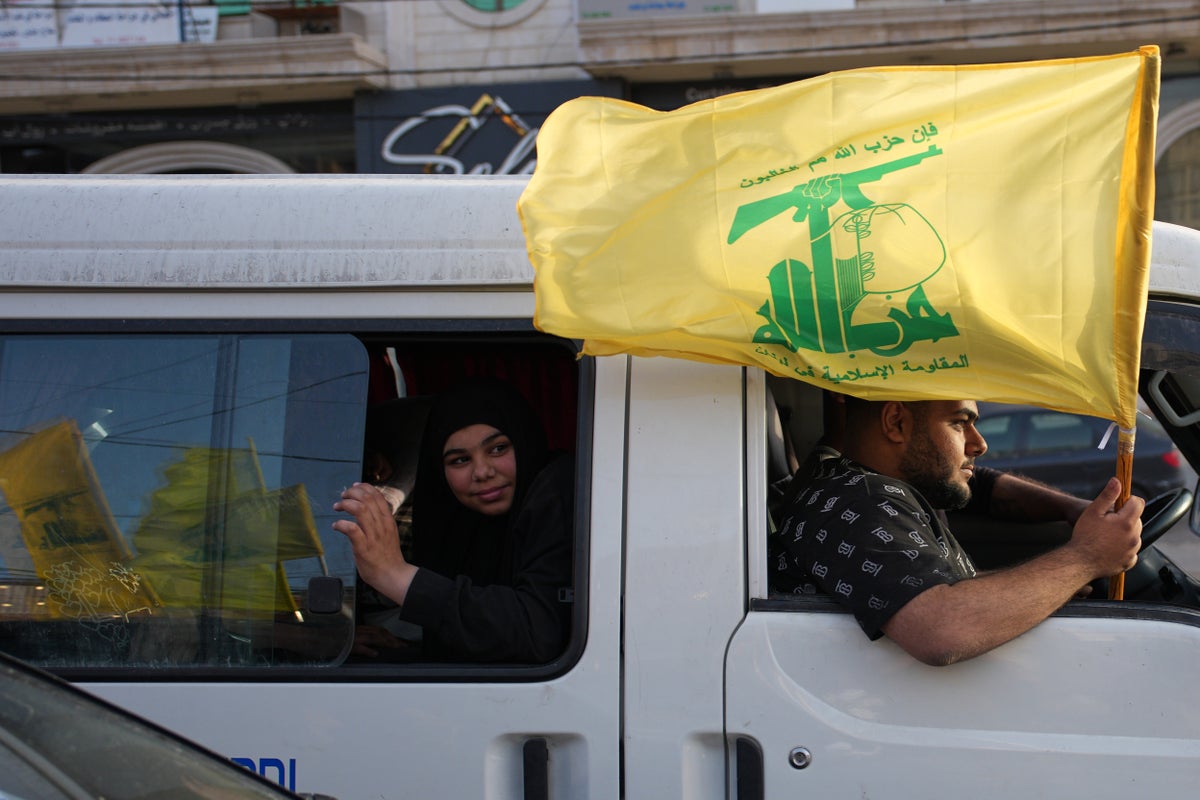
Hezbollah said it will adhere to the ceasefire as long as it is “comprehensive across all Lebanese territories, including border areas, and includes a full halt to hostilities and restrictions on the enemy’s freedom of movement, serving as a prelude to Israeli withdrawal.”
The statement implied that Hezbollah may resume its rocket attacks if Israel continues to target it and remains in southern Lebanon.
U.S. and Iran claim credit
On Truth Social, Trump said Israel is now “PROHIBITED” by the U.S. from bombing Lebanon, an unusually direct assertion of American control over an ally. The U.S. has portrayed the truce as the result of direct Israeli-Lebanese negotiations held in Washington — the first in decades.
Iran and Hezbollah say the deal is actually the result of the larger negotiations between Tehran and Washington and was brought about by Iranian leverage.
Mohsen Rezaei, a military adviser to Iran’s supreme leader, said in a post on X that “while the Lebanese government and Trump are attempting to claim this ceasefire as their own initiative,” it was “the resistance of Hezbollah’s fighters and Iran’s multifaceted pressures” that led to the truce.
Hassan Fadlallah, a member of Hezbollah’s parliamentary bloc, told reporters Friday that Iran had informed Hezbollah leaders of the ceasefire agreement early Thursday, long before Trump announced it.
Lebanon truce appears to be part of the wider ceasefire
Iran — as well as the mediator, Pakistan — had said Lebanon was included in the wider ceasefire reached with the U.S. in separate negotiations earlier this month. That was denied by the U.S., as well as Israel, which launched a massive bombardment of Beirut after it took effect.
Two Pakistani officials told The Associated Press on Friday that Pakistan played a role in securing the ceasefire in Lebanon. They spoke on condition of anonymity to discuss the closed-door talks.
Lebanon's government has been against the war from the beginning and was eager to end it but had little leverage over Hezbollah. Instead, the task fell to Iran, which many Lebanese will see as yet another infringement on their sovereignty.
In a speech Friday, Aoun thanked the U.S. and Arab countries, including Saudi Arabia, for their efforts to secure a ceasefire. He did not mention Iran.
Tehran appears to have used its control over the Strait of Hormuz, and Trump's desire to end an increasingly unpopular and economically painful war, to halt Israel's campaign against its proxy.
As the Lebanon truce went into effect, both Trump and Iran's foreign minister, Abbas Araghchi, announced that the strait had been reopened, something the U.S. had been unable to do through weeks of heavy bombardment and the sinking of much of Iran's navy.
Araghchi directly linked it to the Lebanon ceasefire.
___
Associated Press writers Kareem Chehayeb in Beirut and Munir Ahmed in Islamabad contributed.
Trump puts FBI on case of missing NASA and nuclear research scientists:
Dems use Trump’s AI Jesus post to confront RFK Jr about president’s mental health
Wildfires used to 'go to sleep' at night. Climate change has them burning overtime
Transgender athlete focuses on what may be her last track season as Supreme Court ruling looms
UPS plane forced to abort landing as aircraft crosses its runway
‘Morale is going to be at an all-time low’: Iran war troops living on meager rations