- Production of the all-electric Ford F-150 has come to an end. But the next one will be an extended-range electric vehicle, or EREV.
- The high-power generator will enable 700+ miles of range, Ford said, with longer-distance towing than the all-electric Lightning.
- Ford says that its new Universal Electric Vehicle platform, starting with a $30,000 EV truck, will be the future of its battery-powered car programs.
The Ford F-150 Lightning was a groundbreaking pickup truck. It took so many of the qualities that owners loved about America's best-selling vehicle and gave it zero-emission power, instant torque and even the ability to power a whole house.
Unfortunately for the Lightning, it also became known for the qualities it did not have. Many customers were put off by the EV truck's high price and limited range when towing and hauling. Sales were a drop in the bucket compared to the gas and hybrid F-150, and when Ford did sell them, it was at a loss.
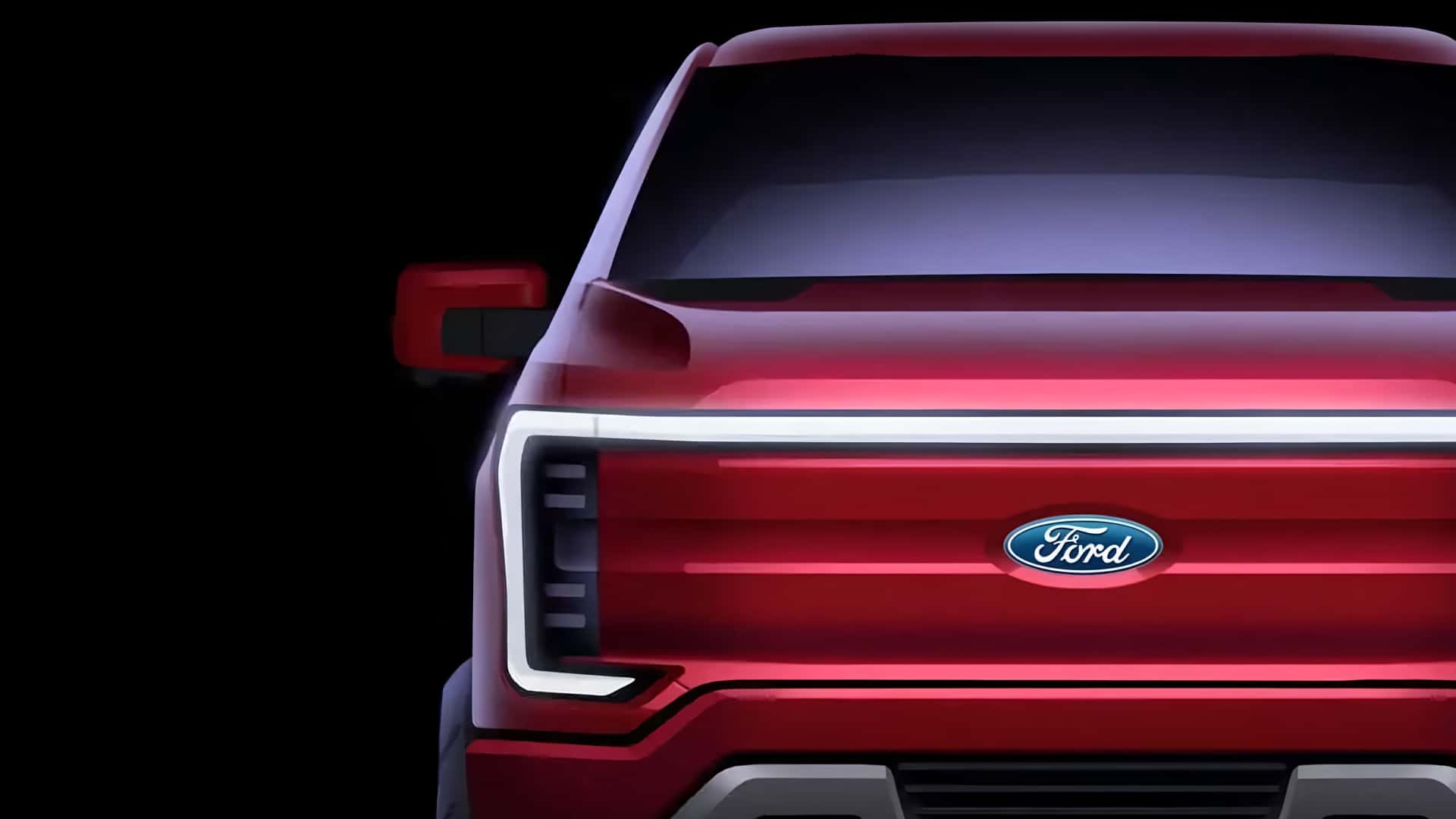
So today, Ford unveiled the revised plan for the next F-150 Lightning: add a gas engine to the next one.
Ford officials said today that production of the current Lightning would come to a close, and a planned next-generation full-size truck—known internally as the Ford T3—would be canceled. In its stead, the next Lightning will be an extended-range electric vehicle, or EREV, with a gas engine that charges the battery. With that addition, Ford expects the next Lightning to offer more than 700 miles of total range.
"We learned a lot from our first generation of EVs, and we know that for many truck owners, towing heavy loads over long distances is non-negotiable," said Andrew Frick, the president of Ford's gas and electric divisions, on a call with reporters today. He called the EREV Lightning "a big step forward" because it operates primarily an EV, but with a gas engine to achieve "range confidence" and longer-distance towing performance. It will also be able to power various electrical devices, much as the current Lightning does.
"The typical customers will get through nine out of 10 days on electricity alone," Frick said. "It will be able to tow with uncompromised range, which is significant for truck owners." Ford offered no other details about the EREV Lightning, including potential pricing and when it might go on sale.
Frick and other Ford officials confirmed that production of the current electric Lightning, which was paused due to an aluminum plant fire, will not resume, marking the effective end of the EV after three-and-a-half years on sale.
"Some of the original forecasts had EV adoption" set much higher than it actually proved to be, Frick said. "We know that hasn't been the case for several reasons, including changes in the regulatory environment, commercial and consumer tax incentives, [and] battery costs not coming down."
EREVs have emerged as a popular alternative to all-electric vehicles, though perhaps only conceptually, since none are currently on sale in the U.S. But they are gaining steam in China and more are planned for the North American and European markets from various automakers.
An EREV typically includes an EV platform, complete with a large battery, an advanced electrical architecture and modern features like software updates, but adds a gas engine to act purely as a kind of generator—not to drive the actual wheels, like on a traditional hybrid. Whenever the EREV Lightning goes on sale, it could compete with the Scout Harvester models and the upcoming Ram 1500 REV.
The EREV Lightning will take the place of the Lightning's presumed successor, the Ford T3. Lisa Drake, Ford's Vice President of Technology Platform Programs and EV Systems, said that the automaker was "partially" into development of the T3 but that it was still a few years away from launch. She did not elaborate as to whether the EREV truck might be an adapted version of that platform or something else entirely.
Meanwhile, Ford's other plans today amounted to a retrenchment on EVs after getting into the game relatively early with products like the Lightning and Mustang Mach-E.
A previously planned new electric commercial van for Europe has been canceled, and at Ford's BlueOval City campus, the Tennessee Electric Vehicle Center will be renamed the Tennessee Truck Plant. There, it will make "new affordable gas-powered trucks." A Kentucky EV battery plant will also be used to make battery energy storage systems now, including for AI data centers.
This is not the first time Ford has pivoted on EVs. Last summer, the automaker announced that a planned three-row electric SUV would be a hybrid instead, and that the T3 would be delayed. But much has changed in a year, including an end to EV tax credits and weakened fuel economy standards by the Trump administration that erased any urgency to move to an all-electric market.
Still, Ford executives today reaffirmed support for the Universal EV Platform, a U.S.-built family of EVs meant to compete with newcomers from China, starting with a truck slated to start around $30,000 when it goes on sale in 2027. "We're really excited about our Universal Electric Vehicle products; those are the pure EVs that we're going to be focusing on," Frick said.
Contact the author: patrick.george@insideevs.com