

When the US and Israel began bombing Iran last week, a lot of people’s minds went straight to Iraq. The visuals feel familiar: American power hitting a Middle Eastern state, talk of “pre‑emptive” action, and a leader in Washington warning about a dangerous regime and its weapons.
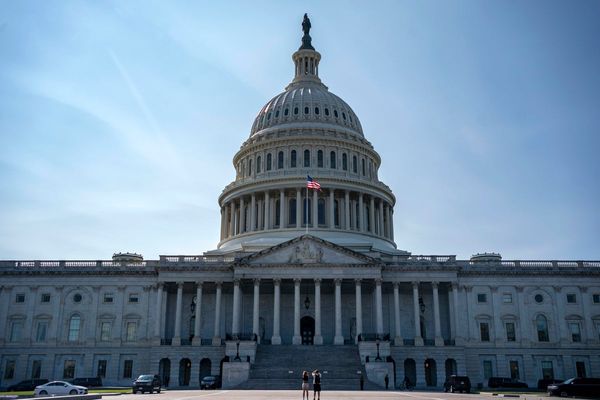
In 2003, George W. Bush told Congress there was a “grave danger” from Saddam Hussein and weapons of mass destruction. This year, Donald Trump used the same stage to talk about Iran’s nuclear programme and a ticking clock, even as his own officials clash over whether earlier strikes “obliterated” Iran’s facilities or left it close to a bomb.

On the ground, the stakes are huge. Iran’s Supreme Leader Ayatollah Ali Khamenei has been killed, senior Revolutionary Guard figures are dead and Iran has launched missiles and drones at Israel and US‑aligned states across the Gulf. Hundreds of civilians have been reported killed, internet access has been heavily restricted, thousands are stranded in the region and key energy and shipping sites have been hit.
So the Iraq comparison is understandable. The real question is whether it’s actually useful, and what it can teach us about what happens next.

Why the Iraq and Iran comparison exists
On the surface, the parallels to 2003 Iraq are obvious. The “war script” feels familiar: a story about a rogue regime, a looming weapons threat and the need to act before it is “too late”, even though the intelligence underneath is contested.
The promises sound similar too.
In Iraq, Bush officials talked up a quick, decisive campaign; now Trump has said the Iran war was projected to last “four to five weeks”, while Israeli officials describe a “pre‑emptive strike” to remove threats. And again, civilians are living through air strikes, blackouts and fear while leaders in Washington and elsewhere argue about strategy.
Ironically, back in 2016, Trump called the Iraq war “a big, fat mistake”, saying, “We should have never been in Iraq. We have destabilized the Middle East”. Ten years on, he is selling another major use of force in the region.
However, Political scientist Wesley Widmaier Jr told PEDESTRIAN.TV that if we stop at the surface of the comparison, we miss the more useful lessons. He thinks three older moments really matter:
-
1953 – unintended consequences
In 1953, the CIA helped overthrow a democratically elected government in Iran. Widmaier says it was “immediately seen as a success”, but became “the law of unintended consequences” that “laid the ground for… seventy‑five years of heartache. His warning about the current strikes is blunt: “we need to remember, beware the unintended consequences”. -
1979 – rally‑round‑the‑flag politics
During the 1979 Iembassy hostage crisis in Iran, President Jimmy Carter enjoyed an early surge in support that later evaporated as the crisis dragged on, helping cost him re‑election. “There’s a rally‑round‑the‑flag effect,” Widmaier says, “but once casualties start appearing… support dries up quite quickly.” He argues Donald Trump may find those political limits still apply, no matter how confident he sounds now. -
Post–October 7 – balance‑of‑power overreach
Widmaier links the current clash to Hamas’s 7 October 2023 attack on Israel. He says Iran backed Hamas partly because it feared Israel and Gulf Arab states were moving closer together, calling it “a classic case of balance of power overextension”. Now, he argues, “you’ve got Israel… very overextended today, especially with respect to American domestic support… they are not playing a good long‑term game”.
He also draws a sharper line back to Iraq. In 2003, he says, “there was misleading the American people”, but he does not think “the misleading was as intentional under George W. Bush as it is under Trump”.
Trump’s “modus operandi is to put as much out there”, listing every possible war aim so that “whatever he does he will be able to go back and say, ‘Well, these are the war aims that we set out to accomplish’”. That information fog makes it harder to pin down what success looks like, and harder to hold anyone accountable.

How people are feeling about Khamenei’s killing and what it means for the future
For many Iranians, especially in the diaspora, Khamenei’s death is both a relief and a source of deep unease. Widmaier puts it bluntly: people are “happy to be rid of an awful leader… he killed [thousands] of his own people”, but they are also “uncomfortable” because “simply going in and toppling a government unilaterally… doesn’t lead to a legitimate regime change”.
An Iranian national now living in Australia told PEDESTRIAN.TV that when she first heard he was dead, she felt “shocked mostly”. “Of course I was happy,” she said, “but I had mixed feelings. I was worried because I knew something is going to start and I didn’t know what’s gonna happen.”
She believes “this is the regime’s fault there didn’t remain any other choice [other] than asking help from US or Israel”, after years of massacres and failed reform.
“While I really don’t like this situation, I myself don’t see any other option,” she explained.
The woman still could not bring herself to chant “thank you Trump” or “thank you Israel” when she attended moments of celebration within the Iranian-Australian community.

Looking ahead, she does not pretend there is an ideal path. In a perfect world, the regime would “just go without all these killings”, but “we know they’re not gonna do that”. Now that the US and Israel are involved, she believes “we do have no choice” but to have “some sort of control from the US” to stop regime insiders rebuilding power, while stressing she does not want “a complete” foreign grip on Iran’s future.
Her ambivalence sums up a wider mood: the killing of Khamenei is widely seen as a good thing in itself, but there is real anxiety about how it happened, who did it and what that means for the future of Iran.
What this comparison suggests about where we’re headed
The value of the Iraq comparison lies not in suggesting history will repeat itself, but in sharpening the questions policymakers and the public should be asking.
It reminds us that interventions that look like quick wins can shape a country for generations, that wartime popularity is often brief, and that overreach can lock Iran, Israel and the US into a conflict none of them can easily exit.
It also reminds us of the rhetoric used to justify wars and the realities that unfold.
On one side, a president who once called Iraq a “big, fat mistake” is now driving strikes that echo that war’s rhetoric.
On the other, Iranians are watching bombs fall, celebrating the end of a feared ruler and worrying about the potential fallout from how he was ousted and what, if anything, will really change next.
The post The Iran–Iraq War Comparison Everyone’s Making And What We Should Learn From It appeared first on PEDESTRIAN.TV .