
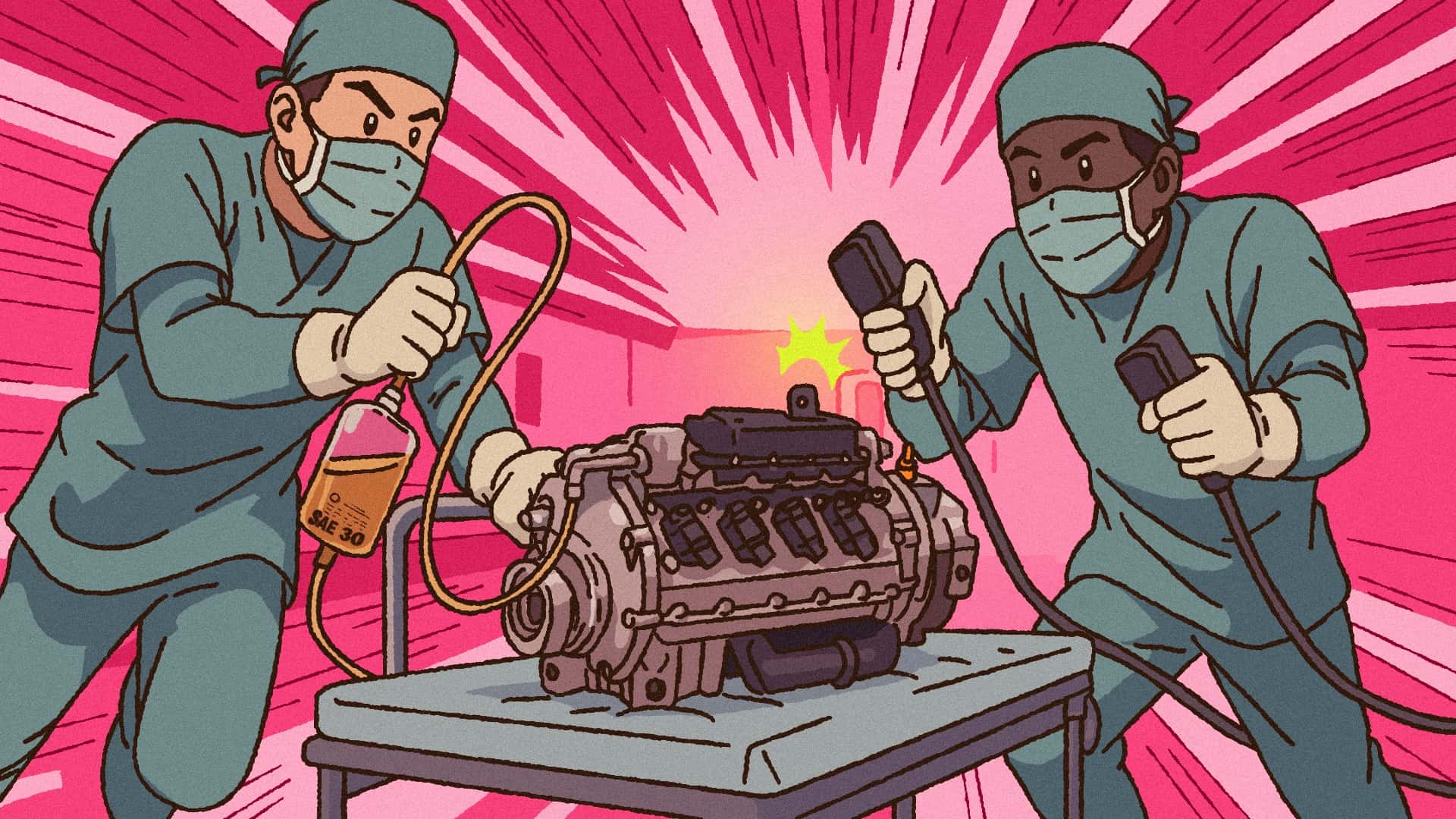
Rumors of the combustion engine’s demise have been greatly exaggerated. Throughout the early 2020s, it seemed inevitable that internal combustion would head the way of the dodo, replaced almost entirely by EVs. Automakers set aggressive timelines and governments laid out ambitious goals, paving the way for a full battery-powered future.
But recently, there’s been a major shift. Automakers are now pulling back on their once overly ambitious electrification goals, and combustion engines are seeing an unexpected revival. Not only do automakers now plan to keep gas engines in their lineups longer, but some are actually investing in the development of entirely new combustion powertrains—something that would have sounded absurd as little as five years ago.
That said, electric vehicles definitely aren’t dead in the water. Even though EV sales have slowed recently in the US, in part due to disappearing incentives, electric cars remain hugely popular in other markets. Globally, EVs are still projected to make up around 25 percent of the entire automotive market by the end of the year, translating to more than 20 million battery-powered vehicles on the road.
Even so, most companies are convinced that combustion engines will remain popular over the next few years. As a result, companies are going to great lengths to keep the gas-burning powertrain alive—at least for a little while longer.

Take General Motors, for example. In order to keep its iconic small-block V-8 around for another generation, the company dropped a massive $888-million investment into its Tonawanda manufacturing site in Buffalo, New York. It’s the largest investment the company has ever made toward gas engine production at a single facility. This comes just five years after an all-in push on its electric Ultium platform—a multi-billion-dollar investment that spawned nearly a dozen electric vehicles across its brands.
"Our significant investments in GM’s Tonawanda Propulsion plant show our commitment to strengthening American manufacturing and supporting jobs in the US," notes CEO Mary Barra. "GM's Buffalo plant has been in operation for 87 years and is continuing to innovate the engines we build there to make them more fuel efficient and higher performing, which will help us deliver world-class trucks and SUVs to our customers for years to come."
Just on the other side of town, Chrysler is spending $13 billion on American production with a large focus on combustion development. Much like GM, it’s the single largest investment in the company’s 100-year history, with more than 5,000 new jobs expected across its plants in Illinois, Ohio, Michigan, and Indiana.
Not only do automakers now plan to keep gas engines in their lineups longer, but some are actually investing in the development of entirely new combustion powertrains—something that would have sounded absurd as little as five years ago.
Yes, some of that will go toward the production of Ram’s extended-range 1500 EV, but the company also promises a new internal-combustion-powered large SUV and a mid-size truck. Already, the iconic Hemi has returned to the Ram lineup, while Dodge revived its V-6 Durango, and the company promises even more combustion-powered vehicles in the near future.
Meanwhile, across the Pond, one of Europe’s largest engine suppliers has a creative solution to keep combustion alive in a stingier market. Horse Powertrains, a Geely-owned, UK-based supplier, introduced its new C15 engine at this year’s IAA Mobility Show in Munich. The compact hybrid setup houses a motor, generator, and cooling system within a suitcase-shaped housing that measures just 18.9 x 19.3 x 9.8 inches.
Horse’s C15 makes a scant 94 horsepower out of the box—just good enough for some European econoboxes. The turbocharged version, meanwhile, makes up to 161 horsepower. Both engines work with a range of fuel options, from gasoline, ethanol, and methanol to synthetics.
But maybe the most unhinged idea for a new combustion powertrain comes from Mazda. At this year’s Japan Mobility Show, the company debuted another lovely-looking concept in a long lineage of stunners that will inevitably never make it to production. What’s most interesting about the Vision X-Coupe, though, is what you don’t see.
According to Mazda President and CEO Masahiro Moro, the concept predicts "a future where the more kilometers you drive, the more you help reduce CO2." What exactly does that mean? Well, the Vision X-Coupe uses a system that Mazda calls "Mobile Carbon Capture." Essentially, the setup combines a plug-in hybrid system with a two-rotor rotary engine that uses microalgae—yes, microalgae—to capture emissions from the tailpipes and store them in its cells.
Mazda says it’s then able to extract oil from those emissions and refine it into carbon-neutral fuel that powers the hybrid setup. The company says it successfully produced over a liter of fuel from an 11,000-liter culture tank… in just two weeks. Granted, it’s a hugely inefficient and unrealistic idea, but the fact that Mazda is willing to invest this much time and effort into new combustion technology proves that companies aren’t ready shy away from fuel-burning engines just yet.
And so many companies are seemingly headed down a similar path. BMW and Mercedes-Benz both have new V-8s on the horizon. Nissan is working on a gas engine with patented fuel-saving technology. Honda has a new hybrid V-6. Toyota has a new V-8. And even in China—a market that leans heavily on electrification—new and innovative combustion technology debuts seemingly by the week.
Of course, it’s impossible to overlook how government agencies have played a role. Here in the US, President Trump lobbied aggressively for the return of internal combustion and has been openly and outwardly anti-EV (for the most part), calling out the Biden Administration for its "electric car hoax." Shortly after returning to the White House for his second term, Trump removed the 50 percent electric vehicle target for 2030 laid out by the Biden Administration, and quickly ended the $7,500 tax credit for new EVs.
Meanwhile, in Europe, after months of pushback from manufacturers, the European Union has agreed to drop its 2035 ban on combustion engines and reduce its emissions targets from 100 percent to 90 percent compared to 2021. That gives companies leeway for production of new hybrid, plug-in-hybrid, and extended-range EVs beyond 2035.
However it shakes out, the combustion engine isn’t going anywhere—at least not in the immediate future. Electrification is still the long game for many automakers, but changing consumer demand and political realities have bought gas engines a few more years. And automakers are hoping to milk every bit of that remaining time.