TAIPEI -- An elderly man sitting on a bench at Taipei Station smiled and spoke in fluent Japanese. "I was born in Showa 6 [1931], and my family name is Fujiwara," he said.
"Taiwan has never been more admired by the world than it is now. I'm more proud and confident than ever," said Fujiwara, who has lived through the period of Japanese rule, the dictatorship of the Kuomintang party and democratization.
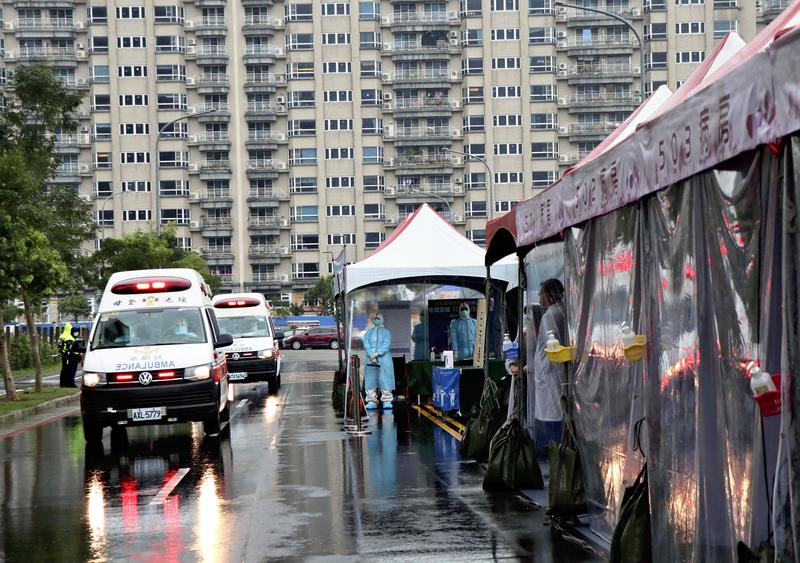
Many people are voicing similar opinions, regardless of their age, gender or occupation. Their smiles stem from the fact that Taiwan has stunned the world by successfully containing the spread of the novel coronavirus. Daily announcements of "zero new infections," and the fact that Taiwan started professional baseball games earlier than anywhere else, are symbolic of its success.
One factor behind their exultation may be the negative image of Taiwan that its own people have painted. They have lived with feelings that their island had been dominated by foreign powers historically, and isolated in international society by pressure from China in modern times.
For example, Taiwan's leading singer Lo Ta-yu sang in the 1980s, "An Asian orphan is crying in the wind." In the 1990s, Taiwan President Lee Teng-hui referred to "the sorrow of being born as a Taiwan person."
However, the island's countermeasures against the coronavirus have blown such pessimism away. Hsieh Chin-ho, chairman of the popular magazine Wealth Management, said: "Everyone was proud of 'being from Taiwan' and began to have confidence. It's an unprecedented change, and it can be a turning point for Taiwan to rise."
This indicates that Taiwan has begun to undergo a historical transformation in which it has pulled itself out of "Taiwan pessimism."
"Taiwan pride" has inevitably brought about another important by-product. The "Taiwan consciousness" of not being Chinese has become even stronger in society, spurred by the differences in measures taken to prevent the spread of the virus.
"In Taiwan, a party that can't protect residents' lives loses in an election. We have freedom of speech as well. We're different from China, where a doctor who warned of the risk of infection very early on was punished," a 50 year-old high school teacher said.
In a survey in May, the Taiwanese Public Opinion Foundation asked, "Do you identify with the feeling 'I'm from Taiwan. I'm not Chinese. And I'm proud of it.'" The answer "yes" accounted for 77.7% of respondents.
In similar surveys through the early 2000s, the most typical answer was "I'm from Taiwan and I'm also Chinese."
A smiling housekeeper, 35, said, "It's an honor to be praised by the world." Asked about the China-Taiwan relationship, she said, "Taiwan is not China."
Current China-Taiwan relations, which involve neither reunification nor independence, will not change for the time being. However, the mentality of the Taiwan public is moving away from China at an accelerating pace.
Read more from The Japan News at https://japannews.yomiuri.co.jp/