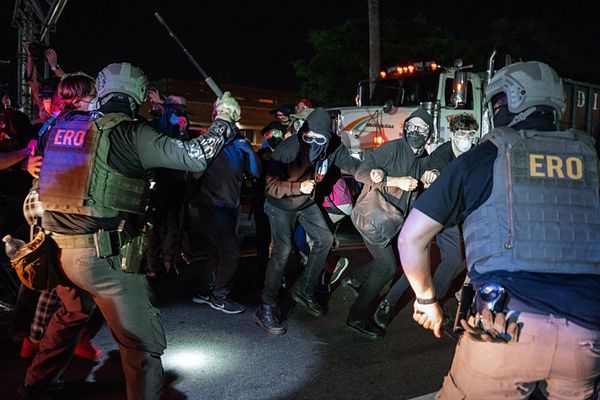
The federal government is quietly widening its domestic surveillance net to include a newly defined group of Americans: people voicing opposition to artificial intelligence. Intelligence agencies and law-enforcement departments are now actively categorising outspoken critics of rapid technological advancement as potential security threats, blurring the line between public debate and national-security monitoring.
This move marks a massive shift in national-security priorities under Donald Trump's administration. When everyday citizens voice their concerns about the constant growth of 'data centres', they are apparently being watched, as authorities shift their focus towards anyone questioning the unchecked spread of automated tools.
Uncovering the push to monitor anti-technology extremists
We recently obtained internal documents that expose a highly organised plan to keep tabs on Americans who are simply feeling a bit anxious about 'tech overreach'. The files encompass more than a thousand pages, demonstrating that federal agencies are building frameworks to track individuals suspected of harbouring extreme anti-technology sentiments.
A recent report scrutinised these documents and highlighted the explicit directives circulating within the government. The text from the report reads: 'In the wake of attacks on CEOs, a nationwide protest movement targeting data centers, and increasing concerns about AI job replacement, federal intelligence agencies and domestic law enforcement are circulating reports with a new domestic target in mind: anti-technology extremists. More than 1,000 pages of unpublished reports from the Department of Homeland Security, FBI, and fusion centers obtained by WIRED show a national shift taking place to surveil this new and worryingly broad category of people and activities deemed an emerging threat. ... A new focus on anti-technology extremism adds an unreported category to already public designations under a presidency that has heavily invested political and material capital in AI and data center proliferation.'
JUST IN: FBI warns of rising “anti-tech extremism” as opposition to AI & data centers intensifies.
— Polymarket (@Polymarket) May 27, 2026
Why 6 January Pardons Complicate the Administration's Security Narrative
Security analysts note that evaluating these new counterterrorism measures requires examining the current administration's broader enforcement record. The government's credibility regarding domestic threats faces scrutiny following recent executive actions.
Trump issued pardons to more than 1,500 individuals involved in the 6 January riots during his first weeks back in office. This decision complicates the administration's stated commitment to strictly prosecuting ideological extremism.
Furthermore, the government appears to be deprioritising surveillance of previously established domestic threats. Previous administrations consistently identified white supremacist networks as the primary domestic terror concern, but the current regime is allegedly abandoning that emphasis.
In the wake of attacks on CEOs, movements targeting data centers, and increasing concerns about AI job replacement, feds & policing agencies are constructing a new domestic target they characterize as "anti-technology extremists" (or, anti-capitalists). https://t.co/mWtEPzLfKN
— Harsha Walia (she/her) (@HarshaWalia) May 27, 2026
Assessing the Bipartisan Resistance to Unregulated AI Expansion
Trump has persistently attempted to prevent states from imposing regulatory frameworks on artificial intelligence firms. These interventions align with his personal investments in the sector and alliances with technology executives.
Monitoring tech critics could function as a mechanism to suppress dissent against corporate expansion and widespread automation. However, portraying AI sceptics as significant public threats faces a major demographic hurdle.
Scepticism regarding automated systems spans the political spectrum and is not confined to isolated fringe groups. A March NBC News poll demonstrated that a majority of surveyed registered voters believe the risks associated with AI tools outweigh their potential benefits.
The coalition questioning technological dominance includes conservative commentators alongside progressive activists. This broad alliance suggests that labelling such critics as extremists could inadvertently target everyday citizens.
When questioned about these surveillance initiatives, federal authorities offered limited details. The FBI stated it 'investigates individuals who commit or intend to commit violence and criminal activity that constitutes a federal crime or poses a threat to national security', and maintained it had 'no additional comment'.
The Department of Homeland Security has not issued a response to inquiries regarding the internal memos outlining these new targets. Federal watchdogs continue to monitor how these surveillance policies will be implemented nationwide.