Finally, the Office of Basic Education Commission (Obec) has reaffirmed its plan to merge or close small schools throughout the country, citing a cost-benefit analysis as a reason.
The confirmation was given last week by Obec's chairman Ekkachai Keesukpan, who explained the decision was based on a Ministry of Education survey which showed that half of the existing schools across the country -- about 18,000 small schools with less than 120 students -- could be shut down or merged with one another. Excluded from the merger plan were about 3,000 small schools in extremely remote areas or near the border.
Mr Ekkachai went into detail about how the mergers were inevitable as the budget-per-head for students for small schools is much higher than for larger schools.
One of the criteria used to decide which schools could be merged was distance. Small schools within a 6km radius of each other could be merged. The Obec chairman insisted that appropriate investment is necessary and that he did not think it would have much effect on students as they will only have to spend "another 30 minutes to commute an additional 6km from their old school", if theirs is unfortunately closed.
Even if Obec has tried to remain sensitive by sparing those in remote and border regions, I have to say that I don't agree with the whole plan. Why do we always have to prioritise quantification over the quality of life and welfare?
I would like to remind the Obec chairman of a few facts. The extra 6-kilometre distance does not apply to every student. Undoubtedly, some will have to travel more than 6km depending on the distance between their home and their old school. More importantly, transport in the provinces, as we all know, is a far cry from being sufficient or efficient. This means these young students will have to suffer an additional ordeal every day.
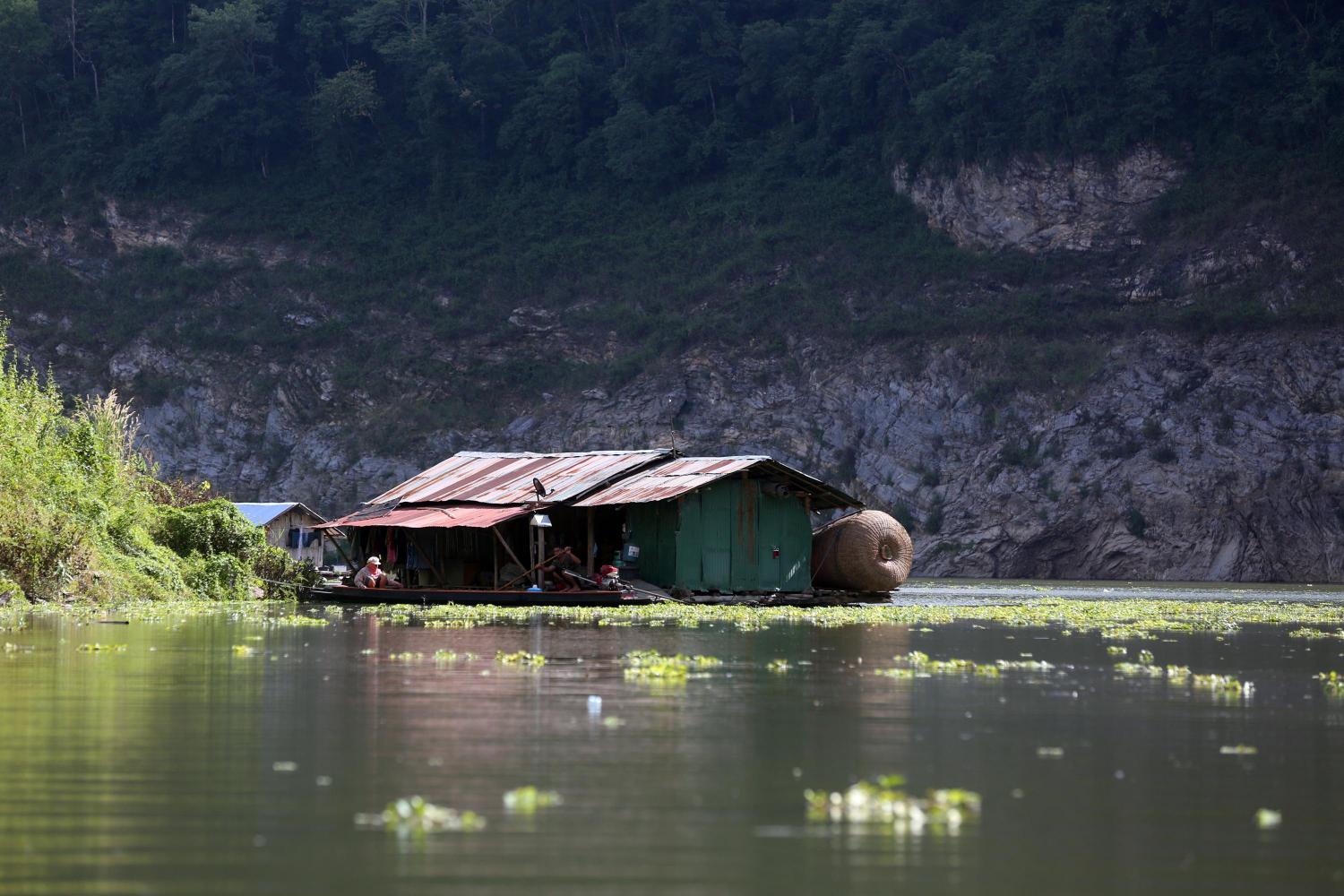
The idea of rating those small schools as so "unimportant" that they could be closed down reminds me of Ban Kor Jadsan School -- Ruen Phae, which is a boathouse school in the northern province of Lamphun. I visited the school a few years ago.
The school became well-known thanks to the critically acclaimed Thai film Teacher's Diary, which is based in a floating school in a faraway land. Due to rave reviews and its popularity, Bollywood is producing a remake that will hit theatres soon.
The film, with picturesque scenery, may give the wrong idea to audiences about the floating school or in some cases even romanticise the rough conditions. The actual school, made from two shabby boathouses, in the middle of nowhere on the Ping River between Tak and Lamphun is nowhere near what audiences sees depicted in that movie, which was shot in the touristic Kaeng Krachan reservoir in Phetchaburi.
In reality, these shabby boathouses serve as a boarding school where two teachers (at the time of my visit, one was away for a meeting in town) take care of six to 10 students, whose parents are fisherfolk.
From a middle-class perspective, the quiet, faraway place seems idyllic for "re-charging" their batteries. But imagine yourself living in a boathouse in the middle of nowhere without electricity or facilities such as a toilet. It takes a one-hour boat ride and another 15-minute drive to reconnect you with civilisation.
Living here means that you are isolated from the outside world with unstable Wifi. Every weekend, the teachers have to go to town to stock up on food for everyone for the rest of the week. They have to meticulously plan everything to ensure that nothing goes to waste because there's no fridge to store meat.
Unable to afford a trip to the city for school, these children have to depend on the shabby boathouse where they learn how to read and write and gain other knowledge about life outside their world of fishing.
The school relies on electricity from solar panels, installed by a company as its CSR project. Some classes are actually pre-recorded classes kept on a pile of DVDs. It's absurd and unbelievable that the state leaves the issue of education and welfare for these children at the mercy of big conglomerates, which run charities to promote their image and businesses.
Of course, this boathouse school isn't on Obec's merger target list. However, it can provide an idea of how small schools can be important for children. Obec should make education planners rethink how to design a curriculum that is more relevant for each region, provide sufficient tools and necessities so that children can attend classes in a better environment as the state aggressively touts "Thailand 4.0".
It's absurd that the government puts so much weight on quantification and sees the matter as a "loss in investment", forgetting that education is a basic human right which will actually help people improve children's quality of life.
Sirinya Wattanasukchai is a columnist, Bangkok Post.