US Republicans are threatening to sanction Canada and Canadian government officials after smoke from devastating wildfires has drifted across huge swathes of the US, creating hazy conditions and dangerous air quality for tens of millions of Americans.
Donald Trump on Friday blamed his country’s northern neighbor for the smoke spreading from wildfires and said he planned to call Mark Carney, the Canadian prime minister, to ask about Ottawa’s plans for dealing with the blazes.
In a post on Truth Social, the US president said the US had been “invaded” by dirty air. “[The] cost of this pollution must of necessity be added to the TARIFFS Canada is currently paying,” he wrote.
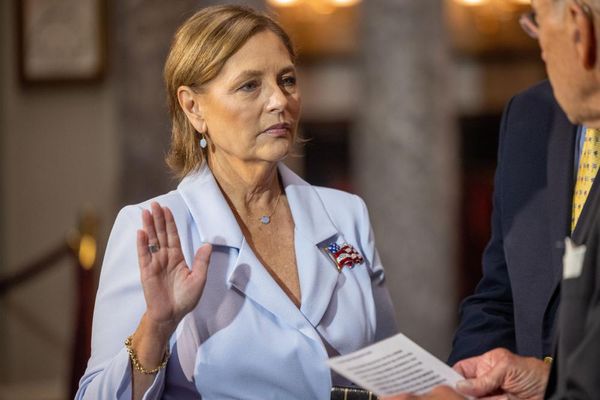
It comes a day after Bernie Moreno, a GOP senator of Ohio, said he would introduce a bill next week “to sanction Canada and the responsible Canadian government officials for this atrocity”. In a statement he said Canada’s government had “failed to invest in wildfire prevention methods including forest thinning, fuel reduction, prescribed burns, and stronger enforcement against arson”. Ohio shares a maritime border with the Canadian province of Ontario.
Four Republican members of the House who represent Michigan, another state along the northern border, also wrote to Carney to say: “If Canada will not manage its forests to prevent these fires, the United States will look elsewhere, and act on our own, to protect our people.”
Asked about the American accusations, Carney told reporters on Thursday: “Fighting climate change is the responsibility of all countries, including the United States.”
The premier of Ontario, Doug Ford, said on Friday that the US could offer more aid to fight the fires, as Canada has done for its neighbor in the past. “Maybe what you should do rather than complain is send support, send help,” Ford said. “Because we have done the exact same thing for our American friends, and that’s what you’re supposed to do.”
Fires are also blazing across the US, in what the National Interagency Fire Center deems an above-average year. So far this year, more than 5,740 sq miles of the US has burned from wildfires, which is 31% more than the average of the previous 10 years to this date. The amount of US land burned each year in the 2020s – averaged out over a decade – is now more than twice what it was 30 years ago.
In northern Minnesota, more than 63,000 acres have burned, while wildfires in Oregon, Washington, and Idaho, have also been reported, contributing to the smoke that Canadians must also contend with, assmoke from US wildfires drifts north and affects air quality.
Canada’s largest fire, near Ontario’s remote Wabakimi provincial park, is reportedly spread across 787,802 acres (318,812 hectares). It is among 191 out-of-control and large fires that were burning as of Friday morning.
Thousands of people in the province have been evacuated and at least one First Nations community has been erased in the fires. On Wednesday, Toronto, also in the midst of a record-breaking heatwave, had the worst air quality in the world.
Nearly 6m acres are estimated to have burned, less than a quarter of land consumed by blazes when Canadian wildfire smoke last blanketed the US in 2023.
The planet’s heating climate – driven by human activities – is causing warmer, drier conditions in the summer, which is amplifying wildfire activity, making extreme wildfires more intense, frequent and large. There is also a growing trend of the wildfire season – which is part of the natural cycle – becoming longer.
The US is, by far, the world’s largest oil-and-gas-producing nation, and has historically emitted more greenhouse gases than any other country, making it a key driver of the climate crisis.
And in the last year and a half, Trump has taken a sledgehammer to US climate policy, bolstering the domestic fossil fuel industry while aggressively rolling back environmental protections and regulations in order to expand oil and gas exploration, and reviving the coal sector. He has also targeted renewable energy industries, blocking millions of dollars in funding earmarked for clean energy projects, and targeted state laws addressing pollution.
The actions come as the administration has suppressed climate research and dismantled key agencies through mass firings of federal workers in fields such as climate and conservation work, weather forecasting and wildlife monitoring.
In another instance, the administration has moved to shutter several government labs that studied how wildfires affect human health, air quality, wildlife habitat and forest ecosystems, which some scientists warned in May could hinder efforts to protect people and the environment from wildfires as soon as this summer.
On Friday, about 109 million people remained affected by poor air quality across the US midwest, mid-Atlantic and north-east.
The pungent wildfire smoke blanketed cities such as Chicago and Detroit, where residents on Friday were warned to stay indoors and reduce activity levels after the air quality index reached a “hazardous” 361, according to the government website AirNow.
The smoke also drifted into Baltimore and Washington DC overnight, creating very unhealthy air quality with index values of 281 and 247, respectively, as of 6am eastern time. In New York City, where smoke has blanketed the city since Tuesday, air quality stood at an “unhealthy” 184 early on Friday. It later improved to 124, a reading considered “Unhealthy for Sensitive Groups”.
Philadelphia and Cleveland had readings considered “very unhealthy” at about 260. Other parts of Michigan, Minnesota and Wisconsin, also recorded readings in the “hazardous” range.
Organizers of the World Cup final in East Rutherford, New Jersey, will be watching the smoke patterns carefully: smoke currently over the mid-Atlantic is expected to blow back up into the north-east.
Wildfire smoke kills tens of thousands of people each year, attacking nearly every system in the human body.