In Glasgow, this week, leaders of Britain’s 10 largest cities outlined a modern charter for local freedom to give councils the legitimacy enjoyed by counterparts in other mature western democracies.
It was unveiled at a summit rich in symbolism, with the recent addition of Cardiff and Glasgow city councils to an influential eight-strong Core Cities group of English cities. This pan-British urban alliance is gaining momentum.
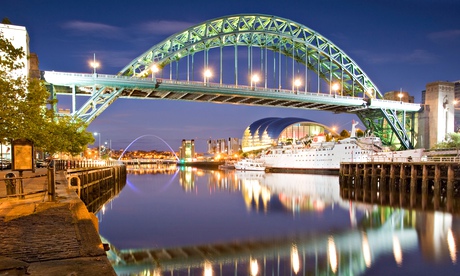
But it has deeper significance. Britain’s core cities – from Newcastle to Birmingham, Bristol, Manchester and Liverpool – have gained support for their charter from a wide range of authorities, across the political divide.
The charter aims to “reverse the loss of faith in politics and strengthen civil society”. It calls on the next government to create an independent body which could oversee a new constitutional relationship between the centre and local government. It would decide on the balance of power between Whitehall and town halls – an initiative that the Guardian suggested in an alternative election manifesto during the 1990s.
Could this mark a new assertiveness? Perhaps. Councils cannot make do and mend for much longer. By next year, their spending will be 40% below its peak in 2008-9. Whole swaths of services – libraries, Sure Start children’s centres, swimming pools, social care for all but the neediest – have already disappeared, with the prospect of worse to come.
The National Audit Office says half of councils are at risk of financial failure. The professional body for town hall accountants, Cipfa, has even accused the Department for Communities and Local Government (DCLG) of distorting figures to disguise the true impact of cuts. In a recent open letter to the new permanent secretary at the DCLG, Melanie Dawes, Cipfa chief executive Rob Whiteman – a council chief executive and a senior civil servant in a previous life – came close to accusing this Whitehall department of crossing the long-accepted civil-service line of neutrality by producing inaccurate information. “There is as very serious point here about ethics in government,” he told her.
In a lengthy report for the Glasgow Core Cities summit, the ResPublica thinktank joined the call for an urgent constitutional rethink in England. It warned that council cutbacks “under the seeming imperative of austerity”, are of such magnitude that local government in its present form cannot survive. As an example, it said that one council service alone – social care – would swallow up the entire spending of many councils within the next 10 years.
Across the political spectrum, the call for managed devolution and a more equitable funding settlement for councils, is gaining momentum. Tory council leaders are as incensed as their Labour counterparts, although few – if any – are prepared to openly criticise a widely disliked DCLG.
What, Whiteman wonders, is the role of the DCLG, now that other departments – Treasury and Cabinet Office, for instance – are setting a modest devolution agenda for councils, and groups of local authorities, with a range of “city deals” that offer a few extra freedoms, in areas from local transport schemes, to skills and training. If this continues, with the DCLG on the sidelines, he tells the new permanent secretary: “I hope you would consider whether the department is needed at all.”
In this context the Core Cities’ initiative – and the wider buy-in that it has achieved across local government with its freedom charter – is significant. A few thoughtful ministers, well away from the DCLG, recognise that local government cannot be allowed to drift as it is, without any vision from the top.
In Glasgow this week, the message was clear: cities drive nations. It was a bold, if partial, statement. But undeniably, from the US to mainland Europe and Asia, regional cities carry more clout than any capital.
Even in a centralised UK, where London, with more than a little arrogance, likes to think it reigns supreme, there is a belated recognition that our great cities – pale shadows of European counterparts – deserve a better deal. To achieve that, a fundamental reappraisal of local government, and how to fund it, is needed. Urgently.
Peter Hetherington writes on communities and regeneration