In the early hours of 3 January, Sader Guerra and his family were shaken awake when the bombing ordered by Donald Trump started in Caracas. “My daughter called me, she said: ‘The Americans are bombarding us, Dad, we are under attack’,” he recalls.
Caraqueños like Guerra are used to the sounds of military demonstrations and low-flying planes disturbing their sleep, particularly those living within earshot of Fort Tiuna military base. “I saw the planes but I thought they were Venezuelan,” Guerra shrugs.
Just before dawn, his daughter sent him a video clip: Nicolás Maduro in handcuffs, being escorted by US soldiers. Even then, Sader was doubtful. “I thought the video was AI-generated,” he says. “It was only once the sun came up and we saw the devastation around us – the destruction, people killed – that the news became real.”
In the days that followed, Caracas entered a state that residents describe as “tense calm”. “There was a lot of fear among the population about going out in case of another attack,” says Maria Ovalle Baró, a marketing campaigner for an entertainment company.
That fear turned into anxiety: “Not knowing what will happen, how the Venezuelan government will act, and how the US government will proceed,” she says. Political speeches have done little to clarify intentions, Ovalle Baró adds. “As we say in Venezuela, ‘aquí huele a gato encerrado’ – something smells fishy.”
Police checkpoints, known locally as alcabalas, appeared across parts of the city, alongside rumours of roadblocks run by armed pro-government groups searching citizens for signs of dissent. “Personally, I haven’t seen any,” Ovalle Baró says. “I simply avoided the areas they were supposedly located.”
In the first days after the bombing, only about 20 per cent of businesses opened, mostly large supermarkets, pharmacies and petrol stations. Long queues formed as people stocked up on food, medicine and fuel. Police were deployed to prevent looting. Soon, around 70 per cent of businesses had reopened, though many closed early as a precaution.
One month on, reports from the capital suggest daily life has largely returned to normal. But every day, groups of hundreds of Venezuelans take to the streets in protest, demanding Maduro’s release.
Since their president was captured, thousands of citizens have joined demonstrations organised by the United Socialist Party of Venezuela (PSUV). Some carry Maduro’s portrait, others hold signs saying “Freedom for Maduro” and “We want you back among us”.
At a rally last month, PSUV vice president for mobilisation, Nahum Fernández, told supporters: “Unity is not up for debate… Anyone conspiring against unity is conspiring against Venezuela.”
Outside Venezuela, particularly among expatriate communities in Colombia, Europe and the United States, a different narrative dominates – one that frames Maduro’s removal as overdue and inevitable. Accounts from Venezuelan expats living abroad tell of their relief and excitement at Maduro’s capture. “I jumped for joy and cried,” says José Antonio Martin, an ornithologist living in northern Colombia. “It was the news I had been hoping for because I haven’t seen my family in 10 years, including my youngest daughter … Every Venezuelan person inside and outside the country has lost something or somebody there.”
Expats will tell you that citizens live in fear of speaking out against the government. “People are scared to talk,” says Martin. “My daughter in Venezuela wouldn’t answer my questions [after the attacks] in case someone was listening in. We are paranoid that calls will be intercepted, that they are looking for spies, or the phone lines will be cut off. Everyone feels that they are in danger right now, it’s a confusing time.”
“Food is plentiful but the problem is how to get hold of it – there is no money. Right now people are spending the last coins they have on food just in case something bigger happens. My mother is calling me to ask if I can send money, so are my friends. People have been stuck in their homes without work so they are worried they won’t be able to buy food for their families if a war breaks out. "
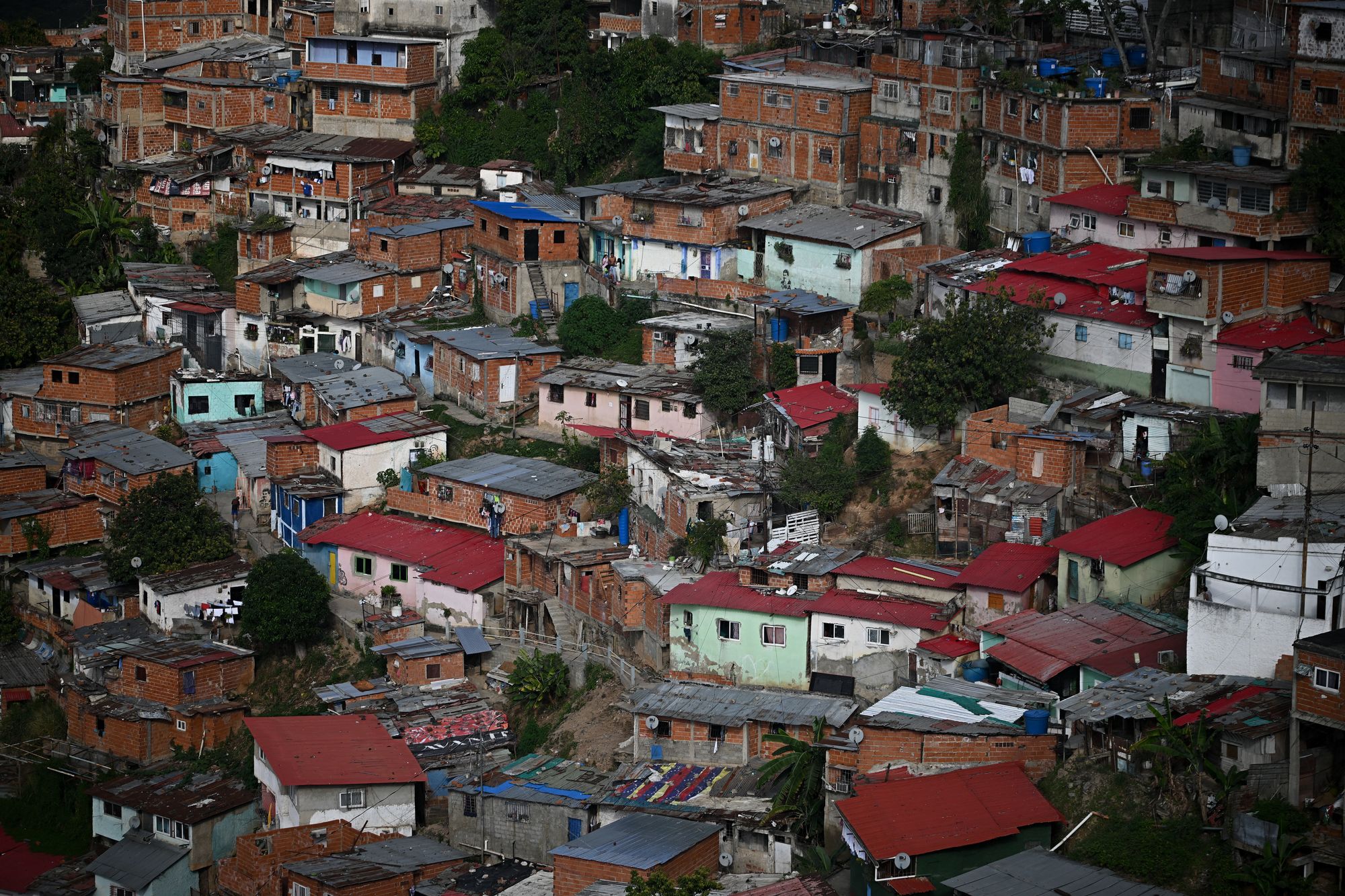
That sensitivity is heightened by Venezuela’s long-running humanitarian crisis. Years of economic collapse, hyperinflation, sanctions and climate-related disasters have left millions vulnerable. According to the UN’s aid coordination office, OCHA, 7.9 million people – more than a quarter of the population – require urgent humanitarian assistance.

Some on the ground tell a very different story. “When I heard Maduro had been kidnapped and his whereabouts were unknown, I was in a state of shock,” says Rosita Baró, a retired translator living in Margarita Island off the north coast of Venezuela.
“I felt very worried about my daughter [who lives in Caracas] and the people who were suffering in the city. Then I felt indignant, disgusted by the unjustified violence, the flagrant violation of all laws and the return to the law of the jungle.”
“I think people in the West have a mistaken belief regarding what is happening with the people in Venezuela,” says Baró. “Beyond political affiliation, we all love this country, and in the face of constant threats – US fleets targeting boats, launching missiles and then the merciless bombing – a unity and a sense of patriotism have emerged.”
Guerra also rejects the idea that Venezuela was a failed state in need of rescue. His own standard of living is comfortable: he runs his own business and recently returned from a Mediterranean cruise.
“Venezuela has never been broken,” he says. “We have endured a lot of frustration… but we will always be able to survive independently because of the country’s rich oil supplies.”
Asked about poverty, he insists basic needs were being met. “Everybody has basic living conditions: food, shelter. There are social programmes in place,” he says, adding that he believes living conditions could have continued to improve had the Americans not intervened.
According to Rafael Rezende, a researcher at the Center for Studies in Social Theory and Latin America (NETSAL) at the State University of Rio de Janeiro, these sharply contrasting views – between expats and locals, rich and poor – reflect a more complex reality.
“People often think that non-democratic regimes survive only through force, but that’s not true,” he says. “Any regime needs some level of popular support, a bureaucracy, and the backing of the military.”
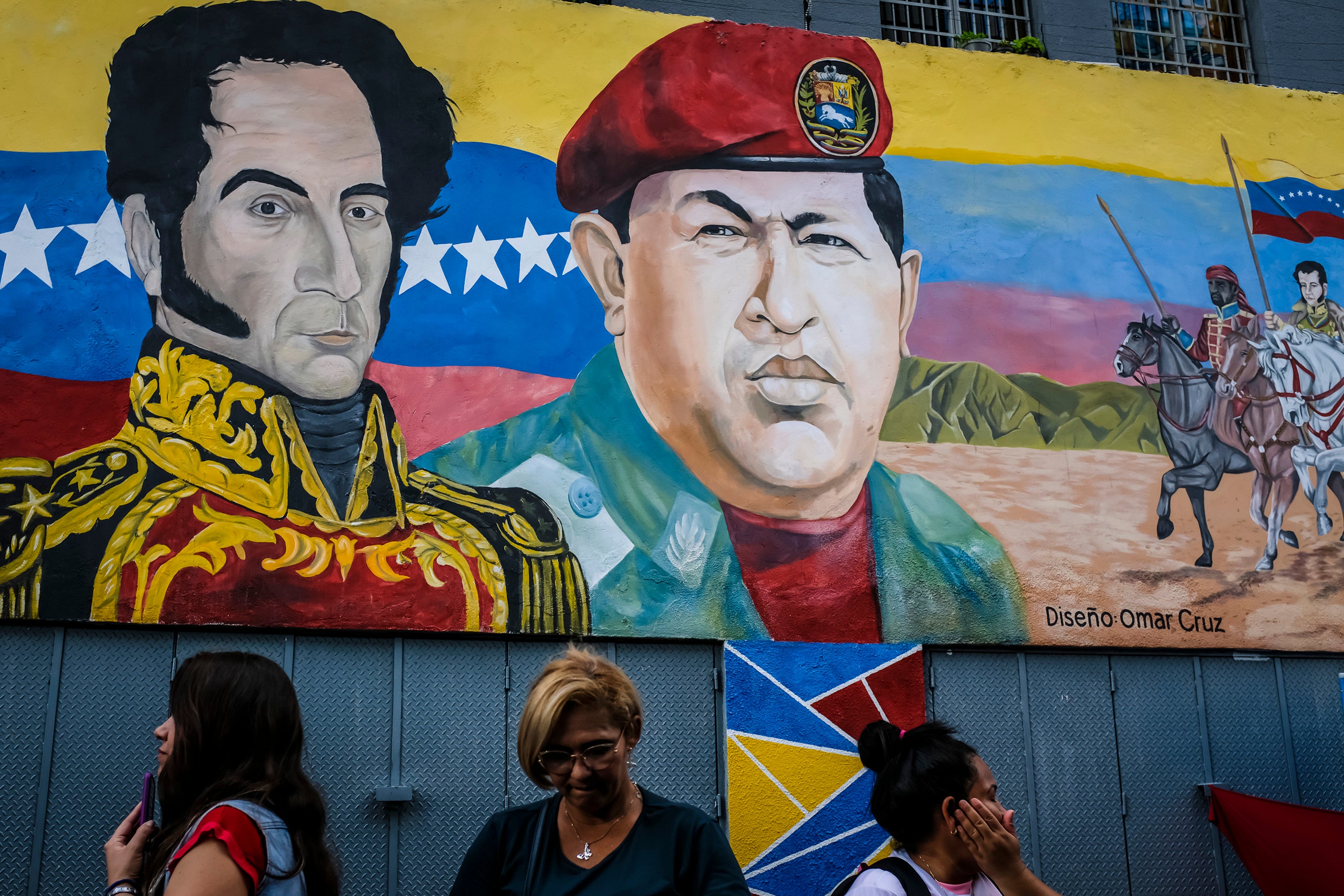
Chavismo, the political movement created by Maduro’s mentor Hugo Chávez, he explains, continues to command loyalty among sections of the population – through social policies, state employment, and, in some cases, corruption. “Many people’s living conditions improved under Chávez’s governments,” he says.
At the same time, opposition is fierce and rooted in lived experience, Rezende adds, thanks to “corruption, the gradual closing of the regime, and the loss [for many] of political and economic power”.
Crucially, Rezende notes, opposition to US military action cuts across these divisions. “Many people in Venezuela may not be Chavistas and still oppose US actions,” he says. “For Latin Americans, US military interventions are always a sensitive issue.”
In January, the UN warned that the US seizure of Maduro had “added a new layer of uncertainty to an already volatile situation”.
For many Venezuelans, uncertainty is now the defining feature of daily life. Ovalle Baró says people continue to work not out of confidence, but necessity. “They go out with fear and anxiety, but continue with their lives,” she says. “As we say here, ‘hay que seguir echándole bola para vivir’” – you’ve got to keep hustling.
One thing uniting Venezuelans on all sides of the political spectrum and the globe is the hope that diplomacy, not force, will determine what comes next.
This article was produced as part of The Independent’s Rethinking Global Aid project
Jeanine Pirro sparks MAGA fury for jail threat to lawful gun owners traveling to DC
Melinda Gates speaks out after she is mentioned in the Epstein files
Mandelson-Epstein latest: Ex-minister faces criminal probe over leaked emails
The 11 most explosive emails between Epstein and Mandelson
Celebrity Cruises apologizes after autistic man kicked off ship in Mexico
Florida's DeSantis and MLB commissioner support new Rays stadium in Tampa