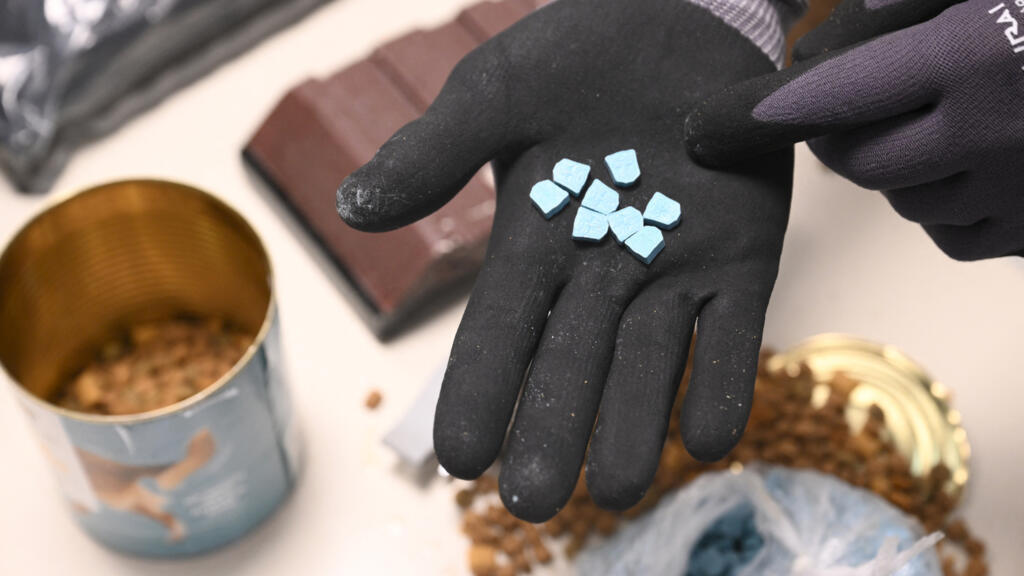
A coordinated European police operation has dismantled a vast cross-border synthetic drug ring in what investigators hailed as the largest operation of its kind to date.
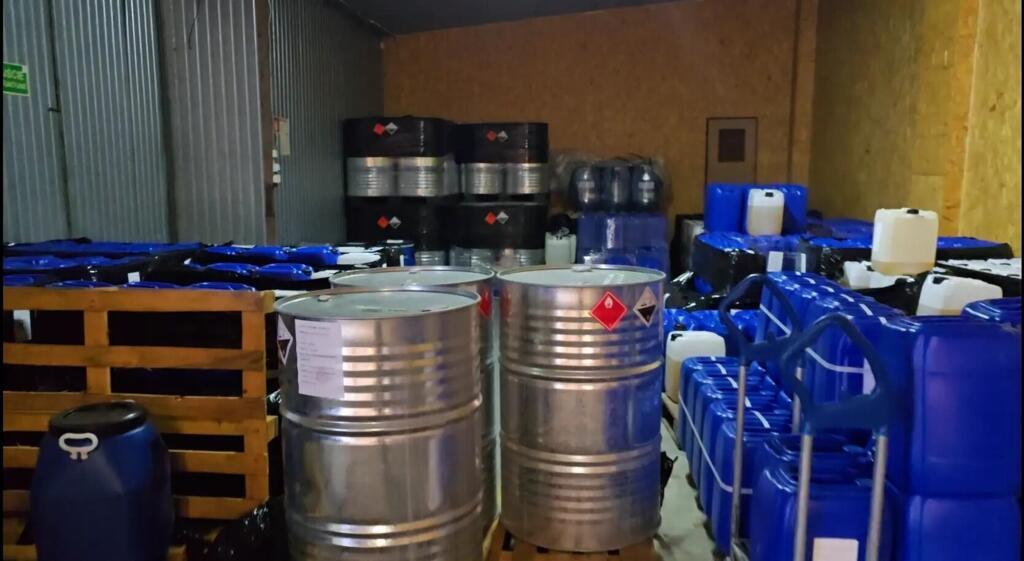
The year-long crackdown, announced on Wednesday by Europol, saw officers take down 24 industrial-scale laboratories and seize roughly 1,000 tonnes of chemicals used to produce street drugs including MDMA, amphetamine and methamphetamine.
More than 85 people were arrested, among them two suspected ringleaders from Poland.
"I've been in this business for a while. This is by far the largest ever operation we did against synthetic drug production and distribution," said Andy Kraag, head of Europol’s European Serious and Organised Crime Centre.
"I think this is genuinely a massive blow to organised crime groups involved in drug trafficking, specifically of synthetic drugs."
Inside the cocaine boom fuelling Europe’s most lucrative drug market
Police forces from Belgium, the Czech Republic, Germany, the Netherlands, Poland and Spain worked together on the operation, which investigators say exposed a sophisticated network stretching across the European Union.
Suspicions were first raised in 2024, when Polish police noticed a network importing unusually large volumes of legal chemicals from China and India.
Further investigation revealed that the substances were being repackaged, mislabelled and redistributed across the EU to clandestine laboratories manufacturing synthetic drugs.
Most of those arrested are Polish nationals, although Belgian and Dutch suspects are also believed to have played roles in the criminal enterprise.
France urges EU to 'wake up' as drug crime spreads across Europe
Cutting the supply chain
Kraag said the investigation was guided by a "supply-chain strategy" aimed at choking off the drug trade at its source.
"These criminal groups – they don’t have their supply anymore," he said.
Beyond the health risks associated with synthetic drugs, Kraag highlighted the broader damage caused by the trade, including violence, corruption and money-laundering.
He also drew attention to the often-overlooked environmental toll. During the raids, authorities seized more than 120,000 litres of toxic chemical waste that criminals typically dump on land or into streams.
"Today, it’s profit for criminals. Tomorrow, it’s pollution," Kraag warned.
Investigators are continuing to pursue other networks believed to be operating across Europe.
"This is one of the biggest distributors. But it’s not the only one. So we’re still looking," Kraag said.
(with newswires)







.png?w=600)