A diarrhea-causing parasite known as cyclospora that causes “explosive diarrhea” is rapidly spreading across the nation - with Michigan being hit the hardest.
Exposure to the parasite by eating or drinking contaminated produce or water causes cyclosporiasis, an explosive stomach bug that can leave people feeling ill for more than a month.
Cyclosporiasis cases have nearly doubled in Michigan over the last week, the state’s health department announced over the weekend. There are now 572 cases, up from just 170 last Tuesday.
The parasite is also infecting residents in Ohio, North Carolina, Wisconsin Texas and a dozen other states, according to recent federal data. Ohio has reportedly seen 177 cases as of July 2 and there have been 110 in North Carolina, WRAL says.
"ODH and local health departments are working with neighboring state partners, including Michigan, and federal partners to investigate. This includes conducting interviews to help identify any potential common exposures. At this point, no source has been confirmed," Ohio Health Department spokesman Ken Gordon said in a statement shared with The Columbus Dispatch.
Past infections have been traced to bagged salad mixes, popular herbs, snow peas, green onions and raspberries, the Michigan Health Department notes.
Fortunately, infections are not usually life-threatening — but they can last for over a month if untreated and lead to more severe illness in older people and those with weakened immune systems.
That typically means a month of watery diarrhea, cramping, bloating, nausea, fatigue, weight loss, appetite loss and increased gas. Although other symptoms can include vomiting, body aches, diarrhea, headache, low-grade fever and other flu-like symptoms, according to the U.S. Centers for Disease Control and Prevention.
Symptoms may develop two days to two weeks after consuming infected food and water with the parasite Cyclospora. But some people may not experience symptoms at all, especially in tropical and subtropical regions.
Some symptoms may go away and return without treatment or continue after others have stopped, too.
That’s why it’s important for patients to get their stool tested and be treated by a doctor using one of three antibiotic drugs known as sulfa drugs, including Bactrim, Septra and Cotrim. Resting and drinking plenty of fluids is also important.
“What leads people to the emergency room is the complication of profound dehydration that comes as a result of this,” ABC News’ Dr. Darien Sutton told Good Morning America on Monday.
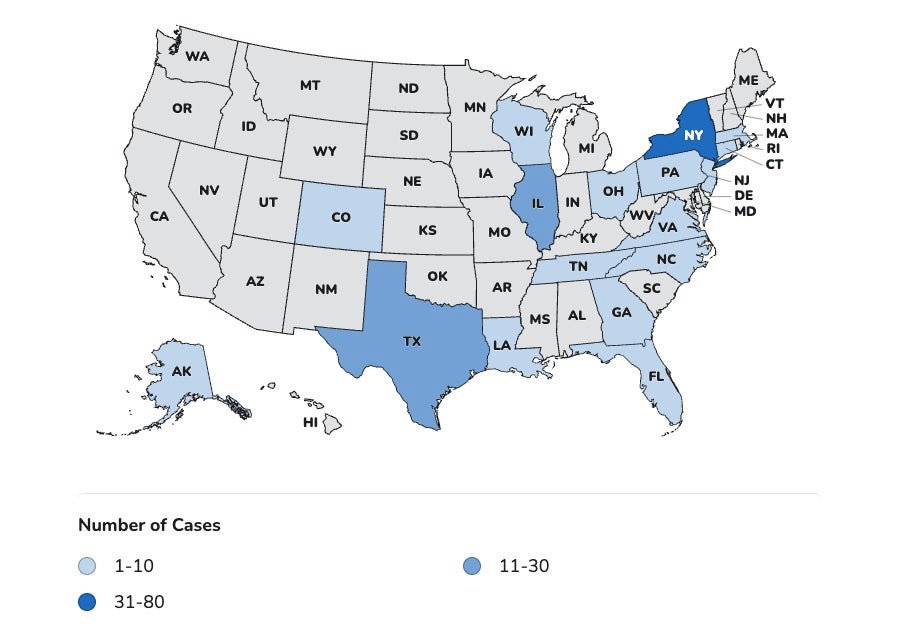
There have been at least 20 hospitalizations in 2026 so far, the CDC data from July 1 shows. Although only 145 cases have been reported to the agency so far.
Those who fell ill were between the ages of five and 86 years old, and the majority – 61 percent – were female. No deaths have been reported.
“These people became sick after eating food in the United States and did not report any travel during the 14 days before they got sick,” the CDC explained.
The agency said there is no evidence of a single, multi-state outbreak right now and that local, state and federal public health authorities are investigating “several clusters of cases in more than one state.”
Cyclosporiasis has been tracked in the U.S. since 2019. People may be able to avoid falling ill by cleaning and cooking their food.