Welcome back to another edition of My Take 5. This week we are covering the just concluded Trump-Xi summit, the renewed focus on Taiwan, Russia’s large-scale attack on Kyiv and Ukraine’s response, the collapse of the Latvian government due to a drone incident, and the elimination of Islamic State terror group’s No.2 in Nigeria. So, let’s get to it:
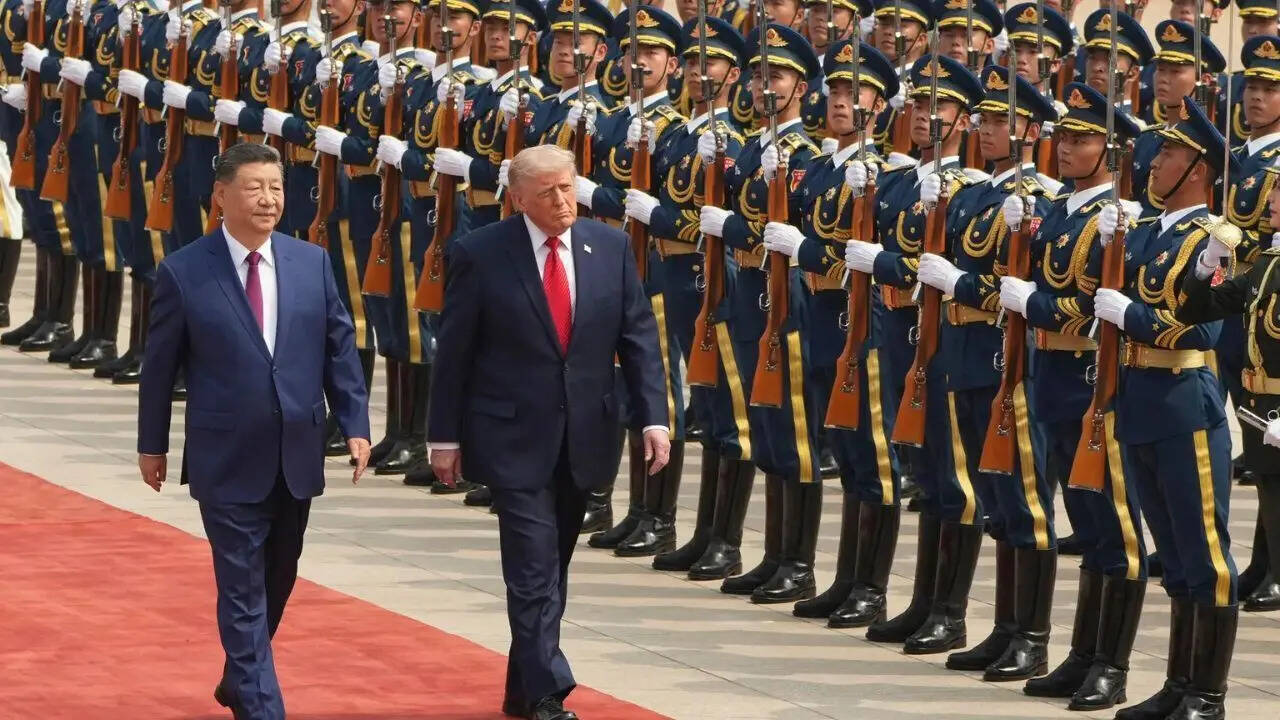
Trump-Xi meet: Trump’s summit with Xi in China this week was underwhelming to say the least. While the world waited for some kind of a breakthrough, particularly on the situation with the Strait of Hormuz, what it got was two major powers sizing each other up and sticking to their guns on their respective strategic interests.
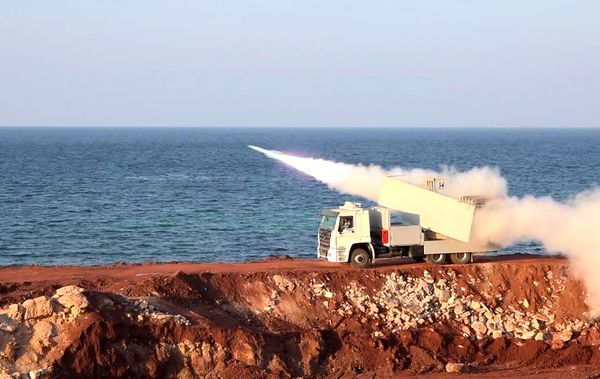
This was amply clear by the very different readouts of the Trump-Xi meetings that the American and Chinese teams put out. They appeared to be talking past each other. The American readout mentioned that the leaders discussed Iran and China’s acknowledgement that Hormuz should be open, the Strait shouldn’t be militarised, and Tehran must not have a nuclear bomb. But the Chinese readout was completely silent on this point.
Similarly, the Chinese readout – and Xi himself – strongly centred the Taiwan issue, warning the US that unless handled properly, Taiwan could become a source of tensions, clashes and even conflict between Washington and Beijing. But the US readout was totally mum on this. Plus, the two sides don’t seem to have resolved their trade dispute either.
In fact, there wasn’t even an extension of the trade truce that expires in October. Trump, though, touted some economic wins including a Chinese commitment to buy American agricultural products, Beijing’s interest in buying American oil, and China agreeing to place an order for 200 Boeing jets. But again, at the time of writing, there was no confirmation from China on these.
Therefore, nothing has fundamentally changed between US and China. True, the Trump-Xi meetings were held in a cordial and warm atmosphere, with both leaders praising each other. But the needle didn’t move meaningfully on trade, the Iran and Russia-Ukraine wars, or Taiwan.
China stressed on long-term strategic management of the bilateral relationship, whereas Trump was trying to show some immediate economic wins for his voters back home. Hence, the US-China relationship remains fundamentally fraught.
Taiwan, again: But there was quite a bit of in-person discussion between Trump and Xi on Taiwan. Xi seemed to be particularly focused on this issue, which is not surprising. But according to reports and Trump’s own statements, Xi wanted to know if the US would defend Taiwan if China attacked the island nation. Trump said he told Xi that he doesn’t talk about this particular issue. But Trump also said that the last thing he needs is another war 9,500 miles away from the US.
There are two crucial takeaways here. First, if Xi did directly ask Trump about US intentions to defend Taiwan, that is worrisome. It means that a Chinese invasion of Taiwan, if even not immediately on the cards, is definitely on the table. And China may just be waiting for the right timing. And if Xi is to prolong his reign, who is to say that he won’t use an attack on Taiwan as a tool to consolidate his position further?
Second, Trump by saying he doesn’t want another war 9,500 miles away is signalling weak determination to defend Taiwan. He also said that he will be making a determination as to whether the massive $11 billion authorised US arms sale to Taiwan should go ahead – this issue too had come up in his talks with Xi. All of this is very ominous for Taiwan.
If China determines that Trump is really not into backing Taiwan, it could launch an invasion of Taiwan in the next two years before Trump exits office and is potentially replaced by a Democrat. Sure, US secretary of state Marco Rubio said that there hasn’t been any change in the US position on Taiwan. But his boss is signalling something different.
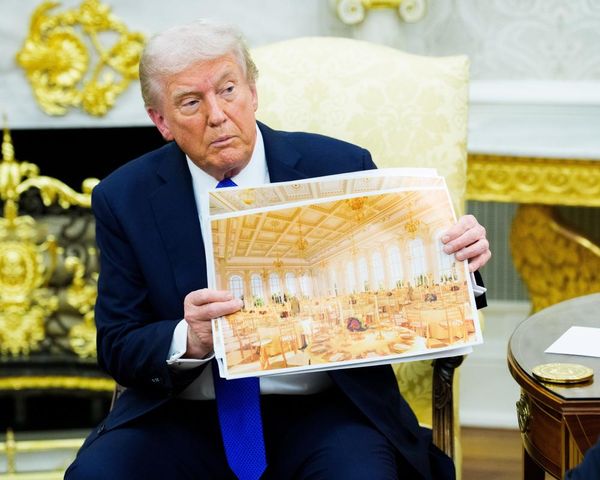
Recall also that Trump in his first term had questioned the strategic value of Taiwan, comparing it to his sharpie, while likening China to the huge Resolute Desk in the Oval Office. The bottomline is, Taiwan can’t fully depend on the US to defend it in the face of a Chinese invasion, certainly not under Trump. So, it needs to build up its own deterrence quickly.
In this regard, it would do well to learn from Ukraine and its awesome modern asymmetric war fighting capabilities.
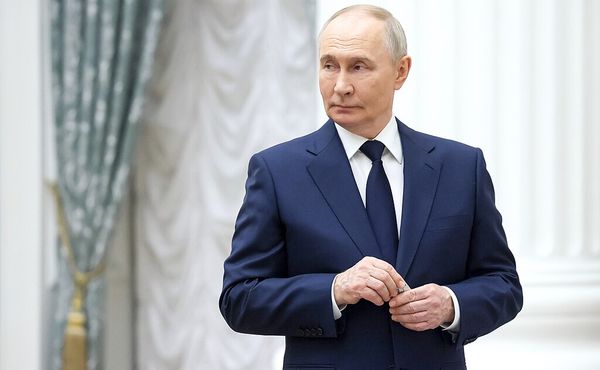
Note, now that the US is practically giving nothing to Ukraine in terms of weapons, and Ukrainians have ramped up their own production of drones and unmanned systems, the Ukraine army is doing a much better job of holding back the Russians on the frontline, and raising the costs of war for Moscow by striking deeper into Russian territory than ever before. This is what compelled Putin to literally beg for a temporary ceasefire to protect his May 9 parade from Ukrainian drones.
So, Taiwan needs to ramp up its own asymmetric war fighting capabilities, and create a solid defensive wall running through its outlying islands in the Taiwan Strait, composed of short-range missiles, long-range drones, and anti-ballistic missile systems to deter China.
For, the US may or may not come to Taiwan’s aid – and it still may, as highlighted by the recent Balikatan naval exercises in the Philippines. But the Taiwanese have to be prepared to defend their own country.
Russia’s massive attack on Kyiv: Not even a week after its May 9 Victory Day parade, for which Russia had sought a temporary truce, Russian forces launched a massive attack on Ukraine, particularly targeting Kyiv.
In fact, a missile struck a residential building in Kyiv as a result of which it was partially destroyed, killing 24 people including three children.
Altogether 56 missiles and 675 drones were launched against Ukraine in the Russian salvo. Ukraine retaliated with its own drone barrage, hitting multiple regions in Russia and Russian-occupied Ukrainian territory. This included the Ryazan oil refinery deep inside Russia.
Plus, a day later, Ukraine launched a massive drone attack on Moscow, hitting assets in the Russian capital that support the Russian war. The strikes, despite Moscow being heavily guarded by air defence systems, again show Ukraine’s growing long-range striking prowess.
Our long-range capabilities are significantly changing the situation – and, more broadly, the world’s perception of Russia’s war. Many partners are now signaling that they see what is happening and how everything has changed – both in attitudes toward this war and in the… pic.twitter.com/z3t7JKigHD
— Volodymyr Zelenskyy / Володимир Зеленський (@ZelenskyyUa) May 17, 2026
All of this clearly shows that Russia is not genuinely interested in peace. It is simply lying. Putin’s recent pronouncements that he thinks the war will come to an end soon could very well be just mind games. True, Russia is now facing a manpower crunch for its military, losing more soldiers to Ukrainian drone attacks than it can replace. It is also true that the frontline is barely moving and Ukraine, in recent months, appears to have gained momentum. But Russia wants to save face.
And in order to do that, it appears to be willing to sacrifice many, many more Russian soldiers. Putin can stop this war any time he wants. But he won’t because he needs to save face. And he is willing to burn though more of his men and resources. So much for Putin apologists who still think the Russian leader is willing to consider peace.
Latvia’s political firestorm: Latvian PM Evika Silina resigned this week as her coalition government collapsed over a drone incident. The latter saw Ukrainian drones being manipulated and redirected towards Latvia by Russian forces using electronic warfare tech. This saw one of the drones explode at a Latvian fuel depot, causing a fire that was quickly brought under control. Such drone redirections have not been uncommon during the Russia-Ukraine war, with drone incursions from Russia being reported across the Baltics and Finland. With Ukraine now increasing targeting Russian oil assets on the Baltic Sea, the possibility of such Russian manipulation and redirection has only increased.
But in Latvia, PM Silina fired her defence minister Andris Spruds for the failure to avert the drone incident. This in turn saw Spruds’ Progressives Party pull out of Silina’s Unity Party-led coalition government. That then forced Silina to step down. But Latvia will hold parliamentary elections in October. And many say the political resignations have been tendered with an eye on the polls.
However, the bottomline is that Baltic air defence needs to be significantly strengthened. True, Latvia is a staunch supporter of Ukraine and has provide much aid to Kyiv in fighting the Russian aggression. But it needs to strengthen its own defence systems as well. Moreover, Russia is already carrying out hybrid warfare against the Baltic states using cyber attacks, propaganda, criminal networks and political interference. Given that these countries also have Russian-speaking minorities, Moscow is also trying to foment internal polarisation across the Baltics. And drone incidents like the one in Latvia are part of these hybrid tactics.
Ukraine has already offered to shore up Latvia’s air and anti-drone defences. This is welcome. A solid defensive barrier across all domains in the Baltics is the need of the hour. Nato must step up to strengthen its eastern flank.
US-Nigeria kill ISIS No.2: In what should be a big blow for the Islamic State terror group, the No.2 leader of the group, Abu Bilal al-Minuki, was killed in a joint US-Nigeria operation this past week. According to reports, al-Minuki was a key figure in the Islamic State West Africa Province group – the local affiliate of IS in West Africa. And since IS has transformed in recent years and is now heavily concentrated in sub-Saharan Africa, al-Minuki had emerged as a prominent figure in IS’s global operations.
According to the Nigerian army, al-Minuki was a former member of the Boko Haram group in Nigeria before pledging allegiance to IS. In other words, al-Minuki had a serious record as a jihadist terrorist. His elimination should impede the rising tide of jihadism in sub-Saharan Africa, aiding efforts to promote regional security and stability.