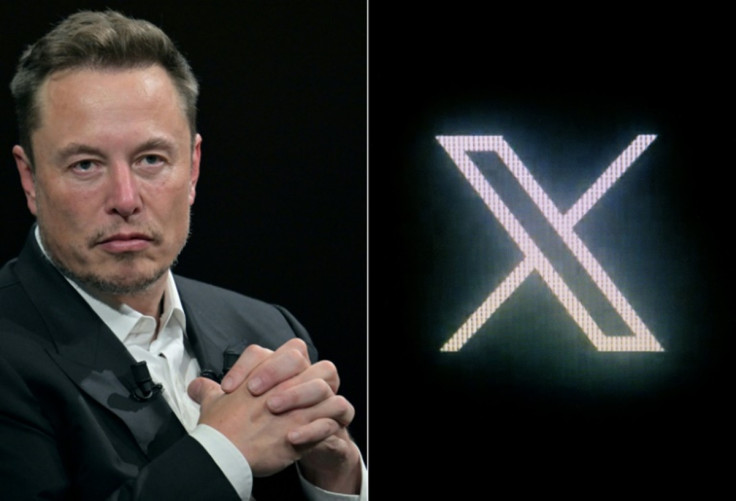
Elon Musk has declared that defeating human death through longevity breakthroughs is far more achievable, calling it an 'extremely solvable problem' during a conversation about the future of humanity. The Tesla and SpaceX chief made the bold claims whilst speaking on the Moonshots podcast with host Peter Diamandis on 6 January, arguing that the human body's synchronised ageing process reveals a clear biological mechanism waiting to be cracked.
'I've long thought that longevity or semi-mortality is an extremely solvable problem,' Musk said. 'I don't think it's a particularly hard problem.' The billionaire's comments mark a striking shift from his previous stance, where he had argued against pursuing radical longevity technologies, warning it would lead to societal stagnation.
Musk Uploads Own MRI to Grok AI
Musk revealed he recently underwent an MRI scan and uploaded the results to Grok, his xAI company's artificial intelligence model, as part of a personal experiment in AI-assisted medical analysis. Neither Grok nor his doctors flagged any concerning issues from the scan. The Tesla chief's willingness to test his own AI platform on his health data suggests he's increasingly serious about leveraging technology to understand human biology.
The podcast's host, Peter Diamandis, pitched Musk on working with Fountain Life, a longevity company he co-founded that offers 'AI-guided diagnostics' and health monitoring. 'We do a 200 gigabyte upload of you, everything knowable about you, full genome, all imaging, everything,' Diamandis explained.
From Death Advocate to Longevity Believer
Musk's latest comments represent a dramatic reversal. In 2022, the entrepreneur told Insider he didn't think society should pursue technologies enabling people to live significantly longer, warning it 'would cause asphyxiation of society because the truth is, most people don't change their mind'.
'They just die. So if they don't die, we will be stuck with old ideas and society wouldn't advance,' Musk said at the time. The apparent shift in his thinking may reflect a growing confidence in AI and biotechnology's ability to address the concerns he previously raised.
Scientific opinion on Musk's optimism remains divided. Dr João Pedro de Magalhães, Chair of Molecular Biogerontology at the University of Birmingham, has calculated that if ageing and all age-related diseases were cured, the average human lifespan could reach 1,200 years. His calculations assume an initial mortality rate of 0.0005 deaths per 100,000 people annually in industrialised nations, leaving only accidents and non-age-related causes as threats to life.
Nature Points to Biological Blueprints Already Existing
Musk's argument draws support from examples in nature where extreme longevity already exists. Bowhead whales can live 200 years with remarkably low cancer rates, whilst Greenland sharks reach 400 to 500 years through slow metabolism and robust antioxidant systems.
Research published in December 2025 showed scientists engineered mice with enhanced mitochondrial proteins, yielding longer lives, better metabolism and reduced inflammation. 'Their cells produced more energy whilst dialling down oxidative stress and inflammation tied to aging,' the report noted, suggesting cellular power tweaks could serve as a longevity lever.
Aubrey de Grey, founder of the SENS Research Foundation, has long advocated for 'engineered negligible senescence', targeting seven types of cellular damage, including cell loss, mutations and extracellular waste accumulation.
I’ve always been uncomfortable with the term “anti-aging.” Aging is a natural, universal process, everything in nature ages. To push back against it as if it’s something to fight or fear puts us in opposition to the very rhythm of life.
— Andrew Weil, M.D. (@DrWeil) December 18, 2025
Instead of resisting it, I believe in… pic.twitter.com/MlX66Cqa8c
Silicon Valley's Divided Approach to Immortality
Musk's renewed interest in longevity places him alongside other tech billionaires who've poured millions into anti-ageing research, though his approach differs markedly. Amazon founder Jeff Bezos has invested in Altos Labs, a start-up focused on cell revitalisation technology, whilst Google founders Larry Page and Sergey Brin launched Calico Labs to explore the causes. PayPal co-founder Peter Thiel and Oracle's Larry Ellison have each donated millions to immortality research.
However, bioethicists have raised concerns about these investments potentially exacerbating inequality. 'Suppose, for example, we had a kind of vaccine for the pandemic of age. This is going to potentially exacerbate all the kinds of existing inequalities that we have... The longer you're around, the more your wealth compounds, and the wealthier you are, the more political influence you have,' bioethicist Christopher Wareham told Financial Times.
What This Means for Human Longevity Research
Musk's public embrace of longevity research could accelerate funding and attention toward anti-ageing science. But whether Musk's optimism proves justified remains to be seen; his influence could reshape how society approaches the ancient question of human mortality. The convergence of artificial intelligence, genetic engineering and biotechnology may finally provide the tools needed to tackle what Musk describes as the 'incredibly obvious' puzzle of human ageing.