Good morning. This week, we anticipate the arrival of Britain’s seventh prime minister in the space of a decade. Barring a sequence of events too freakish to contemplate this early in the day, Andy Burnham will be declared Labour leader on Friday and invited to form a new government thereafter.
Sceptical as I am about doomy predictions on Britain’s chronic ungovernability, I wanted to speak to somebody who could offer some deeper context. Step forward Guardian columnist Andy Beckett, who also writes vivid modern histories about the country’s defining political ideas, and step forward you – First Edition readers – who responded when I asked what contemporary liabilities we should be talking about.
So for this morning’s newsletter, we asked Andy about leadership churn, public impatience and what we can learn from recent political history. First, here’s a catchup on the weekend’s news.
Weekend roundup
-
Middle East | The US military has launched a new wave of attacks against Iran amid the escalating standoff over the strait of Hormuz, with Tehran saying the latest strikes had “rendered futile” all the diplomatic efforts of the past few months.
-
UK news | Senior police figures and politicians have warned against speculation during the murder investigation into Ann Widdecombe’s death, after detectives said there was “nothing to suggest” political motivation.
-
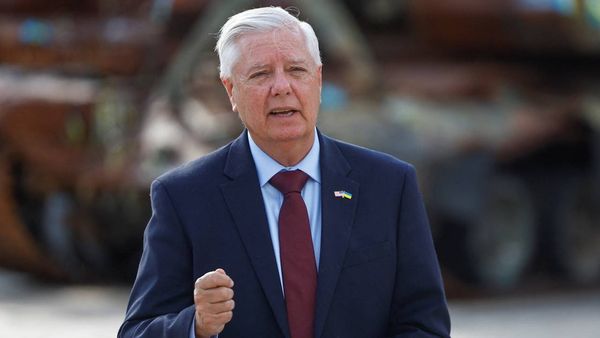
US politics | Senator Lindsey Graham, a key Trump ally in Washington, died this weekend after a short illness, his office announced.
-
Far right | Elon Musk’s family foundation took Tommy Robinson to Russia, according to the billionaire X owner’s father. Lib Dem leader Ed Davey said on Sunday the news was a sign Britain “must do more to defend its democracy”.
-
UK politics | Reform UK would have held just 15% of the donations it received last year if a proposed £100,000 cap on political donations had been in force, according to analysis shared with the Guardian.
In depth: ‘Instability has become the new normal’
Our rapid leadership turnover, Andy Beckett argues, stems from a quarter-century crisis in the Conservative party, as successive prime ministers struggled to define themselves beyond Thatcher. That instability has now infected Labour.
But Paul, a reader from Aberdeen, is interested in how this plays into voter expectations. He sees an electorate that is increasingly impatient, demanding quick solutions from politicians who aren’t always willing to be honest about difficult policy choices and the length of time that sustained change demands.
Andy agrees: “A whole ecosystem of impatience has been created, that involves MPs, party members, voters and the media.”
He dates “12 years of shocks” starting from the 2014 Scottish independence referendum – and I know what he means, having covered two referendums, four general elections, four Holyrood first ministers and five prime ministers (Liz Truss didn’t have time to meet the Scottish press) since then. “Instability,” he tells me, “has become the new normal and our expectations have been reshaped by that. So when you’re following the news, you follow the live blog and see whatever crisis is going on at Westminster – which is about changes in media and digital media, too.”
What strikes Andy about his pub chats these days is that “friends who are well informed are completely unaware of some of the good things done by the Starmer government, like employment rights or renters’ rights legislation”.
“Most people don’t have time to read policy documents, but voters now, including myself, have got used to being better informed about who may be a contender in the next leadership contest than the less dramatic details about what the government might actually do.”
***
The demise of MP loyalty?
Ruby from Kent wants to know to what extent MPs themselves are responsible for the constant turnover of PMs. The Commons has certainly become less disciplined in recent years, says Andy, as Starmer discovered when – despite a massive majority – he faced successive rebellions on issues such as welfare cuts.
“It’s a vicious circle. Because there’s more instability, there are fewer safe seats, which means MPs are happier to rebel because they think, ‘So what? The person who I’m annoying may not be prime minister in a year’. The motivation to stay on the right side of the whips is much diminished.”
***
The scunner factor?
I wanted to ask Andy about the scunner factor, as we call it in Scotland: that long tail of voter disenchantment with all politicians that I think – a bit unfairly – coalesced around a raw hatred of Starmer. I remember encountering it on the doorstep pretty early into his premiership.
“People absolutely loathe Starmer,” says Andy “and that’s quite strange. While he’s not a very good politician, I’d say he’s a 6.5 out of 10 as a prime minister – yet he’s treated by the public like a one out of 10.”
“Maybe some of that is because a pent-up anger about all kinds of problems in Britain has been building up since 2010, or even before then.”
Approval ratings of all party leaders have accelerated downwards over the past 30 years, he says, “reflecting a long-term sort of disillusionment with politics”.
***
What does it mean for policy delivery?
A number of readers raised the negative impact this regular change of leadership and, consequently, government ministers has on simply getting stuff done. First Edition reader Nicola, who works in education, is hoping for “some consolidation rather than constant change, to have ministers who master their brief rather than changing all the time”.
“This is a big problem,” Andy says, “because all kinds of areas, including transport, education or defence, require really long-term solutions”.
“In the past, it was tricky to get things moving within a full five-year term, and now we’re dealing in terms that are generally two or three years. But procurement processes are slow, as is construction, and you get a massive turnover of ministers who take time to understand what they’re doing.”
***
Could electoral reform break the cycle?
Stephen, from Llandeilo, asks whether radical change to the Westminster government electoral system is the answer.
“There’s a potential, isn’t there?” Andy wonders. “With electoral reform, you could conceivably get, like in Germany, the same parties in power for a while but in slightly different alliances, so it could stabilise the system.” But he cautions that most European countries have proportional systems “and most are going through their own versions of instability, so it’s not going to solve it completely”.
***
Things can only get better?
What, I ask Andy finally, are the lessons he takes from recent history: is it possible to predict whether we’ll be having this same conversation in a year about Andy Burnham, and saying what a shame it is that his premiership didn’t last as long as Starmer’s?
He directs me back to the 1970s, when there was a similarly rapid carousel of premiers – Wilson, Heath, Wilson, Callaghan. “At that time, lots of people said Britain was ungovernable, that there was going to be permanent political instability.”
“Then we had Margaret Thatcher for 11 years, followed by John Major for seven years, then Tony Blair for 10 years. So, we have pulled out of instability before. But the technology is different now, the media are more obsessed with drama, voters are more impatient, and we’ve got a climate crisis that we didn’t have in the same way in the 70s.”
Andy predicts that one significant destabilising factor – rightwing populism – may have peaked. “I don’t mean Reform will be unimportant, but they may have reached a ceiling.”
Nonetheless, the next general election is likely to be dramatic: “Even if Labour recover quite a lot, there’s going to have to be some sort of coalition – and then how the hell would they hold that together?”
For readers wanting to set their calendars, Andy believes a more stable period in British politics will come … but not in the next couple of years. “It could take a while for us to get out of this.”
The week to come
-
Monday | Green MP Hannah Spencer presents her Maximum Workplace Temperature Bill to the Commons, which would establish an independent body to recommend safe working temperatures.
-
Tuesday | MPs debate capping political donations as they seek to strengthen a new law on party funding.
-
Wednesday | Sir Keir Starmer will face his final PMQs.
What else we’ve been reading
-
Gaby Hinsliff has an incisive column on one of the biggest pickles Andy Burnham will find himself in when he enters Downing Street: how to deal with Donald Trump. Charlie Lindlar, newsletters team
-
“I don’t really get shocked” – this interview with the heroic Bea Elton, who has made an unlikely career out of cleaning up the homes of desperate people, up says some important things about how we handle shame and isolation. Libby
-
I enjoyed this frankly ludicrous piece for our My holiday from hell series, in which Sarah Ann Harris recounts post A-levels girls’ trip to Corfu that began with being quarantined in hospital the moment she landed on the island. Charlie
World Cup 2026
England | Jude Bellingham’s equaliser against Norway turned the tide of England’s quarter-final – but should it have been disallowed? Sachin Nakrani investigates what he’s choosing to call “cablegate”.
Spain | The former Spanish conservative prime minister Mariano Rajoy is facing growing accusations of racism after writing in a World Cup newspaper column that the French national team “does not have any French players”.
Yet more teams? | Fifa president Gianni Infantino has hinted at expanding the World Cup again for the 2030 tournament. After increasing the number from 32 to 48 this time round, the aim would be for 64 teams to compete. “Every nation should be allowed to dream of participating,” Infantino said.
Sport
Tennis | Jannik Sinner bounced back from dropping the first set to beat Alexander Zverev and retain his Wimbledon title, 6-7 (7), 7-6 (2), 6-3, 6-4. Tumaini Carayol reported from Centre Court that the tin “further establishes him among the best tennis players of his time”.
Cricket | Brendon McCullum has been sacked as the England men’s Test coach, with the England and Wales Cricket Board opting for a completely fresh start for the side after the recent retirement of the red-ball captain, Ben Stokes. McCullum, who was “gutted” by the decision, remains coach of the T20 side.
Cycling | Tadej Pogacar called for radical change to the professional racing calendar after another day of stifling temperatures, as Mathieu van der Poel won the shortened ninth stage of the Tour de France from Malemort to Ussel, with Tom Pidcock finishing third.
The front pages
“June heatwave killed 440 a day at its peak, say climate scientists”, is the Guardian’s front page today.
The Times leads with “Widdecombe ‘killer drove 300 miles with weapon’”, the Telegraph, similarly, says “Widdecome suspect drove 300 miles to her house”. The i Paper has “New Widdecombe murder arrest but no sign of political motive, say police”, and the Express says “Our sadness at losing ‘one of a kind’ Ann”. Metro has “Widdecombe killing ‘not political’”.
The FT leads with “New US strikes on Iran pose biggest test for interim deal” and the Mirror, on the Hillsborough Law, goes with “I’m over the moon”.
Today in Focus
China’s massive AI rollout
While the spread of AI has been met perhaps with a lot of scepticism in the west, China has fully embraced the technology, explains our senior China correspondent Amy Hawkins, from millions of users talking to AI doctors, to the use of intelligent robots in factories, and drones delivering food on the Great Wall of China. She talks to Annie Kelly.
Cartoon of the day | Nicola Jennings
The Upside
A bit of good news to remind you that the world’s not all bad
Go big – and regret nothing. These are some of the secrets of success shared by late bloomers – from a seventy-something standup comedian to the founder of a highly successful spice business – on how to have a stunning second act. They reveal why it’s never too late to embark on the life of your dreams.
Along with sensible truisms such as pursuing what you are truly passionate about, there is great wisdom in taking a long view. “People should remind themselves that they only have one life,” says Lisbeth Dreyer, a literal late bloomer who became a flower farmer and florist in her 60s. “And if there is something you want to do, you should try it. I think people feel bad inside if they don’t try what they want to do. If it doesn’t work, at least you tried. It is easier to live with it if you try.”
Sign up here for a weekly roundup of The Upside, sent to you every Sunday
Bored at work?
And finally, the Guardian’s puzzles are here to keep you entertained throughout the day. Until tomorrow.