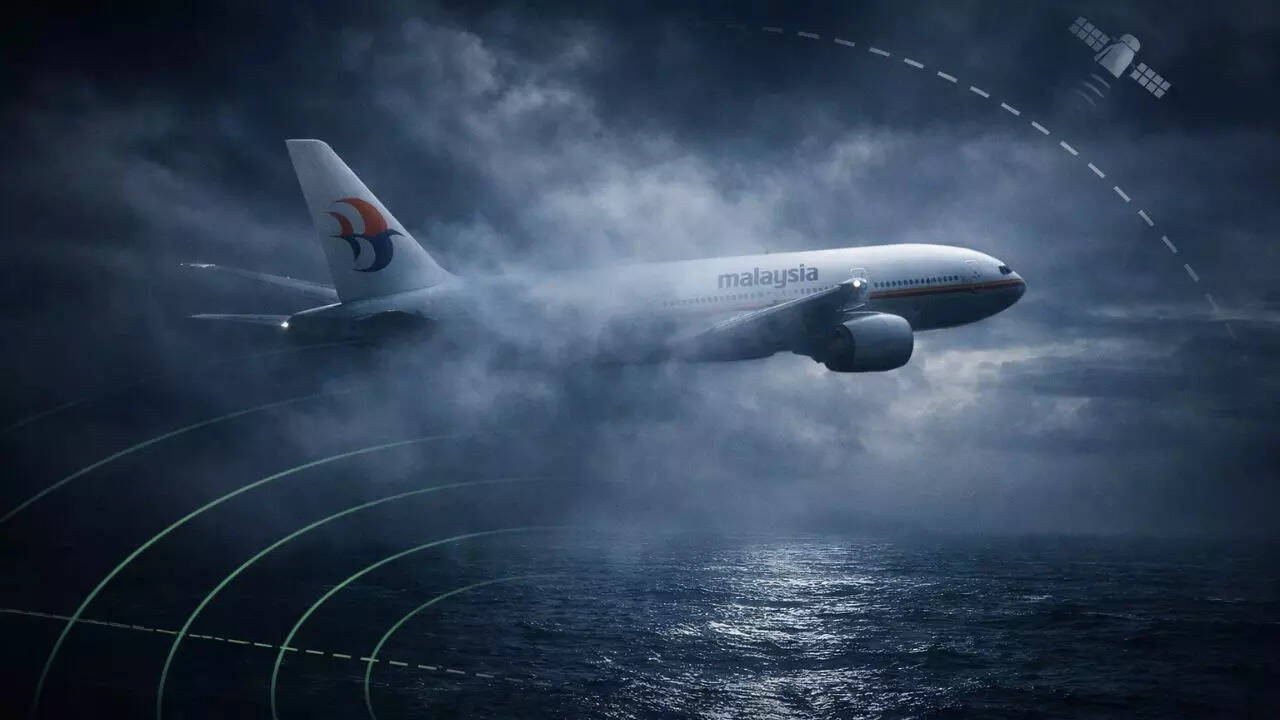
In the early hours of 8 March 2014, flight MH370 took off like any other, but it never landed, and its disappearance shocked the world. The Malaysia Airlines flight lifted off from Kuala Lumpur International Airport, carrying 239 people — families, business travellers, children, and crew — bound for Beijing. Less than an hour later, the plane vanished. No distress call. No signals to air traffic control. Nothing.
In an age when satellites track planes across continents, and radar can monitor aircraft in real time, how could a massive Boeing 777 simply disappear? For hours, it flew somewhere nobody could see. For days, weeks, and now more than a decade, the world has waited for answers that never came. Families of the missing are still desperate for closure.
The latest search for Malaysia Airlines flight MH370 ended this year in January without uncovering any evidence. In a statement, Malaysia’s transport ministry said the latest search, which began in December and covered around 15,000 square kilometres of the seabed, failed to locate the aircraft. The efforts "have not yielded any findings that confirm the location of the aircraft wreckage", the ministry said.
The search operation was carried out by exploration firm Ocean Infinity, based in Britain and the United States. The company ended the mission on January 23 after weeks of scanning the seabed using advanced underwater technology. To try to locate the missing aircraft, Ocean Infinity deployed autonomous underwater drones capable of diving to depths of up to 6,000 metres (20,000 feet).
Aviation history had already been haunted by similar mysteries. The most famous examples are linked to the Bermuda Triangle, a stretch of the Atlantic Ocean between Florida, Bermuda and Puerto Rico where several aircraft vanished during the early decades of aviation.
What exactly happened?
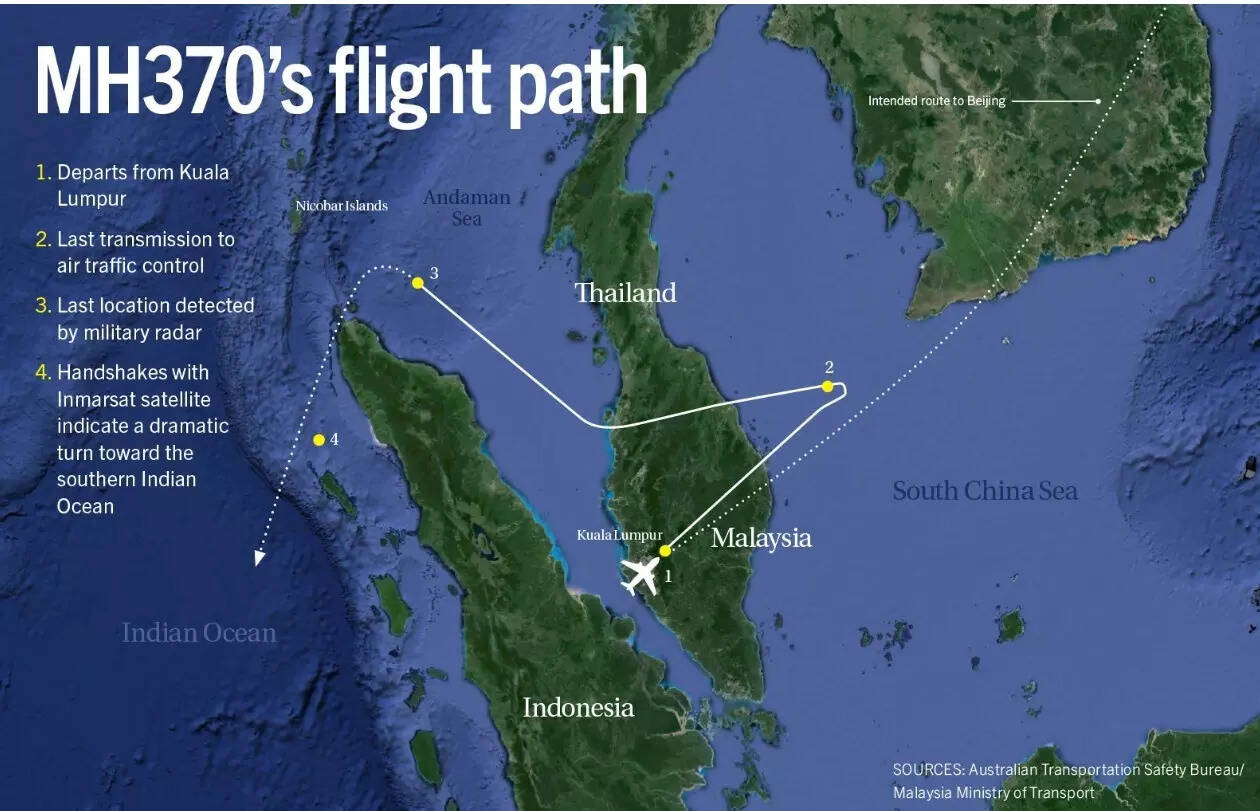
The flight took off from Kuala Lumpur International Airport at 12.41 am, bound for Beijing. On board were 227 passengers and 12 crew members from over a dozen countries. Less than an hour into the flight, the aircraft’s transponder and primary communication systems stopped transmitting.
The plane vanished from civilian radar screens, although military radar briefly captured it turning sharply west across the Malay Peninsula and into the Strait of Malacca. Satellites continued to receive automatic signals, known as 'handshakes', for several hours after it disappeared from radar, suggesting the plane continued to fly on autopilot or under some form of control until it likely ran out of fuel over the southern Indian Ocean.
How the search unfolded
Immediately after the disappearance, a massive multinational search began. Malaysia, assisted by Australia, led a seabed search covering over 120,000 square kilometres of the southern Indian Ocean, one of the least explored regions on Earth. That phase officially ended in January 2017 without locating the main wreckage.
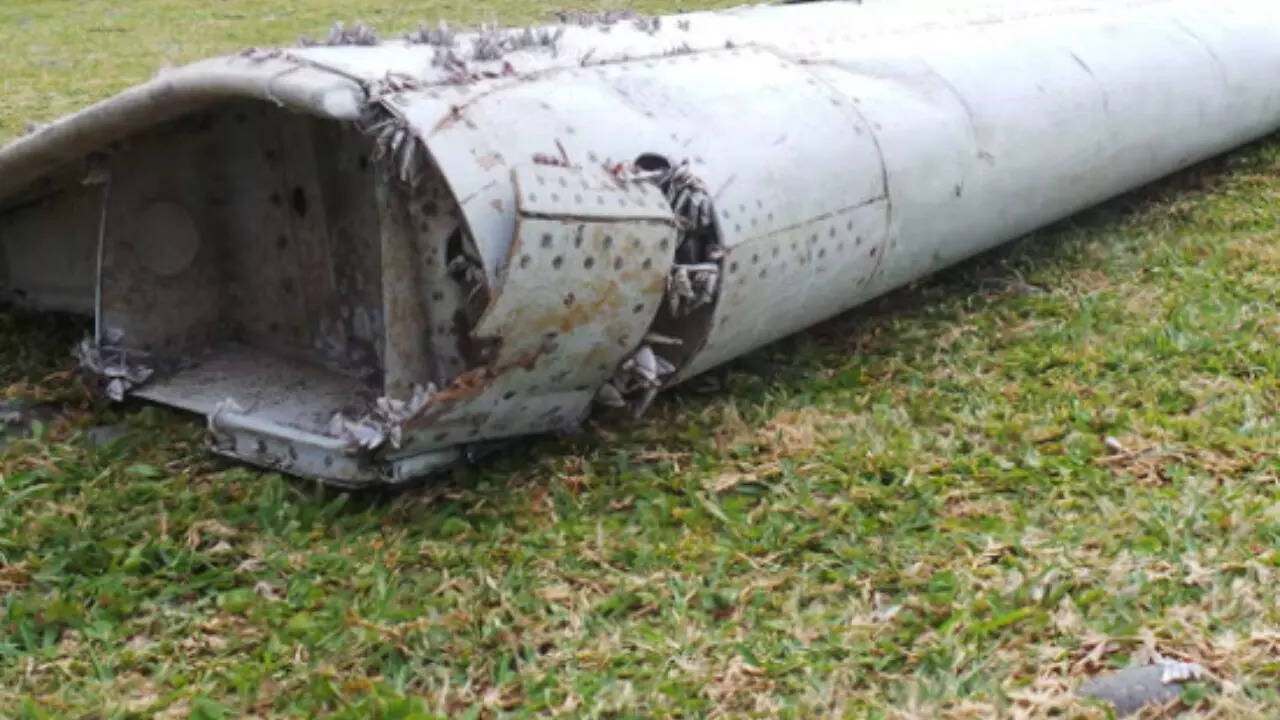
Over the years, pieces of debris confirmed to be from MH370 washed up on shores around the Indian Ocean, including Reunion Island, Mozambique, and Madagascar. While these fragments provided proof that the plane had gone down in the ocean, they did not reveal the exact crash site.
After a pause in active searching, the Malaysian government signed a “no find, no fee” agreement with the marine exploration company Ocean Infinity. Under this deal, the company would be paid up to US $70 million only if the wreckage was found. A new search area covering approximately 15,000 square kilometres was identified, and operations took place in two phases between March 2025 and January 2026.
The search used autonomous underwater drones and advanced sonar mapping to scan about 7,500 square kilometres of seabed. Despite this, no wreckage or flight recorders were recovered.
Speculations and conspiracy theories
Some experts suggest that a sudden, catastrophic accident may have incapacitated the crew and passengers immediately, leaving the plane to continue flying on autopilot until fuel exhaustion. However, others say, the fact that the aircraft made several sharp turns after disappearing from radar indicated the possibility of someone at the controls.
Some hypothesise that MH370 may have been deliberately depressurised, causing passengers to become unconscious while a pilot continued flying for hours until fuel ran out.
The most widely discussed theory involves deliberate action by a pilot. Investigators discovered that Captain Zaharie Ahmad Shah had practised a flight path on a home flight simulator similar to the suspected route over the southern Indian Ocean and subsequently deleted the record.
Over the years, speculation arose about a possible terrorist hijacking. But some experts say that strengthened cockpit doors make this highly improbable, and it was unclear why the crew could not have alerted air traffic control if overpowered.
Extreme theories suggested the plane could have landed safely on a remote island, including the US military base on Diego Garcia, the Andaman Islands, or even deserts in China or Kazakhstan. However, experts say these scenarios are highly unlikely given fuel limitations and lack of evidence.
Some have even suggested alien abduction or disappearance into a black hole, but there is no evidence to support any extreme explanations.
Picture credit: EP.
Why is MH370 mystery still unsolved?
Finding MH370 has been exceptionally difficult. The southern Indian Ocean is vast, deep, and geologically complex, making it one of the hardest places on Earth to search.
The early loss of the aircraft’s transponder and communication systems obscured its initial flight path, leaving investigators to rely on satellite signals that could only define a massive search zone spanning hundreds of thousands of square kilometres.
While debris has been found, it has not led searchers to the main wreckage or the black boxes that could reveal the plane’s final moments. Even with advanced technology, including autonomous underwater drones, detailed sonar mapping, and years of multinational collaboration, the aircraft has remained elusive for over a decade.
Families seek closure
Many questions continue to haunt families, aviation experts, and the public. Why did the plane turn off its communication systems? Who, if anyone, was controlling the aircraft in its final hours? Where exactly did the plane end its journey? Why have no human remains been found? Every anniversary of the disappearance brings these questions back into public consciousness, a reminder of the lives lost and the enduring mystery of MH370.
In March 2025, the Chaoyang District People’s Court in Beijing ruled that Malaysia Airlines and its international affiliate must pay over 2.9 million yuan, about US $410,000, to each family of eight passengers legally declared deceased.
This covered death compensation, funeral costs, and emotional distress damages. Of the 78 lawsuits filed by relatives, 47 were settled and withdrawn, while 23 remain pending because some families have not yet completed legal procedures to declare passengers dead.
The Malaysian government has said that it will continue to keep families informed and assess future search possibilities. Meanwhile, advocacy groups and relatives of the passengers are determined to pursue every avenue to find answers, pressing for renewed searches in unexplored areas of the Indian Ocean.
Until the main wreckage is found, or flight recorders are recovered, MH370 will remain one of the most enduring aviation mysteries in history. Every new attempt reignites hope and speculation, but it also shows the sorrow and uncertainty that has lasted more than a decade.