
While a fragile ceasefire between the United States and Iran is holding, Israeli strikes on Beirut threaten to derail it and widen the current conflict. Indirect talks under Pakistani mediation begin on Friday, giving both sides 15 days to try to reach a lasting truce. Israeli writer and academic Dror Mishani tells RFI the conflict has already done serious damage at home, warning that Israeli society is being driven by trauma and a growing desire for revenge.
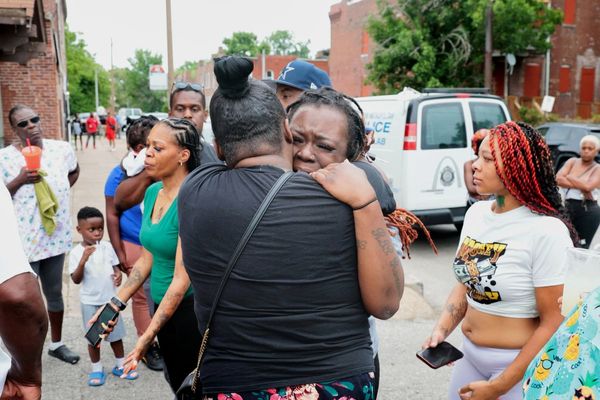
More than 300 people were killed in Israeli strikes on Lebanon on Wednesday, according to the Lebanese health ministry, in the heaviest attacks on Beirut since 1982.
The violence has drawn strong international reactions, with even the United States urging restraint. Israel has proposed opening negotiations with Lebanon, while Beirut says a ceasefire must come first.
Other issues being tackled in the talks mediated by Pakistan include Iran’s nuclear programme, sanctions and shipping through the Strait of Hormuz.
Mishani, a novelist, screenwriter and literature professor at Tel Aviv University, argues that the trauma of the 7 October, 2023 Hamas attacks on Israel has pushed the country into a moral crisis, where concerns about justice, law and culture are giving way to a desire for revenge.
RFI: The truce between the United States and Iran seems very fragile. After 39 days of war, Lebanon has suffered heavy Israeli strikes. As a left-wing, pacifist Israeli author, how would you describe life in Israel under this conflict?
Dror Mishani: Life is returning to normal in Israel. Children are supposed to go to school and parents are going back to work. But for me, this immediate return to normality is part of a new dehumanisation that is taking hold here.
We are expected to act as though, for the past month and a half, we have not been living under daily missile attacks, in constant fear for our lives, as though we are no longer in a war, as though the war is not still ours.
Personally, I feel devastated. I am glad for the Iranian people that the war is paused. I am also glad for us Israelis that we are no longer living under missiles. It was a real nightmare. But the war continues for the Lebanese people. And I fear we will be living with the consequences of this war for years to come.

RFI: You say you're glad, and yet you seem to be almost apologetic about the situation.
DM: Really, I feel as though I have lost my home. Not because it was damaged by the bombing, but because I no longer recognise the society that was once mine. It has been completely destroyed in this recent war.
So for me, it is not really a happy morning – it is a morning of a little hope, but very little.
RFI: You say Israeli society has been destroyed. In what way?
DM: Netanyahu and Trump tried to destroy Iran and Lebanon, but they also managed to destroy Israeli society. I no longer recognise the society in which I was born and grew up. It is a society that has allowed trauma to take over, that has allowed its darkest moments to reign.
We are now a society that no longer cares about morality, culture, law or justice – only about revenge. It is a society haunted by violence and destruction. Almost no one spoke out against the threats to annihilate Iranian civilisation.
RFI: So when Donald Trump made this threat, 24 hours before his ultimatum expired, are you saying this caused little reaction in Israel?
DM: Exactly. Do you understand what that means? In Israel, one week before Holocaust Remembrance Day, Israelis support the threat by a deranged dictator to erase another civilisation. For me, that is the destruction of our society.
France warns Lebanon must not be ‘scapegoat’ after Israeli strikes
RFI: Was this war against Iran justified in its objectives? It is presented as a war against a regime that seeks the destruction of Israel.
DM: There is no such thing as a just war. During the war, I read a great deal of Simone Weil, the great French Jewish philosopher who wrote very precisely about war and its futility.
This is not a just war. It is a war that tried to destroy Iran and Lebanon, but that also continued the destruction of Israeli society.
RFI: You have two children and you are a university professor. Is this conflict something you discuss at home or with your students?
DM: Yes, of course. What is very difficult in Israel now is that almost everyone supports the war. For example, a few hours after the ceasefire with Iran was announced, the headline on an Israeli news site read: “Massive attacks in Lebanon, dozens of targets hit, hundreds dead in Beirut” – as if to reassure Israelis 'do not worry, we are not stopping'.
This play of revenge that has been unfolding here for three years, day after day, is not over. Revenge is still on stage, and I think that is what most Israelis want to see.
RFI: You say most Israelis – does that mean it is difficult for voices like yours to be heard? Are you able to speak out in Israel?
DM: Yes, a little. There is the daily newspaper Haaretz where such views can be published. But I am not sure the peace camp still exists in Israel.
All the opposition leaders, people like Yair Lapid and Yair Golan, criticised Benjamin Netanyahu not for waging the war, but for not causing enough damage to Iran.
Iraq turns to Turkey for oil exports as Middle East war reshapes routes
RFI: In other words, they accused him of stopping the war before the job was finished?
DM: Yes. But I want to [make something clear]. Last Saturday, there was a demonstration against the war in central Tel Aviv. There were about 1,000 people, which is not many. But it still took courage, because of the missiles and very hostile police.
There were writers, academics and intellectuals. It was marginal, yes, but still important.
Israeli society is now focused on one thing – the total destruction of everything and everyone. It is no longer interested in justice; only revenge matters.
We must try to remind [people] that it was once different, and that another path exists.
RFI: You said a year ago that the trauma of the 7 October, 2023 attacks had turned Israel into a society "obsessed with revenge". Is that still the case?
DM: Yes. There are many reasons for what Israel has done over the past three years. It is linked to having an irresponsible prime minister, ready to sacrifice his people and his country to avoid prison.
It is also linked to the support of an American president who encourages chaos in the world. But above all, it is linked to the trauma affecting Israeli society – a trauma that is understandable.
Since 7 October, we have been caught in a spiral of violence and destruction that I do not see ending. And I have understood that this does not make us stronger – on the contrary, it weakens us.
This interview was adapted from the original version in French and has been edited for clarity.