In a rare judgment, the European Union's highest court sided with a Syrian refugee's appeal in a landmark case that sought damages against the European border and coast guard agency, Frontex, opening the way for other victims to do the same.
The Luxembourg-based Court of Justice of the European Union sent the case of Alaa Hamoudi v. Frontex back to the General Court for re-examination after finding that it failed to properly examine his alleged expulsion alongside 21 other migrants from Greece to Turkey in 2020.
The court considered that the evidence presented by Hamoudi had been ”sufficiently detailed, specific and consistent," Judge Ben Smulders said in a video released Thursday.
While the general court will now reassess the case and issue a new verdict, Hamoudi's lawyers celebrated Thursday's ruling as “historic."
Iftach Cohen, who leads Hamoudi’s legal team alongside Francesco Gatta, said Hamoudi's “courage and audacity” could potentially benefit tens of thousands of other migrants pushed back from Greece to Turkey.
"Hopefully this will bring an end to the de-facto legal impunity of Frontex,” Cohen told The Associated Press.
In a statement, Hamoudi said the ruling was not only a personal victory but “an important step toward justice for the men, women, and children who went through the same experience as I did ... and could not fight back."
While Frontex was not accused of physically carrying out the collective expulsions themselves, Hamoudi’s lawyers, experts and migrants say the role of the EU’s border agency is key.
In comments sent to AP in writing, Frontex said that Thursday's rulings, including a separate case looking at the allegedly unlawful deportation of a Syrian family in 2016, “does not decide who is at fault.”
However, “they make clear that courts expect close scrutiny where Frontex is involved and that fundamental rights must be taken seriously,” Frontex said.
Hamoudi’s case
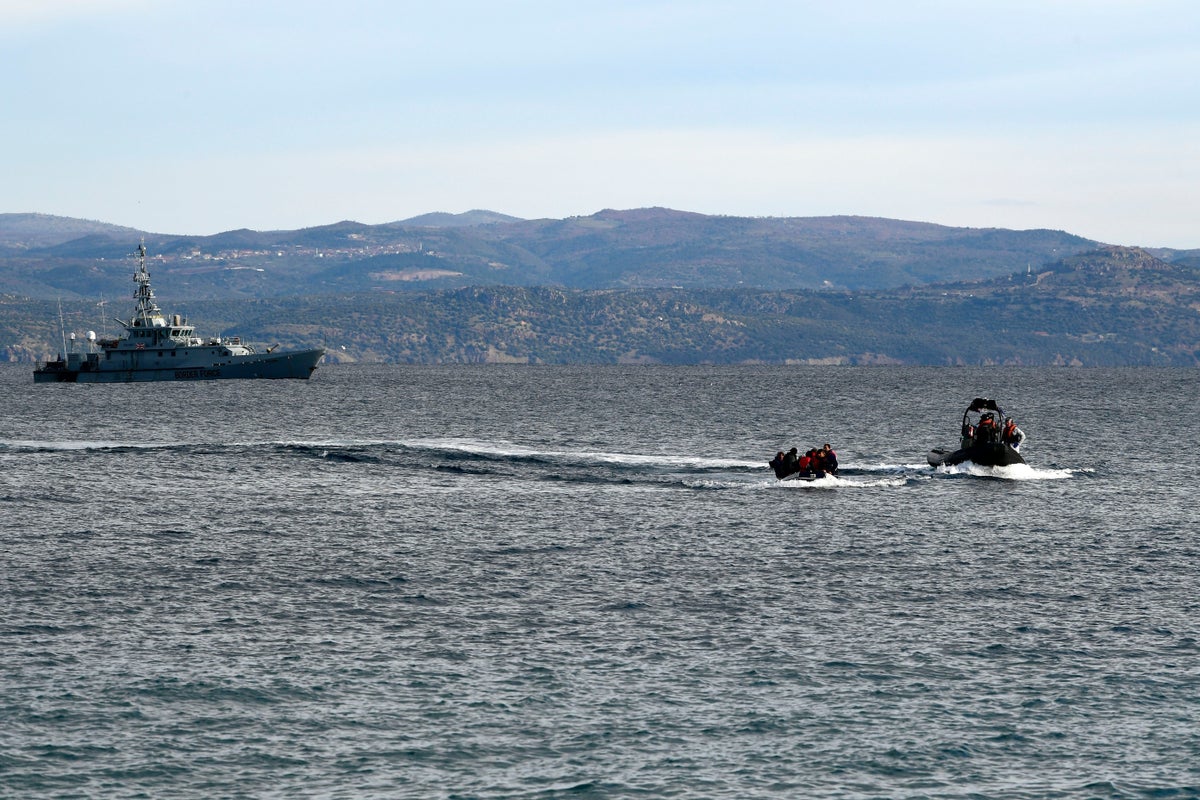
According to Hamoudi’s testimony, he was among 22 people, including children, to land on the Greek island of Samos on April 28, 2020. Moments later, police arrived and confiscated their phones before forcing them onto a life raft, Hamoudi said. They were towed overnight into Turkish territorial waters and left adrift for 17 hours until they were rescued by the Turkish coast guard. Hamoudi claims a Frontex surveillance plane flew over the scene twice.
“I was struggling between death and life,” Hamoudi told AP in an interview ahead of the judgment from his home in Mannheim, Germany. “This is the reason that made me sue Frontex.”
Turkish authorities detained Hamoudi for 10 days and confiscated his passport. Fearing he would be forcibly sent back to Syria, a country he left when he was around 12 years old due to the devastating civil war, Hamoudi attempted again to cross the border in Greece until he succeeded and reunited with his family in Germany.
As evidence, Hamoudi’s lawyers shared video allegedly showing him and other migrants on Greek soil before being dragged back into the Aegean Sea. The German weekly Der Spiegel found evidence of Frontex’s alleged presence during that time. A damning EU anti-fraud agency report also found Frontex had covered up pushbacks in Greece.
“They treated us in a way that was inhuman,” Hamoudi said.
A new precedent
The Court of Justice of the EU acknowledged the power imbalance between migrants and Frontex, setting a new precedent on the amount of evidence that asylum-seekers like Hamoudi are expected to present in court to have their claims considered.
"These victims are in a situation that makes it very difficult, if not impossible, for them to gather such evidence, which could effectively grant Frontex immunity and compromise the effective protection of the fundamental rights of these victims,” the judge, Smulders, said.
The illegal practice of summary expulsions, or pushbacks, have largely become normalized across Europe as anti-migrant sentiment runs high and the right to seek asylum is increasingly under threat.
“We have reached a historic result, but many others are still being stripped of their rights every day at the borders of Europe,” Hamoudi said in a statement issued following the ruling.
Niamh Keady-Tabbal, a researcher at Maynooth University, who has litigated pushback cases against Greece but is not involved in Hamoudi’s case, said the ruling could “challenge the way Frontex has been structured to evade accountability."
Allegations against Frontex
“Frontex has been really instrumental in enabling (the expulsions) by systematically detecting vessels, handing over responsibilities to the Greeks and contributing to covering up these pushbacks,” Keady-Tabbal said.
During collective expulsions, migrants can be stripped of their phones, arbitrarily detained, beaten and expelled in the dead of night with few or no witnesses. “These are victims of a policy that is carried out to deliberately destroy, conceal and hide evidence,” said Keady-Tabbal.
Legal experts and human rights advocates have for years called on Frontex to withdraw from Greece based on its own regulation, which states that the agency should suspend or terminate its activity in a country if it sees violations.
Despite years of well-documented pushbacks and calls for accountability, Frontex has said it will continue its operations in Greece.
“Frontex chose engagement over withdrawal because oversight, monitoring and pressure for change only exist if we are present,” the agency said in a written statement ahead of Thursday's ruling. “We do not ignore concerns and we do not look away."
Many experts contest that, arguing Frontex has deliberately left scenes of violations, like those claimed by Hamoudi, to avoid liability.
On Thursday, the agency vowed to improve its work and become more transparent. “Our focus remains on ensuring that every person affected by our operations is treated with dignity and fairness.”
___
Follow AP’s global migration coverage at https://apnews.com/hub/migration