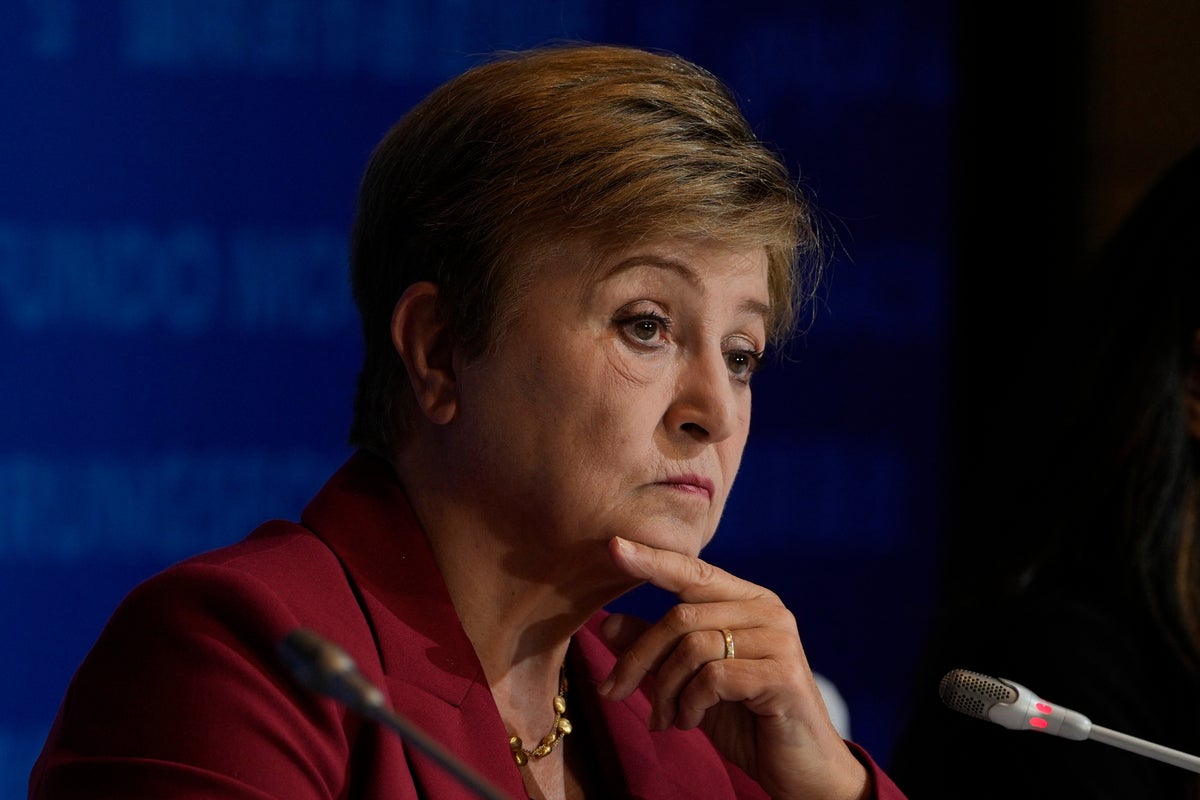
The Iran war is darkening the outlook for the world economy — whether or not a fragile ceasefire holds, the head of the International Monetary Fund warned Thursday.
IMF Managing Director Kristalina Georgieva said the fund will downgrade its forecast for the world economy next week.
“Had it not been for this shock, we would have been upgrading global growth,” Georgieva said in remarks ahead of next week's IMF-World Bank spring meetings. "But now, even our most hopeful scenario involves a growth downgrade.''
The world economy had proven resilient in the face of President Donald Trump's decision to impose sweeping taxes last year on imports from most the world's countries. In January, the 191-country IMF had upgraded the global growth outlook to 3.3% and was poised to do so again when its new forecasts came out next Tuesday.
But the war, which began Feb. 28, changed everything. The conflict has driven up the price of oil and natural gas; damaged oil refineries, tanker terminals and other energy infrastructure; disrupted shipments of fertilizer the world's farmers depend on; and damaged the confidence of businesses and consumers.
The United States and Iran announced Tuesday they'd reached a ceasefire — after Trump warned that otherwise "a whole civilization will die tonight.''
Still, the IMF's Georgieva said Thursday, "growth will be slower—even if the new peace is durable.''
Sub-Saharan Africa and small island countries are most vulnerable to the energy shock, Georgieva said. Around the world, governments have only a limited ability to support their economies with spending increases and tax cuts because their debts are already so high.
She noted that many countries have taken steps to limit the damage from the energy shock such as urging or requiring people to work from home; encouraging more use of public transportation; and limiting travel by public officials.
Georgieva pleaded that policymakers “be careful not to make things worse'' with ”go-it-alone'' moves such as limiting exports and imposing price controls. "Don’t pour gasoline on the fire,'' she said.